







Content Marketing for Course Creators: The 2026 Organic Strategy
Content Marketing for Course Creators
Key Takeaways
-
Trust Over Ads : building relationships through helpful education converts at a much higher rate than cold paid sponsorships.
-
Organic Longevity : optimizing your blog with SEO for course creators creates a steady path of passive traffic for years to come.
-
Prioritize Email Growth : capture your warm visitors immediately by utilizing strong list-building strategies.
-
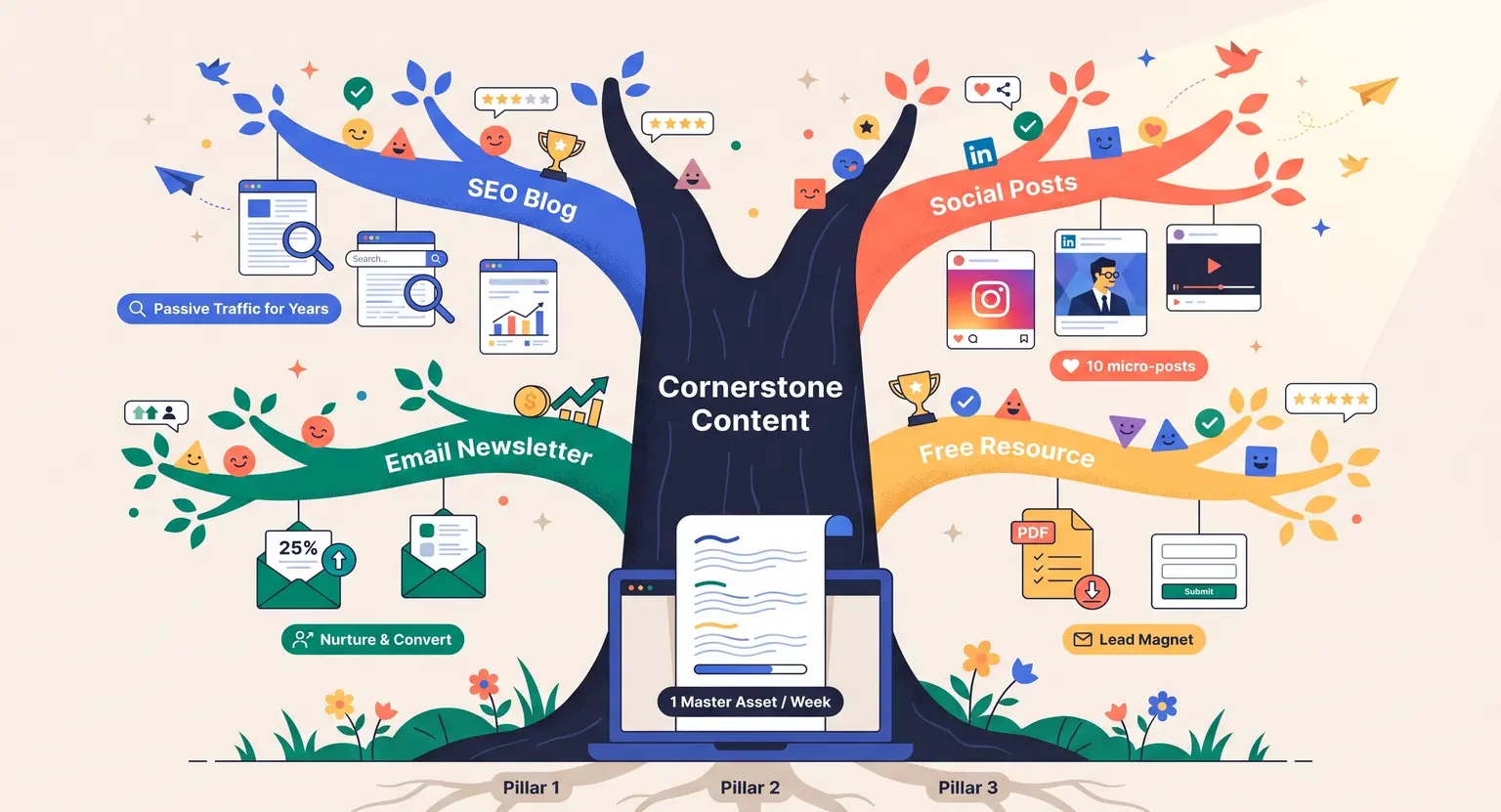
Repurpose Wisely : produce one comprehensive educational resource every single week, then slice it into ten bite-sized social updates.
Starting an online academy is incredibly exciting, but finding steady students often feels like yelling into a void… Paid advertising is getting more expensive by the day, and social media algorithms are increasingly volatile.
So, how do you actually build a steady stream of highly motivated students who are genuinely excited to purchase your training?
The secret is simple : stop hard-selling and start teaching in public.
High-quality educational content acts like an organic magnet, drawing in people who are already trying to solve the very problems your program addresses.
It establishes your personal authority long before any credit card is processed.
But doing this successfully in 2026 requires more than publishing random tips. You absolutely need a structured ecosystem that transforms curious readers into dedicated, paying students without wasting your valuable sanity on a content treadmill.
Why Cold Ads Fall Flat (and Why Value Wins)
A few years ago, you could put a small budget into social media ads, direct people to a basic registration page, and watch your student roster grow. But audience habits have shifted.
Modern students are highly skeptical of generic marketing promises. They crave real proof before making any commitment.
And that is where structured educational sharing becomes your ultimate leverage point.
Sharing practical tips, teardowns, or lessons instantly demonstrates your competence. It gives prospective learners a risk-free sample of your teaching methodology and communication style long before any transactions happen.
Yet, sharing advice without an underlying blueprint will only lead to high web traffic but empty pockets - every piece of free content must serve as a deliberate bridge toward your paid offers, converting casual viewers into loyal students.
Structuring Your Core Educational Pillars
Before opening your digital editor, you must define clear boundaries.
Trying to address every single topic in your industry will only dilute your focus. Instead, establish three to four core content pillars that align directly with your curriculum.
To find these, list your target audience's most immediate frustrations. If your course is about organic garden design, your pillars might focus on soil health, irrigation efficiency, and plant selection - answering these specific questions builds natural anticipation for your premium lessons.
This systematic structuring ensures that your free material feels relevant. It acts as a helpful precursor, warming up your audience… Once they understand your basic philosophies, joining your advanced academy feels like the next logical step.
The Organic Student Journey : From Discovery to Purchase
Think of your prospective students as travelers moving through a path of trust.
It is unreasonable to expect someone to discover your profile and purchase a premium class instantly. They must move naturally through an inbound funnel, starting with discovery and ending with enrollment.
The journey begins with organic discovery. Perhaps they find a detailed guide of yours through Google or watch an insights-heavy reel.
Your goal here is to deliver immediate value by solving a highly specific micro-problem, showcasing what makes your training unique.
But do not let that traffic slide away. You need a reliable capture mechanism, like a free workbook. Inviting them into your list lets you use personalized email marketing for course creators to deepen relationships and systematically announce open seats.
Selecting the Ultimate Content Formats
You do not need to manage ten active social channels to run an exceptionally profitable knowledge business - doing so will only lead to creative exhaustion.
Instead, focus your energy on one or two core formats that align with your natural strengths.
If you love writing, diving into search optimization is a fantastic choice. Valuable articles will bring in targeted traffic without requiring you to get on camera. Alternatively, if you shine behind a microphone, audio sessions can build deep personal connections.
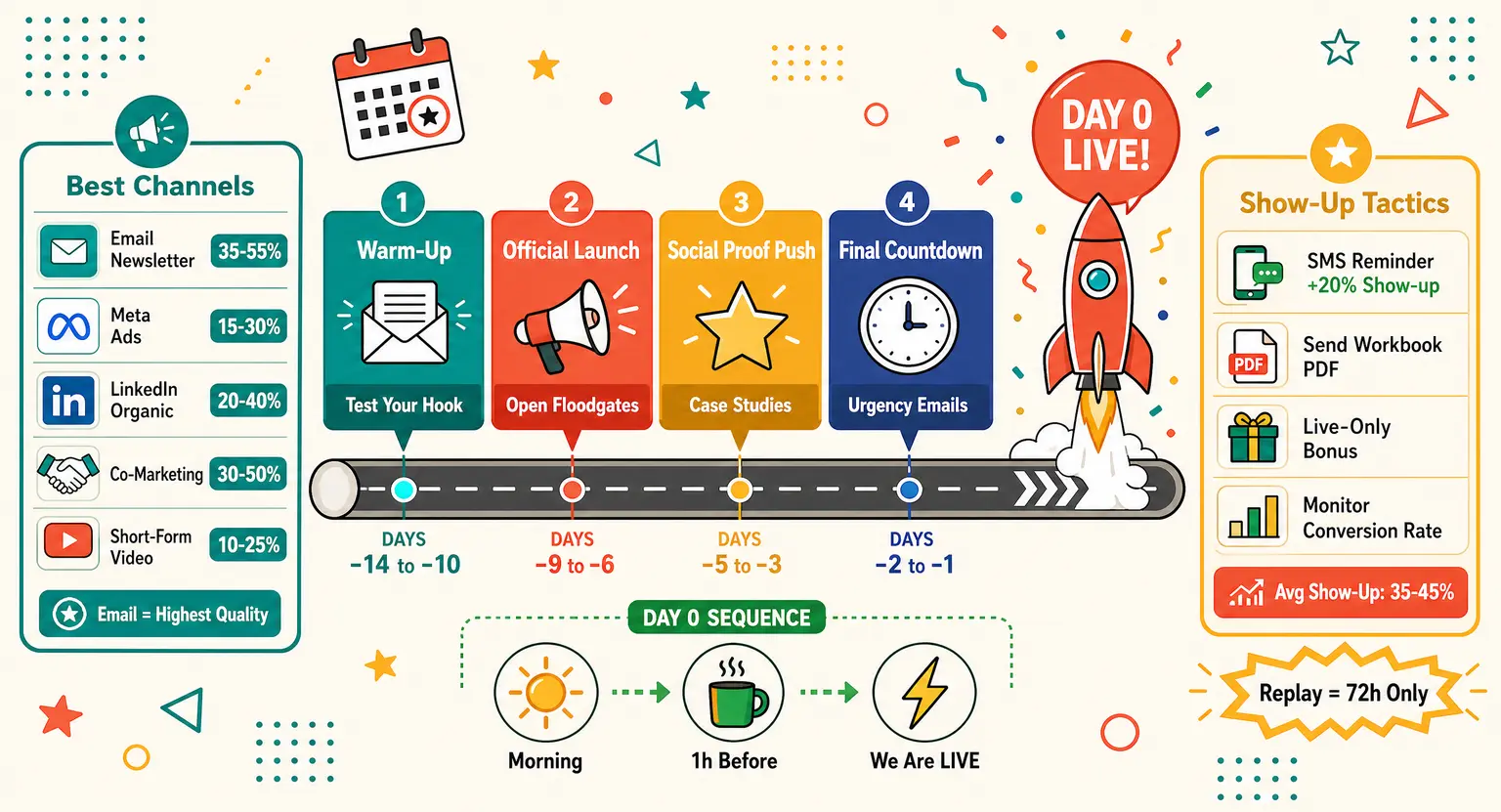
But if you prefer real-time, interactive communication, mastering high-converting presentation styles is key - learn how to organize a successful webinar to deliver outstanding live value while naturally presenting your premium training to motivated attendees.
Evaluating Conversion Formats : Effort vs. Reward
Every piece of content you build has an operational cost and a different level of influence on final enrollments.
Understanding how these formats perform helps you allocate your valuable time to high-yield assets that actually drive business growth.
| Content asset | Primary growth goal | Creation time | Conversion rate | Perfect use case |
|---|---|---|---|---|
|
Deep blog posts |
Targeted SEO reach. |
Moderate to high. |
Medium. |
Answering detailed search queries from prospective clients. |
|
Short social videos |
Rapid discovery. |
Low to moderate. |
Low. |
Sharing brief motivational tips and humanizing your brand. |
|
Live online webinars |
Intimate connection. |
High. |
Very high. |
Teaching critical frameworks and pitching advanced courses. |
|
High-value freebies |
Email expansion. |
Moderate. |
High. |
Providing direct, downloadable tools in exchange for emails. |
|
Regular newsletters |
Nurturing interest. |
Low. |
High. |
Building trust, sharing student stories, and opening sales. |
|
Student case studies |
Overcoming objections. |
Moderate. |
Very high. |
Highlighting actual success and proving system efficiency. |
Notice how high-conversion elements like live webinars and student case studies perform well because they interact with an interested audience.
Consequently, a great strategy uses wide-reach formats to capture attention first, then points those leads toward high-touch channels to complete the sale.
Establishing a Sustainable Creation Routine
The greatest obstacle standing in your way is not competition; it is creative burnout.
Most course creators launch their marketing plans with intense energy, posting complex updates multiple times a day… But within weeks, exhaustion sets in, and their production halts completely.
To maintain stable student acquisition, you must design a system that works on autopilot.
Instead of brainstorming daily, schedule a recurring monthly planning day - dedicate this window to designing your content calendar and structuring a single, highly detailed cornerstone project.
For instance, one master asset like a deep article can be easily adapted into three distinct social micro-posts, integrated into a text email, and expanded into a brief lesson video.
This repurposing loop saves hours of administrative overhead, keeping your web presence healthy with minimal friction.
Directly Translating Free Eyes Into Paid Registrations
Always remember that all of your educational materials must serve as direct steps to your paid program - if you offer incredible advice but fail to clearly instruct readers on what they should do next, they will simply consume your ideas, feel happy, and leave your ecosystem.
At the conclusion of your tutorials, remind your learners that your official curriculum offers a faster, highly supported pathway.
Integrate honest student testimonials to prove that your methods work when students commit to doing the work.
If your flagship curriculum is still under construction, do not let that hold you back. You can generate immediate interest and validate demand before writing lessons.
Learn how to pre-sell an online course to attract early students and secure validation for your business model.
Explore Further :
-
Build a perfect launch roadmap : review our detailed path on how to launch an online course easily.
-
Struggling to find leads? Dive into creative tactics on how to get students for an online course without ads.
-
Formulate your growth systems : use these comprehensive online course marketing strategies to guide your campaigns.
-
Compare your software choices : check our guide covering the best online course platforms for beginners.
-
Select a winning concept : browse through our list of top online course ideas for 2026.
-
Verify your educational concepts : learn fast techniques to validate an online course idea efficiently before launching.
-
Streamline your entire business : access top-tier hosting, conversion, and funnel infrastructure through the main LearnyBox hub today.
Frequently Asked Questions
How long does it take to see results from content marketing as a course creator?
Generally, organic content campaigns require three to six months of persistent publishing to generate steady search traffic and customer interest.
However, if you target highly specific search terms or already have a micro-community, you can begin capturing qualified email leads within your first few weeks.
Should I focus on social media or a blog for my online course?
Both channels carry value, but they fulfill completely different objectives.
Blogs establish long-term SEO discovery and lasting assets, while social networks enable real-time personal validation and conversation.
For sustainable success, prioritize your blog as your home content hub and adapt lessons into daily social posts.
Can I do content marketing without showing my face on camera?
Absolutely. While on-camera teaching speeds up personal alignment, you can easily establish deep credibility using voiceover slides, written guides, technical screencasts, interactive checklists, and visual cheat sheets.
What matters most is delivering practical, actionable lessons that help your audience overcome roadblocks.
Is email marketing still necessary if I publish quality free content?
Yes, email is incredibly critical. Free public updates generate initial awareness, but your private subscriber list is where intimate relationships grow and actual enrollments are secured.
Without an email system, you have zero leverage over your followers and remain highly vulnerable to sudden social platform adjustments.


 How to Create a Course Refund Policy (Templates & Best Practices for 2026)
 How to Run a Beta Version of an Online Course (2026 Guide)
 How to Create a Cohort-Based Online Course (2026 Guide)
 How to Sell an Online Course With a Quiz Funnel (2026 Guide)
 How to Sell an Online Course Through a Sales Call (2026 Guide)