







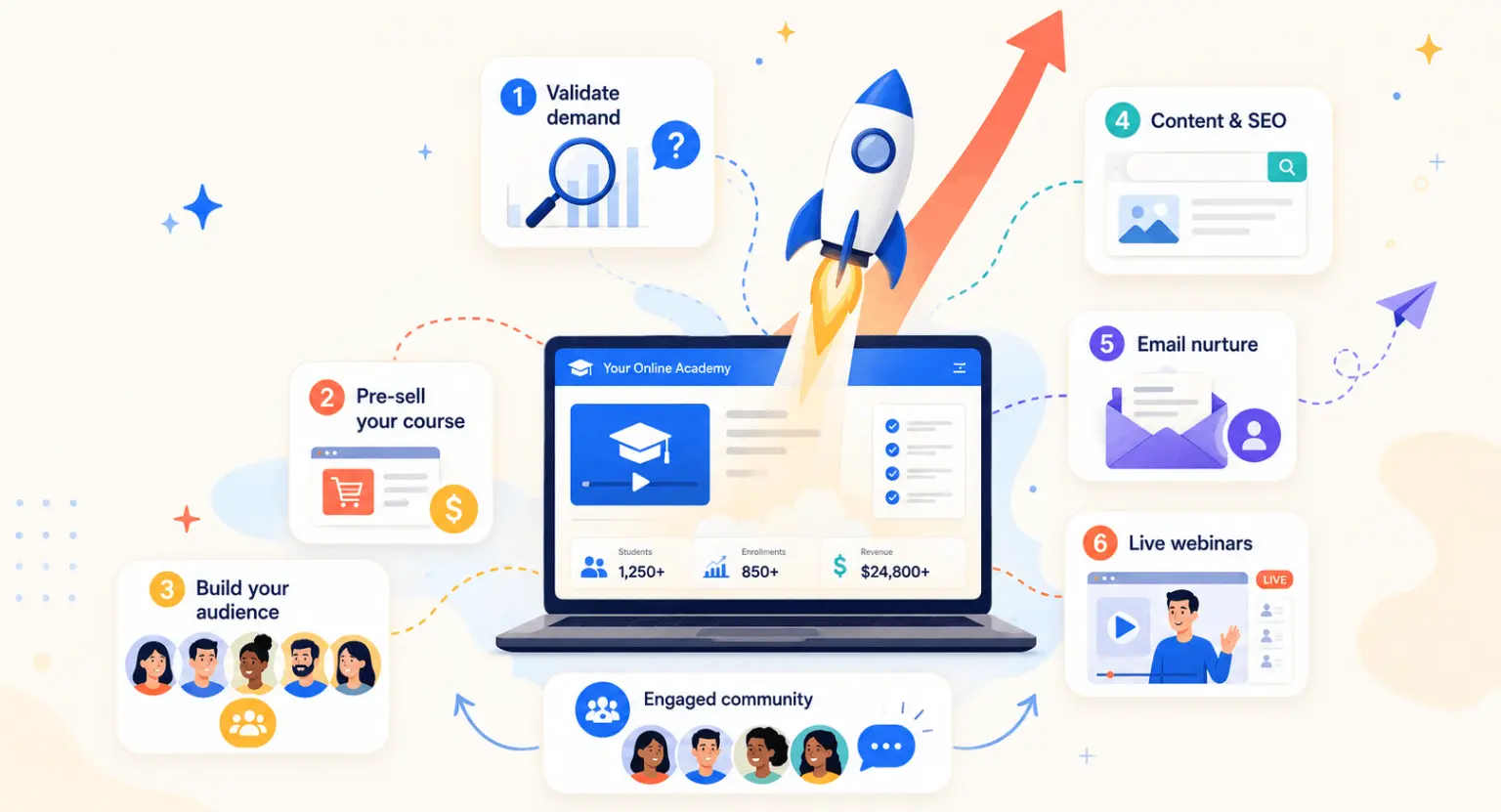
How to Get Students for an Online Course: The Complete 2026 Strategy Guide
How to Get Students for an Online Course
Key Takeaways :
-
Validate First : never build your curriculum in a vacuum. Ensure demand before recording any videos.
-
Pre-Sell Strategy : secure immediate funding and active student feedback by offering early-cohort discounts.
-
Leverage Multichannel Journeys : combine search intent with direct social outreach for steady growth.
-
Focus on Authority : write helpful tutorials to demonstrate your unique training method.
-
Cultivate Direct Systems : build email pathways to nurture readers into dedicated buyers.
Expert tip : explore more actionable frameworks via our in-depth post on online course marketing strategies to perfect your enrollment machine.
You poured your heart, soul, and hard-earned expertise into crafting an incredible curriculum. The slides are gorgeous. Your script is flawless… But as you launch your project to the world, you are met with silence.
In 2026, the marketplace for digital knowledge has evolved significantly. People seek genuine, deep solutions to their problems.
So, how do you bridge the gap between your empty digital lecture hall and rooms filled with enthusiastic, paying learners?
It starts before you record your first lesson. Successful educators understand that attracting students requires alignment between demand and marketing.
You must first validate an online course idea to confirm people actually want to pay for what you aim to teach.
Without this verification step, even expensive visual campaigns fall flat, but once you have proof of interest, you can scale using targeted outreach, automation, and community building.
Let's look at the actual strategies that work today.
Why Validation is Your Ultimate Marketing Tool
Before we jump into paid campaigns or social sequences, we must address the foundation.
Why do so many courses fail to attract students? It is not because the creator lacked passion or expertise. Rather, it is because they built a course based on what they thought people wanted, instead of what people actually needed.
True validation is the process of putting a basic offer in front of your target audience and asking them to commit.
This commitment can come in the form of an email address, a questionnaire response, or ideally, a deposit. If you cannot convince fifty people to sign up for a free webinar on your topic, you will struggle to convince them to buy a premium product.
Spend time research-mining forums :
What questions keep appearing?
What tools do people complain about?
Where are the gaps?
Once you find a recurring problem, formulate a clear promise. If the response is enthusiastic, you have a green light to move forward.
Pre-Selling : Enroll Students Before Creation
One big mistake course builders make is going dark for months to perfect a course, only to release it to zero attention. It is a heartbreaking situation, yet avoidable.
Instead of waiting, sell the concept before the product is built.
When you choose to pre-sell your course, you are not just getting funding to cover your production costs. You are securing real student feedback while they are highly invested.
This strategy changes everything. It forces you to refine your curriculum based on what your initial buyers struggle with most.
But how do you make this attractive to early adopters?
You offer them a deal they cannot refuse :
-
Deeply discounted early-bird pricing that will never be offered again.
-
Direct access to you via live group coaching calls or troubleshooting sessions.
-
Lifetime updates as the course material grows and features are added.
-
An exclusive chance to shape the actual community structure and select future resources.
By positioning your pre-sale as an exclusive mastermind, you turn early students into invested partners - their feedback guides your production, and their glowing testimonials become the fuel for your main launch campaigns. Plus, you establish immediate proof of concept.
Orchestrating an Irresistible Launch Event
A quiet release rarely makes waves. To get students all at once, you need tension, excitement, and a clear deadline.
Mastering how to launch an online course is all about organizing a campaign that moves prospects from curious observers to excited buyers.
Start by offering a high-value, free live experience like a masterclass or an interactive workshop. During this free event, solve one specific problem for your audience. Show them how you teach, showcase your expertise, and build instant trust.
Once your free experience ends, open the doors to your paid program.
Use ethical urgency :
-
Cap your initial cohort size to maintain learning quality.
-
Offer a limited-time bonus pack for those who sign up quickly.
-
Keep the enrollment window short to prompt decision-making.
As the deadline approaches, your emails and social messages should highlight the transformation your course offers, building a logical bridge to the close of registration.
This launch runway constructs the psychological focus needed to drive purchases.
Organic Traffic : Build an Intent-Driven Student Stream
Paid ads generate rapid registrations, but they dry up when you turn off your credit card.
For sustainable growth, you need organic traffic. When someone searches for a solution online, they have commercial intent. They are looking to learn right now.
Positioning your landing page at the top of search result layouts is a massive advantage. Utilizing smart SEO for course creators ensures your academy appears when someone types highly specific questions into search bars.
Avoid targeting broad keywords.
Instead, target long-tail, niche problem queries where your direct expertise shines.
For example, do not try to rank for "business management." - instead, target "how to manage a remote engineering team in a startup."
The search volume is lower, but every visitor arriving on your page is a perfect match for your course. This intent-based attraction model results in exceptionally high conversion rates and consistent enrollment.
Content Marketing as a Trust Accelerator
People buy from those they trust. If someone discovers your course page cold, they might hesitate to buy. This is where strategic content distribution acts as an authority signal.
Consistent, high-value content marketing for course creators breaks down the friction of purchasing.
By publishing helpful articles, case studies, and actionable tutorials, you demonstrate your teaching style for free. It serves as a test drive for potential customers - they see how organized your thoughts are, how easy it is to follow your advice, and how much they can learn from you.
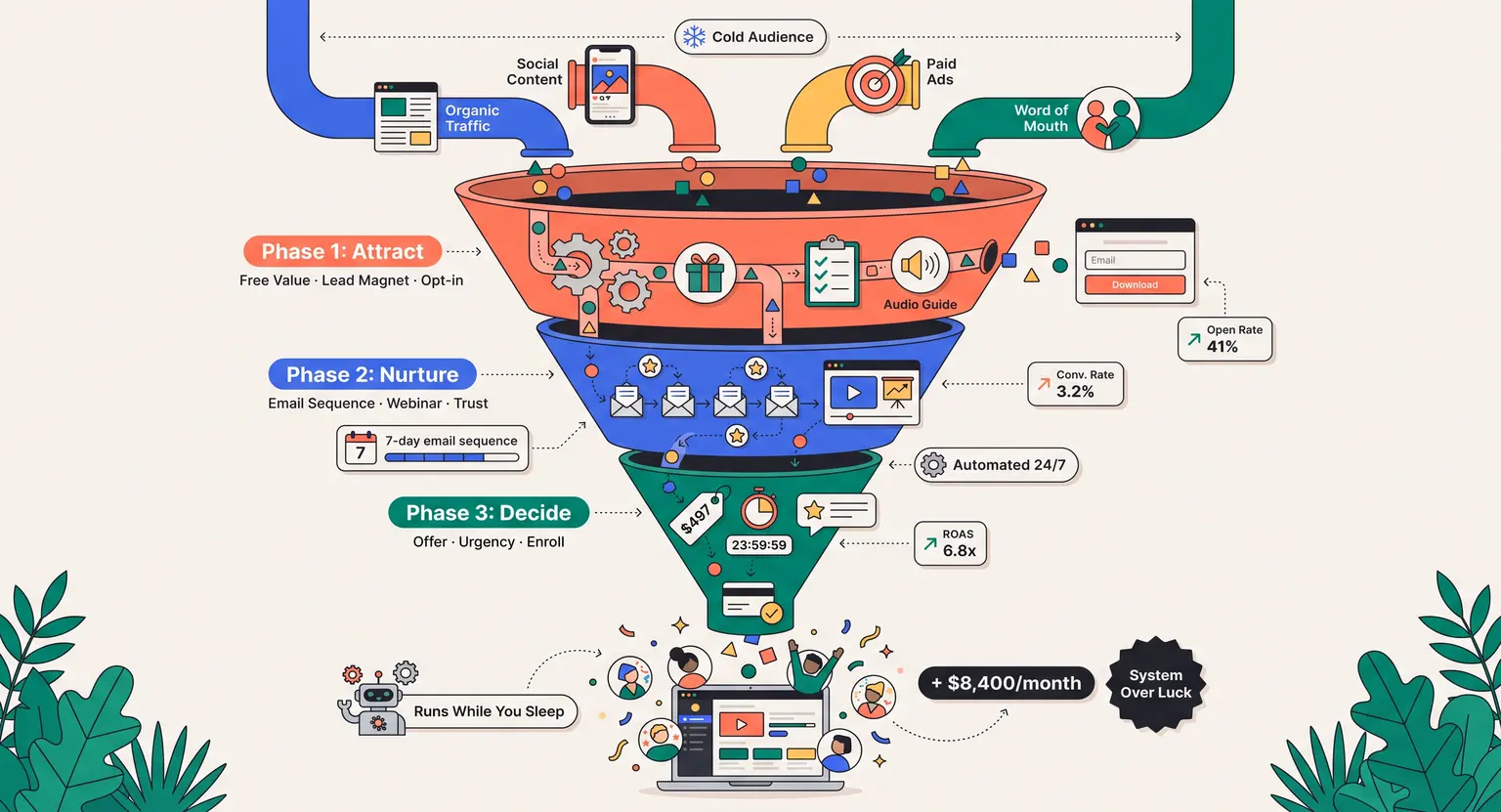
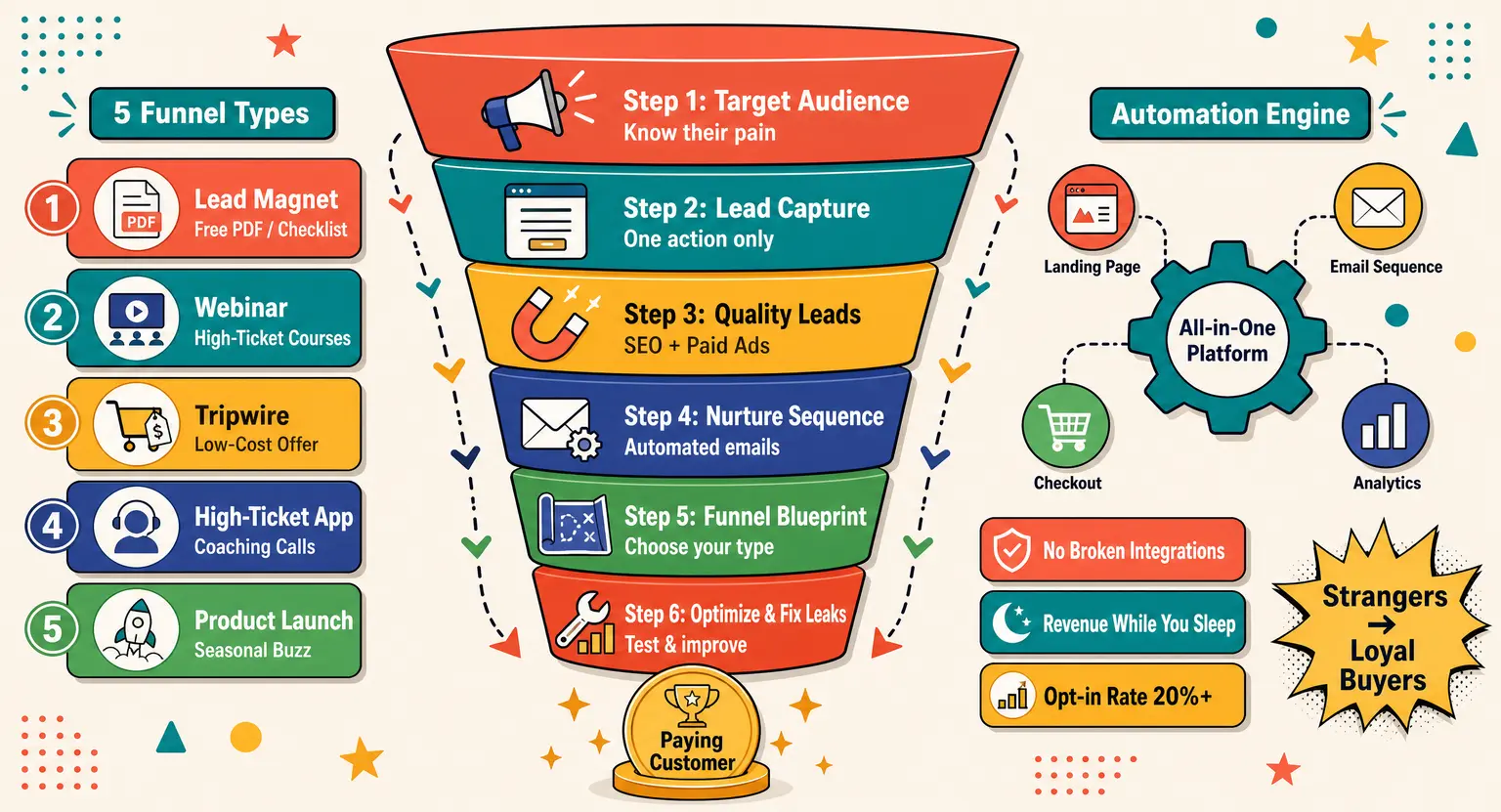
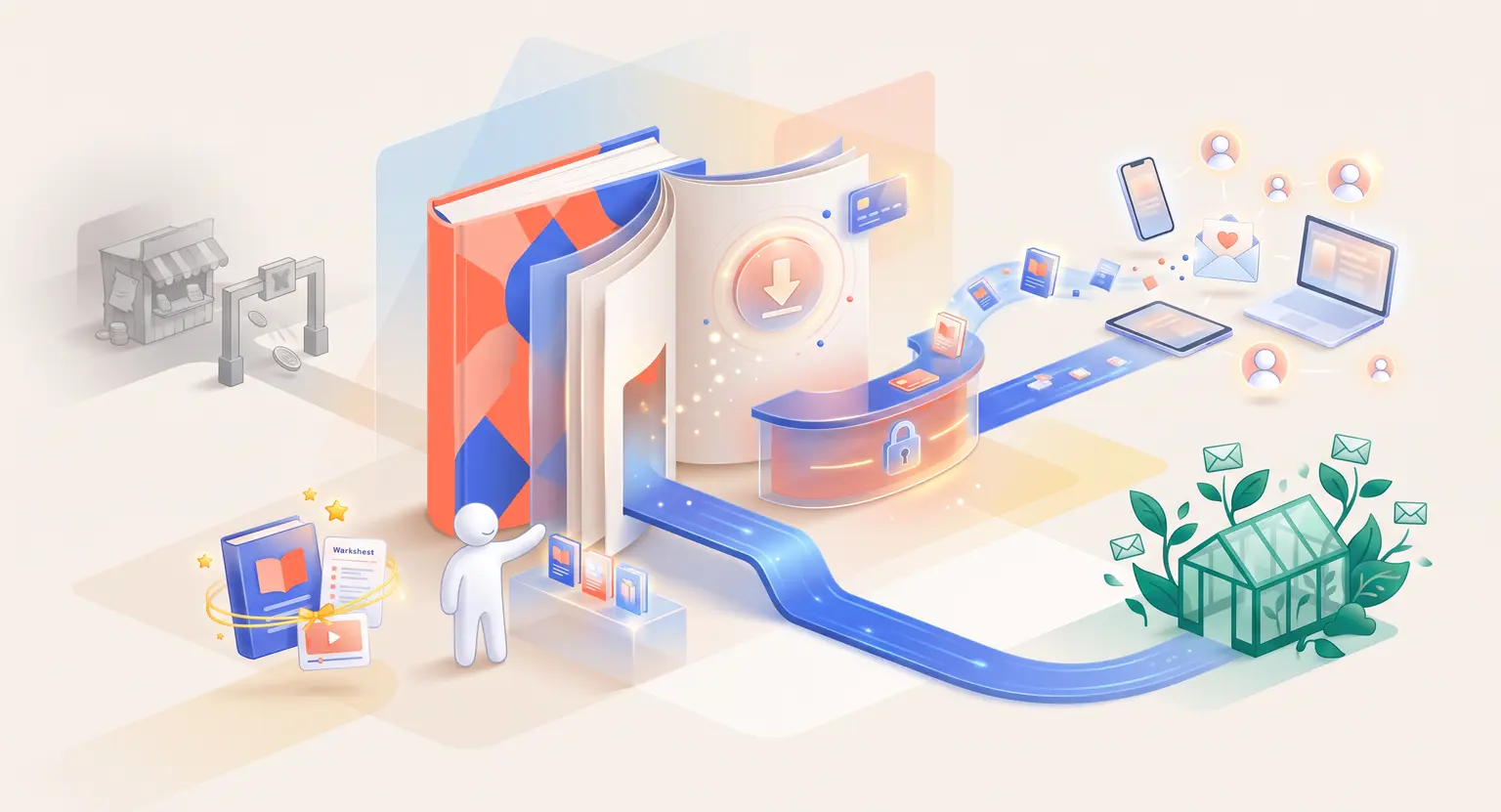
Think of your free blog content as the top of your student pipeline. Every post should lead naturally to a free resource, a checklist, or a template, which captures their email address and moves them further down your funnel.
Over time, this library of helpful resources builds a robust competitive moat around your brand.
Social Media & Niche Communities : Focus Over Noise
It is easy to get caught up in the vanity metrics of social media views, likes, and shares... But having ten thousand casual followers will not help if none buy your program.
Effective social media for course creators requires a laser focus on target communities rather than massive viral campaigns.
Identify where your potential students actively discuss their struggles. This could be specialized forums, subreddits, LinkedIn groups, or private community spaces.
Do not enter these spaces to spam links to your website - that approach will quickly get you banned.
Instead, spend time answering questions, sharing your real-world insights, and contributing value. When people see you consistently offering expert assistance, they naturally check your profile.
Make sure your profiles clearly state what you teach and point directly to a high-converting lead magnet landing page.
This turns passive social scrolling into targeted lead generation.
The Engine of Conversion : Email Marketing & Segments
Social media is fantastic for discovery, but your inbox is where conversions truly happen. The vast majority of sales are generated through dedicated lists.
Building a robust workflow for email marketing for course creators ensures you can build trust automatically with every subscriber who downloads your materials.
When someone joins your list, send them a highly focused sequence of educational emails. Break down misconceptions, share student success stories, and present your teaching philosophy - this keeps your brand top-of-mind without feeling pushy.
But do not send the exact same messages to everyone. Segment your list based on interest and skill level - a beginner needs a different message than an advanced professional.
By personalizing your outreach, you make every potential student feel heard, leading to much higher enrollment rates when you pitch your final offer. It turns cold lists into warm cohorts.
Selecting Your Acquisition Model
To help you prioritize, let us compare the most effective models for finding students. This layout demonstrates the balance between preparation time, financial investment, and average yield conversion rate.
| Marketing channel | Cost level | Time to first student | Conversion rate | Best setup options |
|---|---|---|---|---|
|
Direct community outreach |
Free or low. |
1 to 7 days. |
High (10% - 15%). |
Personal outreach via specialized groups and direct messaging. |
|
Pre-sales strategy |
Free. |
2 to 3 weeks. |
Very high (15%+). |
Validation landing page utilizing a best platform to sell online courses for processing payments. |
|
Search engine optimization |
Medium. |
3 to 6 months. |
High (5% - 8%). |
Publishing high-quality long-form blog guides targeting long-tail queries. |
|
Live launch events |
Medium. |
2 to 4 weeks. |
Medium (3% - 5%). |
Interconnected marketing funnels, live webinar setups, and structured emails. |
|
Targeted paid advertising |
High. |
1 to 3 days. |
Low to medium (1% - 3%). |
Direct ads leading to high-converting free workshop pages and sales pipelines. |
A Proven Step-by-Step System to Fill Your Digital Classroom
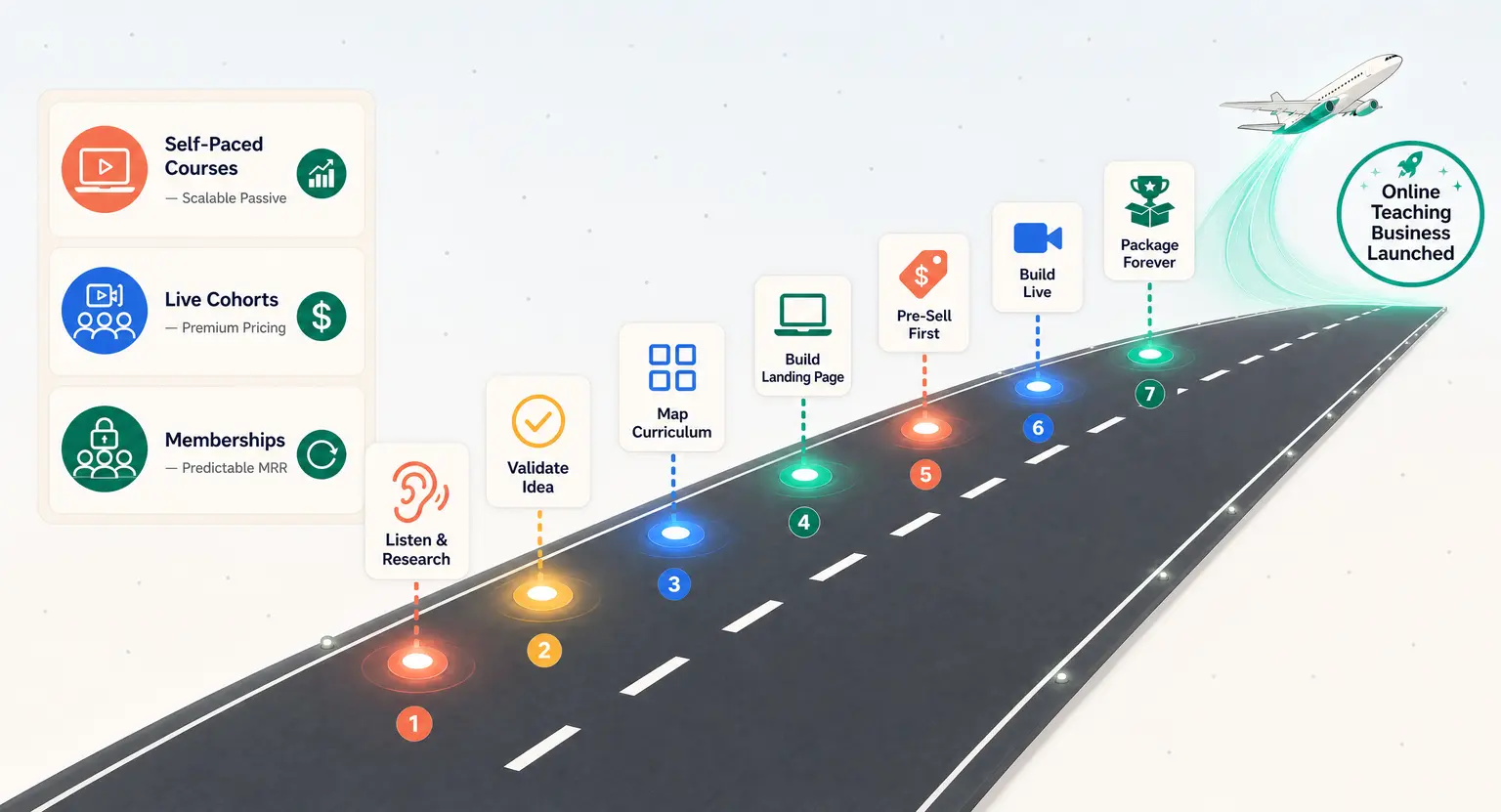
To keep you on track and prevent analysis paralysis, here is a structured marketing routine you can implement starting this week.
Do not try to execute everything all at once - pick one channel, master it, and layer on additional approaches as your student base grows.
Here is your checklist for student acquisition :
-
Identify your target customer profile and list the top platforms where they ask questions.
-
Write a guide addressing their biggest headache and offer a simple template as a downloadable bonus.
-
Set up an automated sequence that delivers the template and introduces your profile.
-
Offer free workshops or quick strategy calls to build initial trust with active prospects.
-
Capture feedback from every free interaction to strengthen your landing page arguments.
-
Run a soft launch with a discount to convert your highly engaged leads.
Related Materials :
-
Find tools on the LearnyBox platform to scale your business.
-
Establish an optimized system to sell online courses seamlessly.
-
Read our complete pricing strategy guide to boost margins.
These three curated resources help accelerate all student enrollment marketing efforts today.
Frequently Asked Questions
How can I get my very first student without a budget?
Start with direct, high-value outreach.
Find niche forums where your target audience hangs out and answer questions thoroughly. Offer free or heavily discounted strategy sessions to convert those initial contacts into paying customers and secure valuable testimonials.
Should I focus on email marketing or social media?
Prioritize email. Social media is great for initial discovery, but your list is where trust is nurtured and sales are closed. Always focus your social strategy on driving followers to your opt-in pages.
Is pre-selling really necessary before building the whole course?
Yes. Pre-selling proves people will open their wallets for your solution. It eliminates the financial risk of spending months building a product that nobody actually wants to buy.



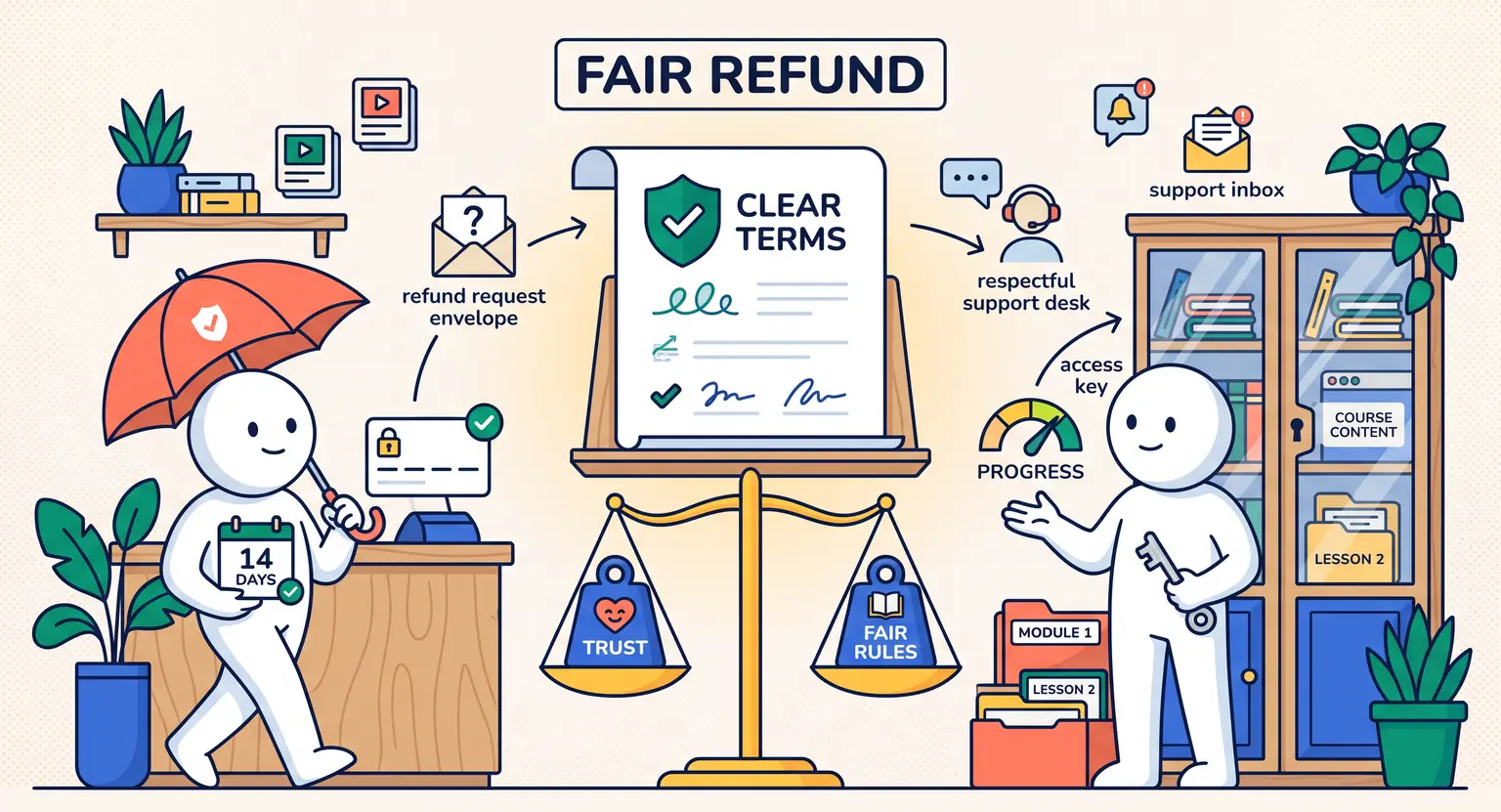 How to Create a Course Refund Policy (Templates & Best Practices for 2026)
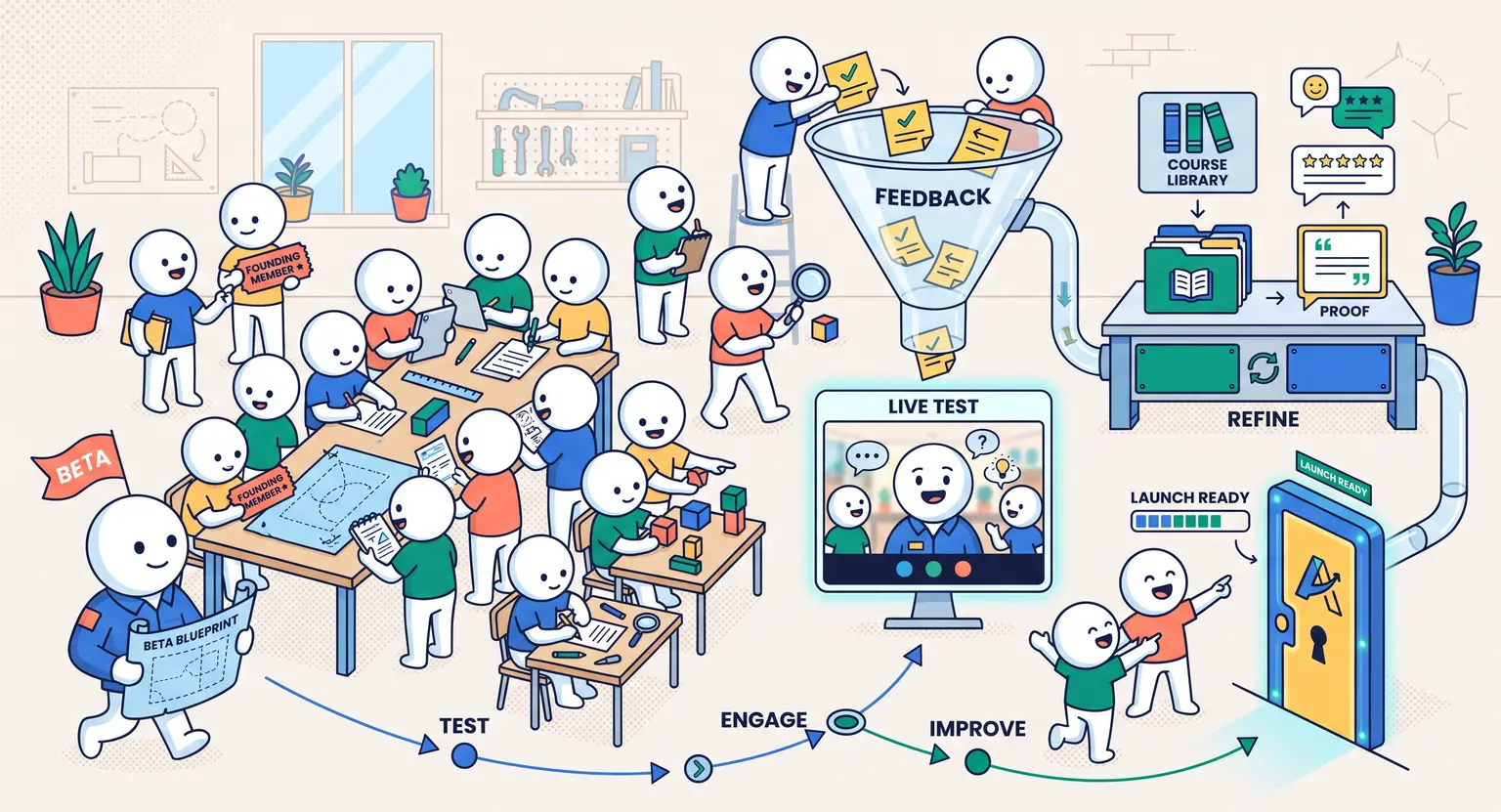 How to Run a Beta Version of an Online Course (2026 Guide)
 How to Create a Cohort-Based Online Course (2026 Guide)
 How to Sell an Online Course With a Quiz Funnel (2026 Guide)
 How to Sell an Online Course Through a Sales Call (2026 Guide)