







How to Make Money Teaching Online in 2026
How to Make Money Teaching Online
Remember when teaching online meant sitting in front of a laptop for ten dollars an hour, repeating basic vocabulary to a screen of distracted kids? Those days are dusty history.
In 2026, the landscape of digital education has totally transformed. Today, regular people with highly specific skills are launching full-scale educational brands, making reliable incomes without ever having to step inside a traditional classroom.
And honestly, if you have a reliable internet connection and solid knowledge, the door has never been wider open...
But here is the catch : the wild-west era of throwing random slideshows onto massive, discount-heavy marketplaces and hoping for a miracle is practically over.
Students today demand highly organized, structured, and action-oriented learning experiences. They don't want endless, dry lecture files. They want results.
So, how do you take your unique expertise and turn it into a sustainable source of income?
Whether you want to coach one-on-one, run corporate bootcamps, or sell pre-recorded courses, this guide breaks down the steps to get your online teaching business off the ground and generate consistent profits.
Quick Fast-Track Summary
-
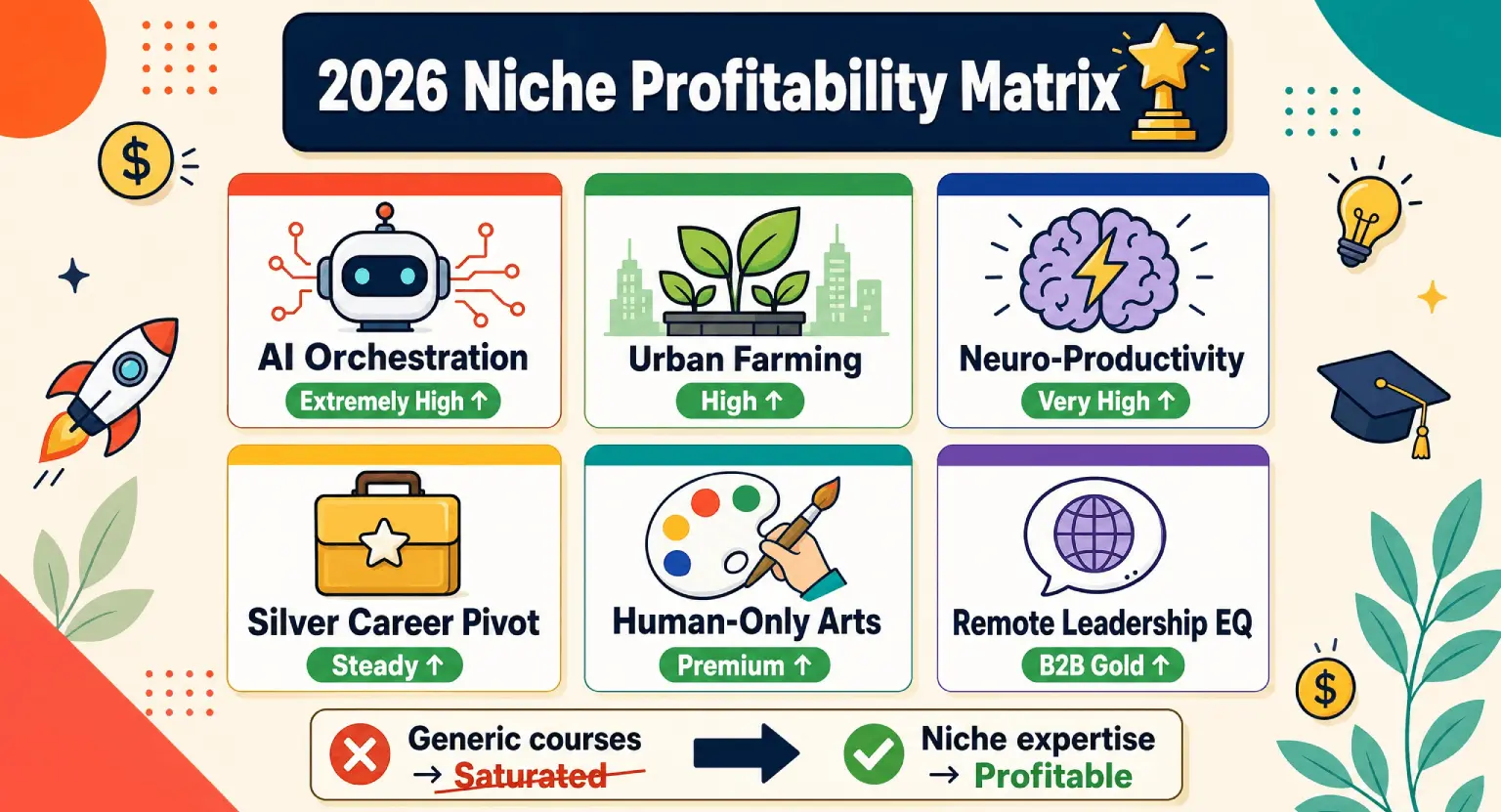
Niche Specialize : find a hyper-specific pain point to solve first rather than trying to teach everyone.
-
Choose Your Model : decide between cohort programs, self-paced assets, or high-ticket consulting.
-
Establish Control : avoid massive marketplaces that eat your margins and hide student data.
-
Build the Pipeline : before launching, learn how to monetize your knowledge effectively.
-
Expand Your Portfolio : explore creative digital product ideas to build multiple passive streams.
-
Invest in Systems : use unified all-in-one platforms instead of gluing several broken plugins together.
1. Define Your Market Spot and Validate Your Concept
It is highly tempting to sit down and say, "I am going to teach people basic photography." But let's be totally real : if someone simply wants to learn how to operate a camera, they will go watch free tutorials on YouTube.
To actually make serious money teaching, you need to go way deeper than the fundamentals.
Instead of general photography, teach product photography for handmade ceramic sellers. Or instead of generic programming, teach JavaScript for mechanical engineers transitioning into tech roles… This highly targeted focus makes your value immediately obvious.
So, how do you know if anyone will pay for this?
Test the waters before filming expensive lesson videos. Research specialized online forums, browse professional networks like LinkedIn, or look at what books people are buying in your space. This will save you endless stress.
If people are already complaining about a problem on Reddit, they are actively looking for a solution.
Take the time to understand how to validate an online course idea so you never waste weeks of work on a concept that nobody wants.
2. Select Your Format (Don't Get Stuck on Just One)
You are not limited to just one way of teaching. In fact, many successful instructors use a combination of different setups to keep their income diversified and interesting.
Let's look at the most reliable structures that actually make money today :
-
On-Demand Self-Paced Programs : pre-recorded lessons that students complete at their own pace. If you want to sell online courses of this style, build simple, easy-to-follow learning progressions.
-
Live Cohort-Based Bootcamps : teach groups live over a multi-week period. The community aspect drives great motivation, allowing you to charge premium prices. You can answer questions, give direct feedback, and build massive trust.
-
Hybrid Memberships : students pay a monthly subscription fee to gain ongoing access to content libraries, live Q&As, and discussions, yielding highly predictable recurring revenue.
-
1-on-1 Mentorship and Premium Consulting : trade your time directly for high-premium retainer fees while helping clients navigate specific major bottlenecks.
The beauty of these setups is that they can feed into each other. One-on-one clients might transition to your membership, or self-paced students might upgrade to your premium live cohort.
3. How to Price Your Knowledge Without Underselling Yourself
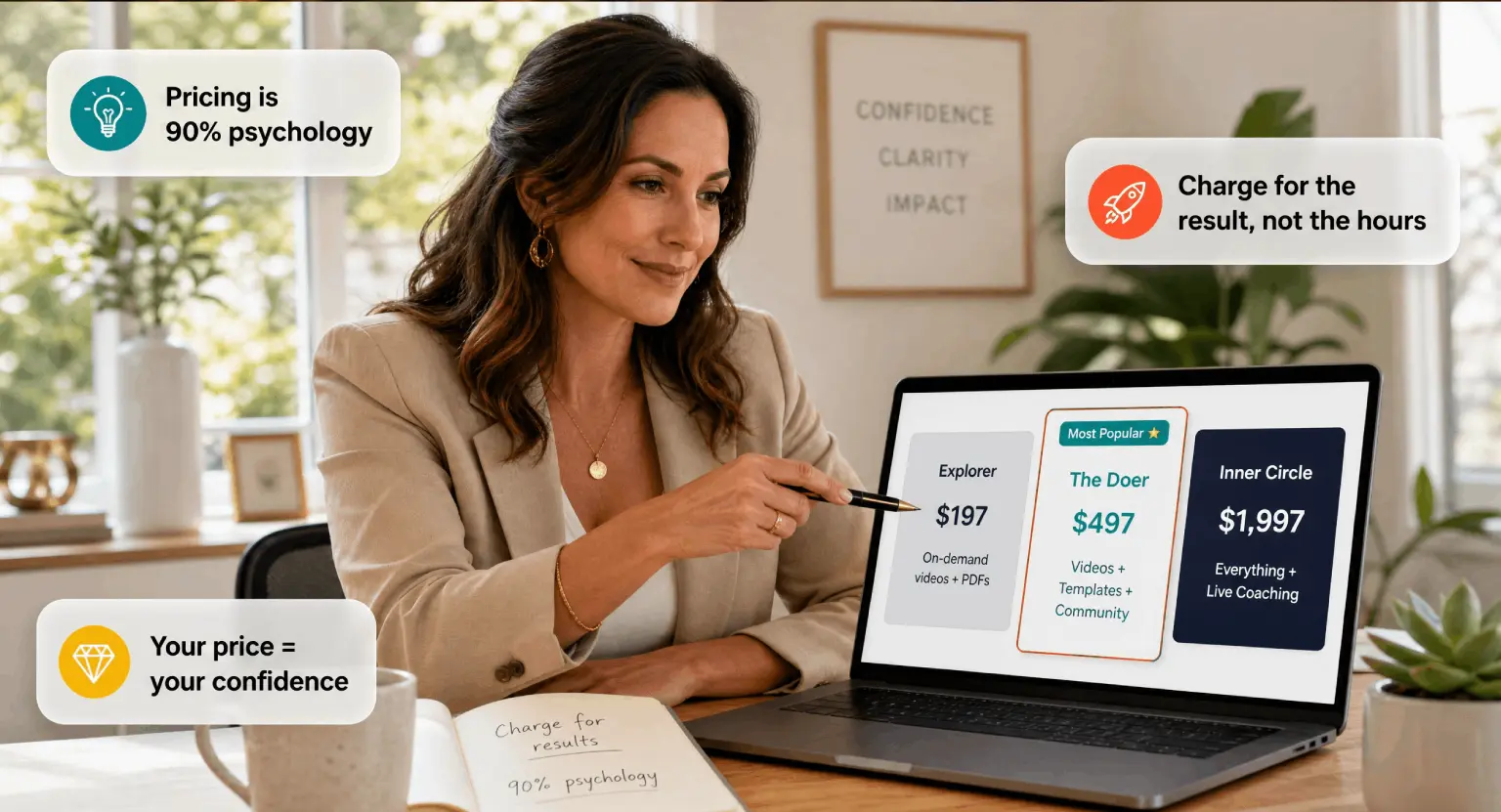
Pricing is easily the place where most beginner teachers get stuck. They ask, "Should I charge ten dollars or one hundred dollars?"
And sadly, many choose the lowest possible price point because they suffer from imposter syndrome. They assume no one will pay real money for what they know.
But here is a foundational truth about human behavior : people simply do not value things that are dirt cheap - if someone registers for a training program that only costs five bucks, they almost never block out time to actually watch it.
When they invest five hundred dollars, they show up to every class, they do the exercises, and they experience genuine breakthroughs.
So, do not fight to be the cheapest option in your space - instead, price your offering based on the size of the transformation you deliver.
If your instruction teaches an accountant how to save forty hours a week during tax season, that knowledge is easily worth a thousand dollars.
If you are teaching someone how to play basic chords on a guitar, the price will naturally be lower than business training, but you can still command a premium by offering highly detailed customized weekly feedback.
Make sure to review a proven online course pricing strategy to find the sweet spot that balances customer accessibility with your financial goals.
4. Comparing the Most Popular Online Teaching Models
To help you decide which career path fits your personal lifestyle and revenue goals, let's look at how these common setups match up against each other.
| Teaching model | Income potential | Time commitment | Best delivery path |
|---|---|---|---|
|
Self-paced courses |
High (scalable, passive once finished). |
High initial setup, low weekly maintenance. |
Requires selecting the best online course platforms to host files securely. |
|
Live cohorts |
Very high (premium ticket pricing). |
High (must be live during class hours). |
Requires live call tools combined with a structured community portal. |
|
1-on-1 consulting |
Medium to high (hourly capacity limited). |
Extremely high (tied to hours worked). |
A simple payment link and calendar integration works best. |
|
Monthly memberships |
Very high (predictable MRR). |
Medium (constant fresh content updates). |
A unified membership platform is ideal. |
|
Mini-tutorial assets |
Low to medium (high volume needed). |
Very low (simple PDF guides or audio templates). |
Perfect if you are exploring how to sell digital products for fast wins. |
5. Building Your Audience Without Buying Expensive Ads
You can have an absolutely beautiful curriculum, but if your launch is met with total silence, you won't make a dime… So, how do you find real buyers?
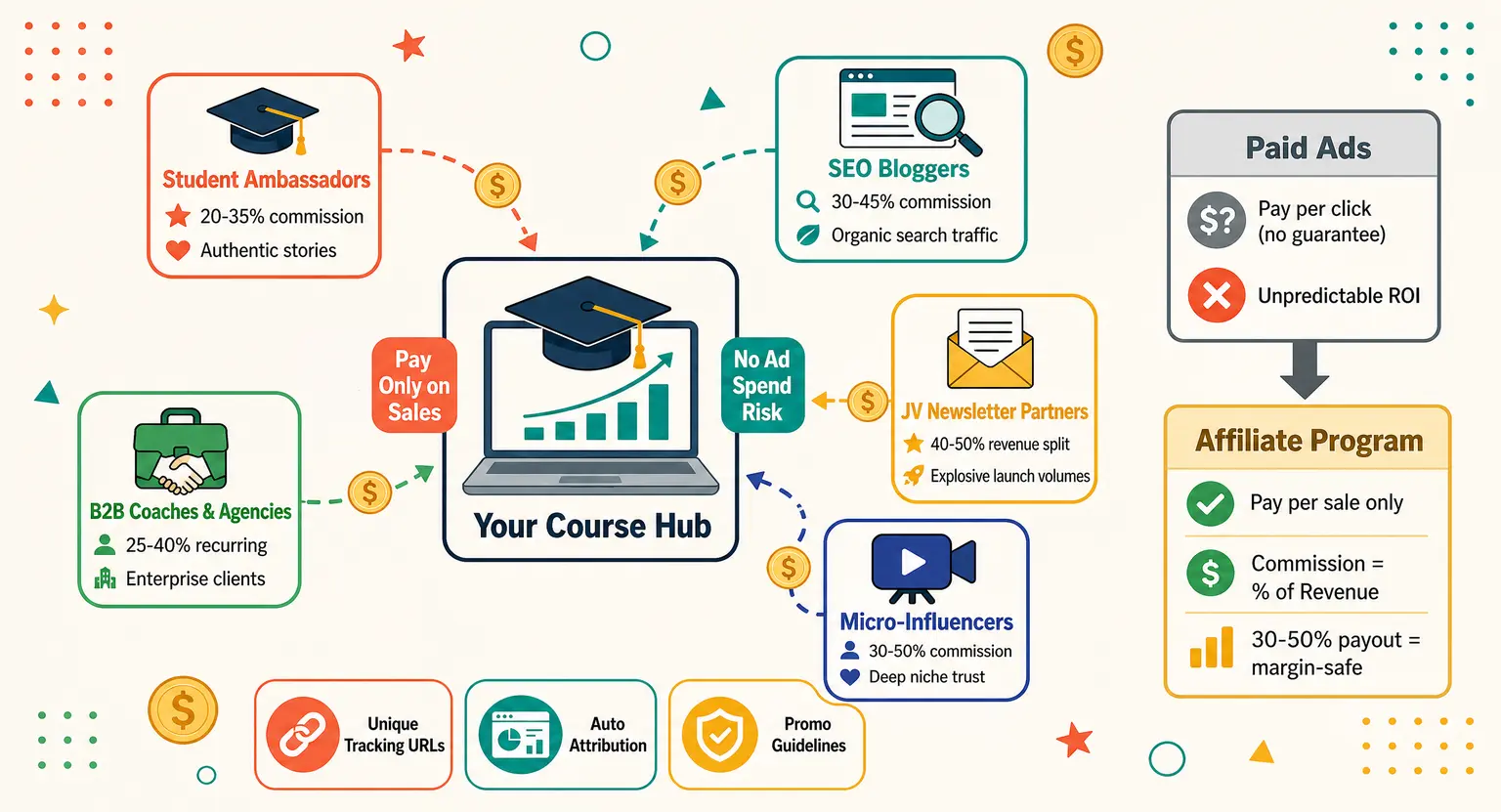
Don't rely purely on paid ads. They require massive testing budgets and eat through your savings fast before your messaging is refined.
Instead, focus on organic trust-building.
There is simply no better way to build massive trust than by sharing practical, actionable advice completely for free - you can start by answering questions inside active industry communities, posting short lessons on professional platforms like LinkedIn, or compiling breakdowns of complex issues in your field.
And don't let those visitors just walk away. You always want to invite your readers onto an email list. This list is the ultimate protective shield for your educational business.
Spend time understanding how to grow an email list using simple lead magnets - like a free checklist or a quick template, from there, you can nurture them with highly valuable emails and pitch your classes naturally.
This simple strategy turns cold website browsers into enthusiastic hot leads who appreciate your perspective. Over time, that compounding trust becomes your strongest competitive moat.
6. Setting Up Your Infrastructure (Keep it Clean and Unified)
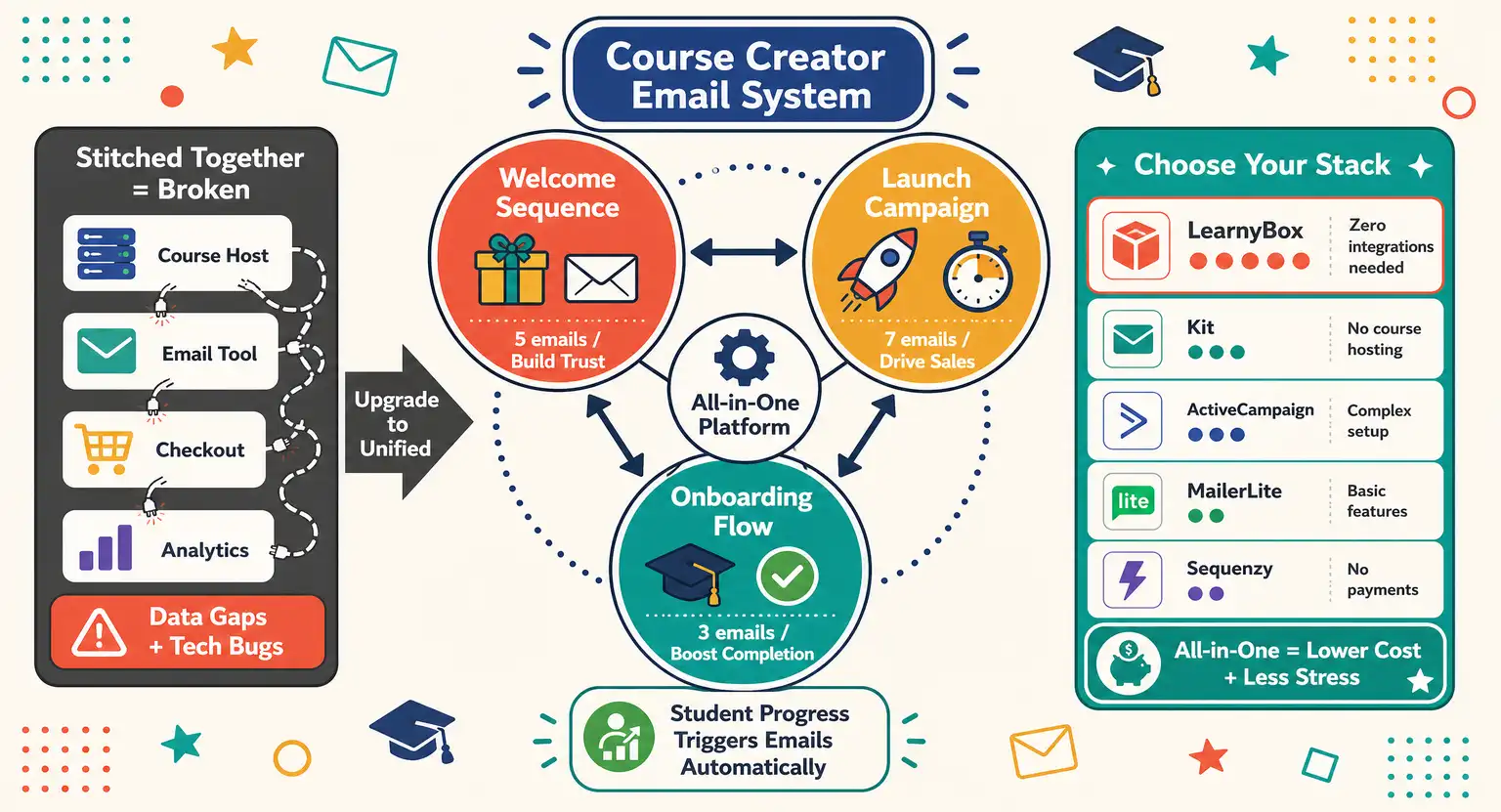
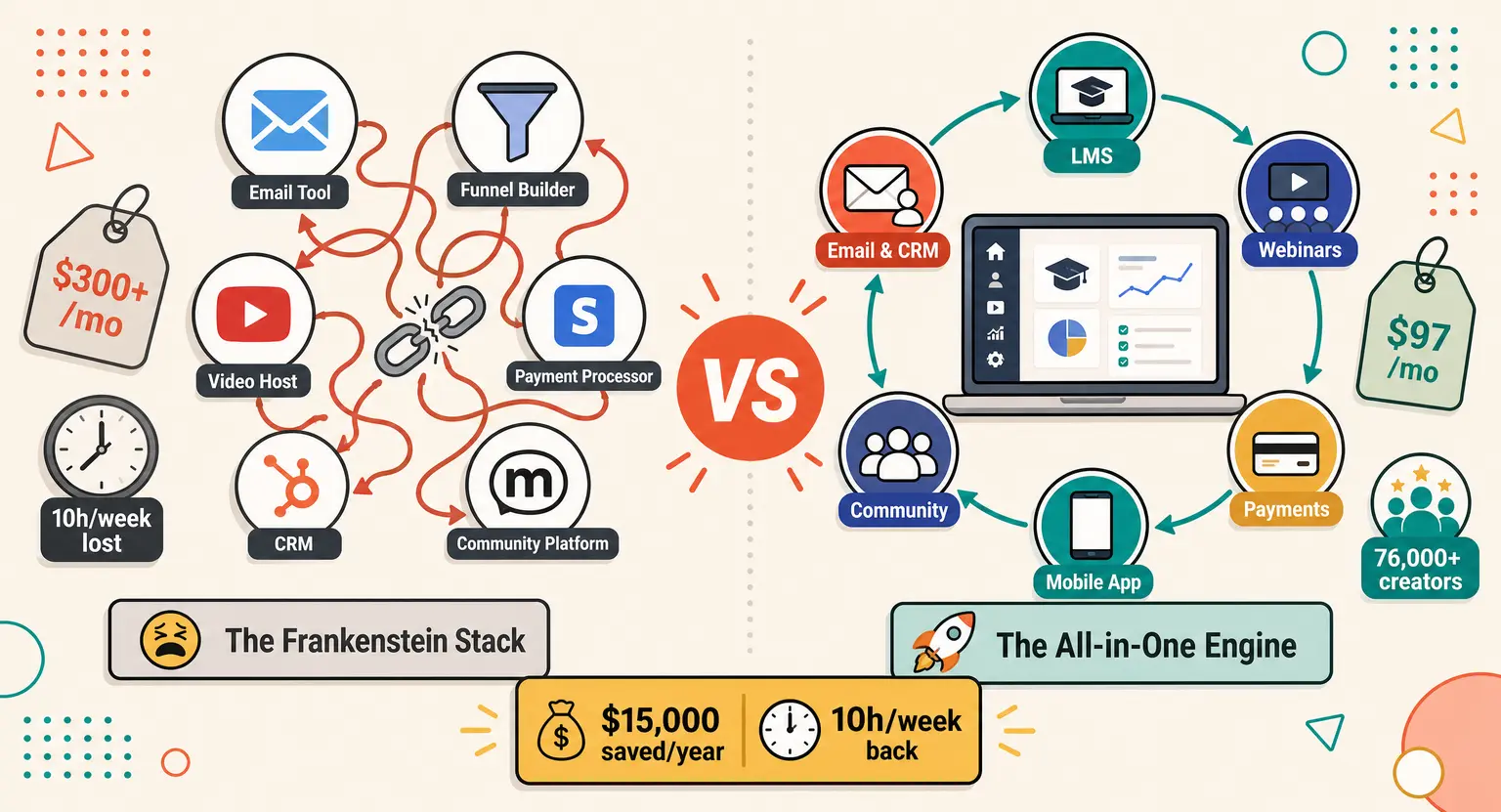
Many educators get paralyzed trying to connect five different software tools : one for payments, one for emails, one for video hosting, another for landing pages, and another for student community chat…
This is a recipe for a massive, broken digital mess. And when one system updates, the other four often break down.
To keep your sanity and protect your margins, look for systems that bring all of these operations under one roof. When payments, emails, and curriculum live in the same place, everything runs smoothly.
Using an all-in-one platform to sell online courses ensures that students receive their login credentials instantly upon payment, allowing you to focus on teaching rather than technical integration.
This means you aren't hunting down missing links, worrying about security certificates, or manually troubleshooting credit card checkout bugs at midnight on a Tuesday when you should be sleeping.
7. Your Roadmap to Launching Your First Offer
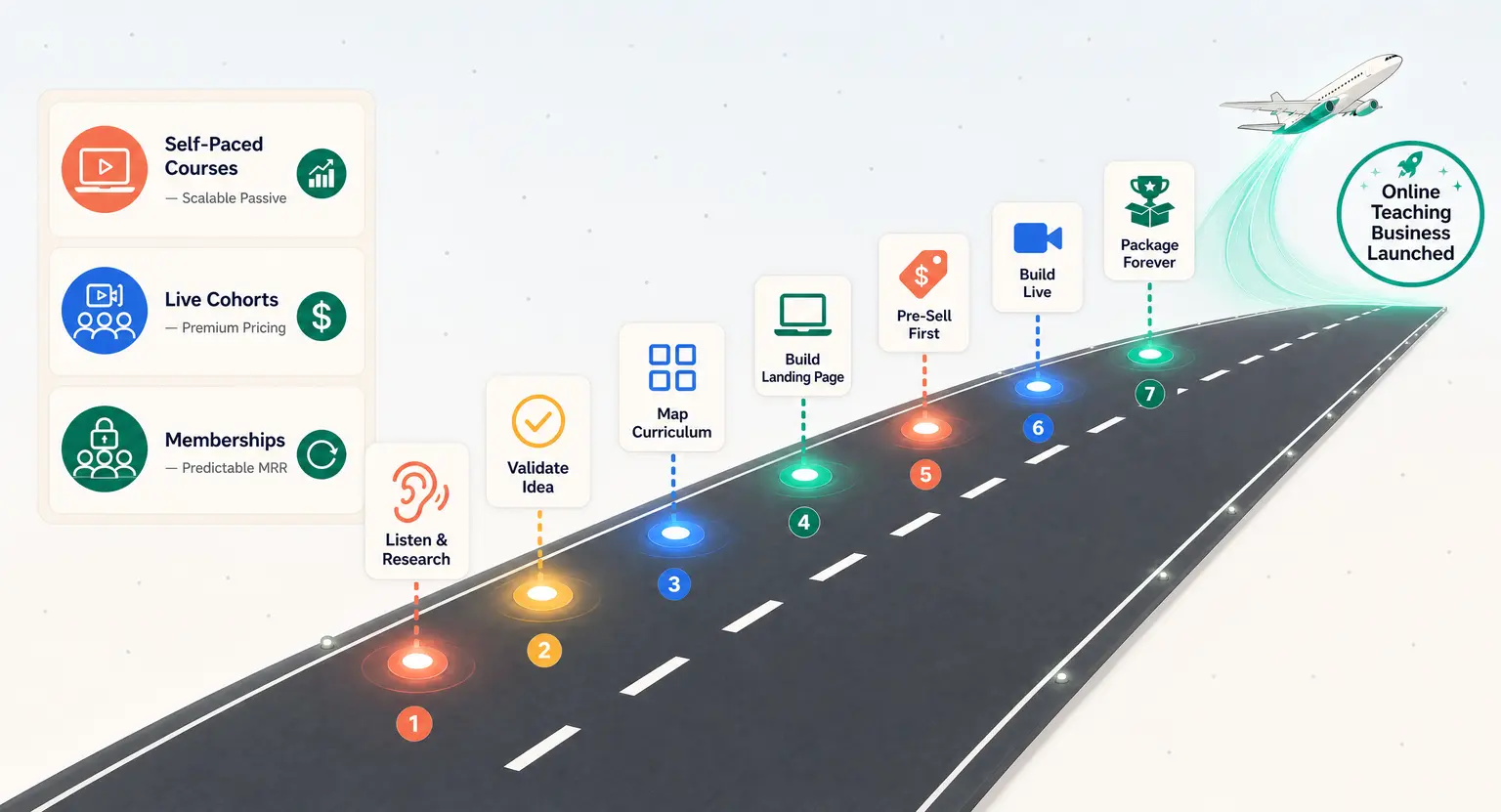
Let's simplify everything down into a realistic, actionable plan. If you want to go from absolute ground zero to a profitable launch, here is the basic workflow you should follow :
-
Step 1 : conduct human listening.
Spend a week looking through community comment sections to find where people are hitting roadblocks. -
Step 2 : define your core result.
Write down a single, clear outcome your program delivers. -
Step 3 : map out your curriculum.
Write a quick skeleton of your lessons. Keep lessons under ten minutes. -
Step 4 : create a basic registration page.
Put up a clean landing page explaining what students will learn. -
Step 5 : pre-sell your program.
Offer a special introductory rate to your early group of students before you build the content.
Once you secure your very first handful of passionate buyers, build the entire program live with them, record each session as you go, and then package those recordings neatly into a premium evergreen offer for future buyers.
That is the ultimate secret : get paid to build your program, then sell the package forever.
Explore Further & Expand Your Knowledge
If you are eager to accelerate your journey as a professional online educator, make sure to read these deep guides from our library :
-
Ready to launch? Learn how to structure and launch your program step-by-step by reading how to launch an online course.
-
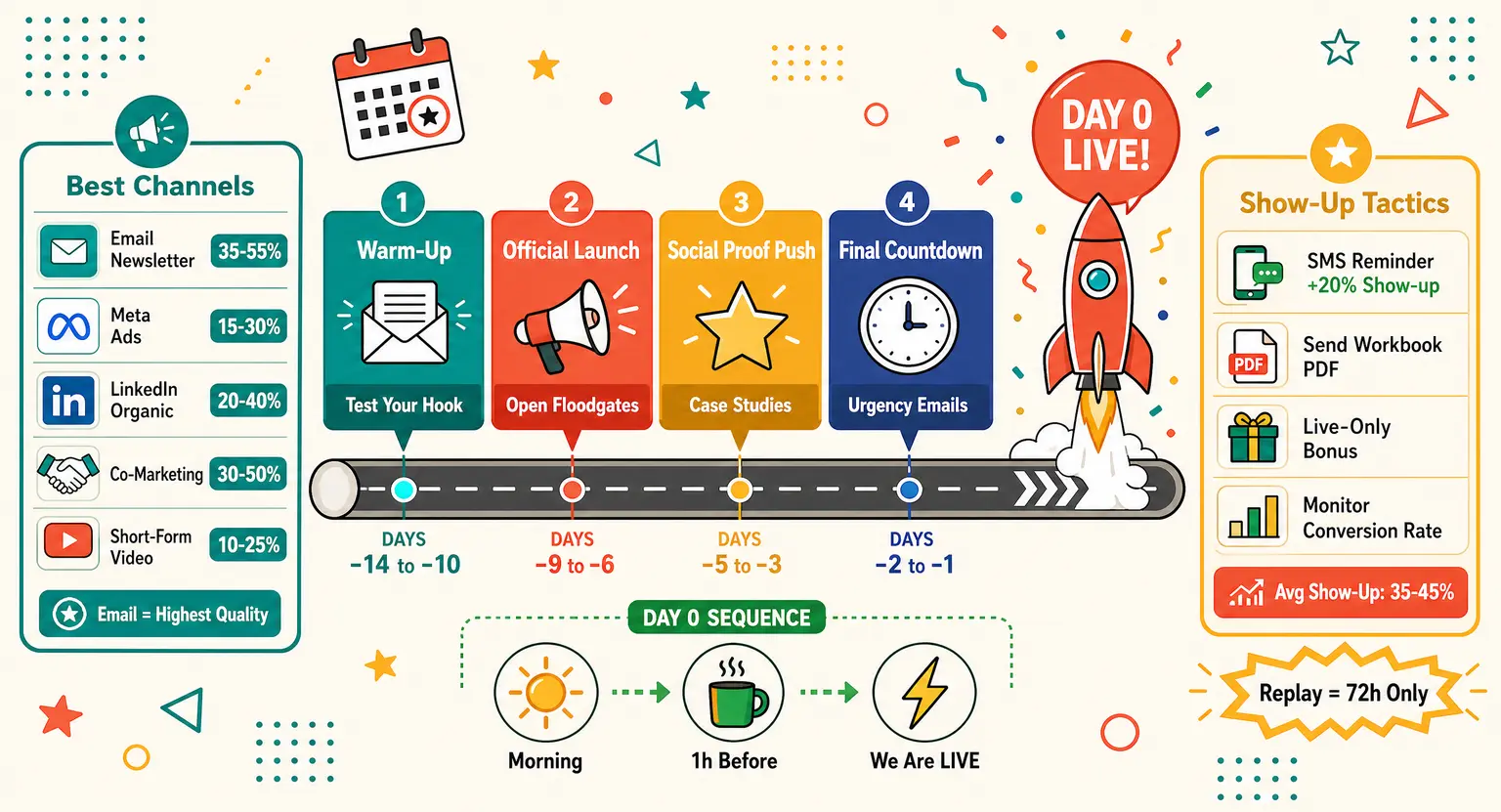
Want to generate massive interest quickly? Discover our guide on how to organize a successful webinar.
-
Still looking for your topic? Browse our curated guide on profitable online course ideas for expert niches.
Frequently Asked Questions About Teaching Online
How much money can you actually make teaching online?
Your earnings depend on your business model.
Marketplace tutors make $15 to $50 hourly, while creators selling premium cohort programs or self-paced courses often generate thousands of dollars monthly, reaching six-figure annual revenues once they establish direct sales.
Do I need a formal teaching degree to teach online?
No, formal credentials aren't required. While degrees help for corporate or academic spaces, private student audiences care far more about your real-world experience, proof of results, and your ability to explain complex concepts cleanly.
What equipment is absolutely necessary to get started?
You only need a standard laptop, a high-quality USB microphone, a 1080p webcam, and a quiet, bright room. Clear audio matters far more than camera video quality when welcoming your first group of learners.
Should I sell on a marketplace or use my own website?
Marketplaces can help you get early visibility but they take massive cuts of your revenue and restrict access to student data.
Running your own dedicated training website lets you control your pricing, build direct customer relationships, and keep nearly all of your hard-earned profits.
How can I find my very first paying students?
Start by identifying micro-communities on professional forums, LinkedIn, or specialized subreddits.
Offer massive value upfront through free resources, mini-trainings, or short webinars, and then naturally invite the most interested people to join your comprehensive paid program.




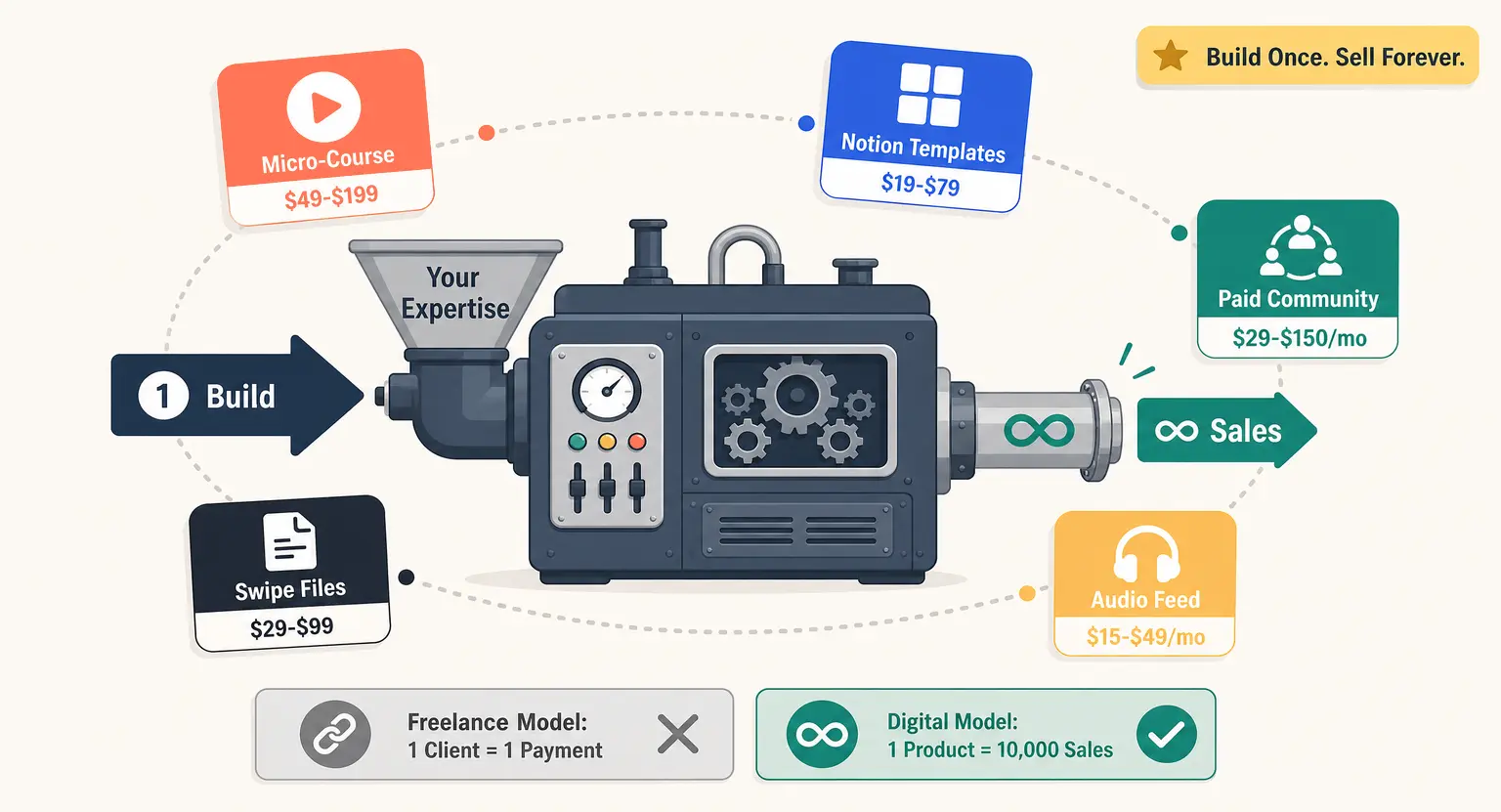 Digital Product Ideas: The Ultimate Blueprint for Modern Creators
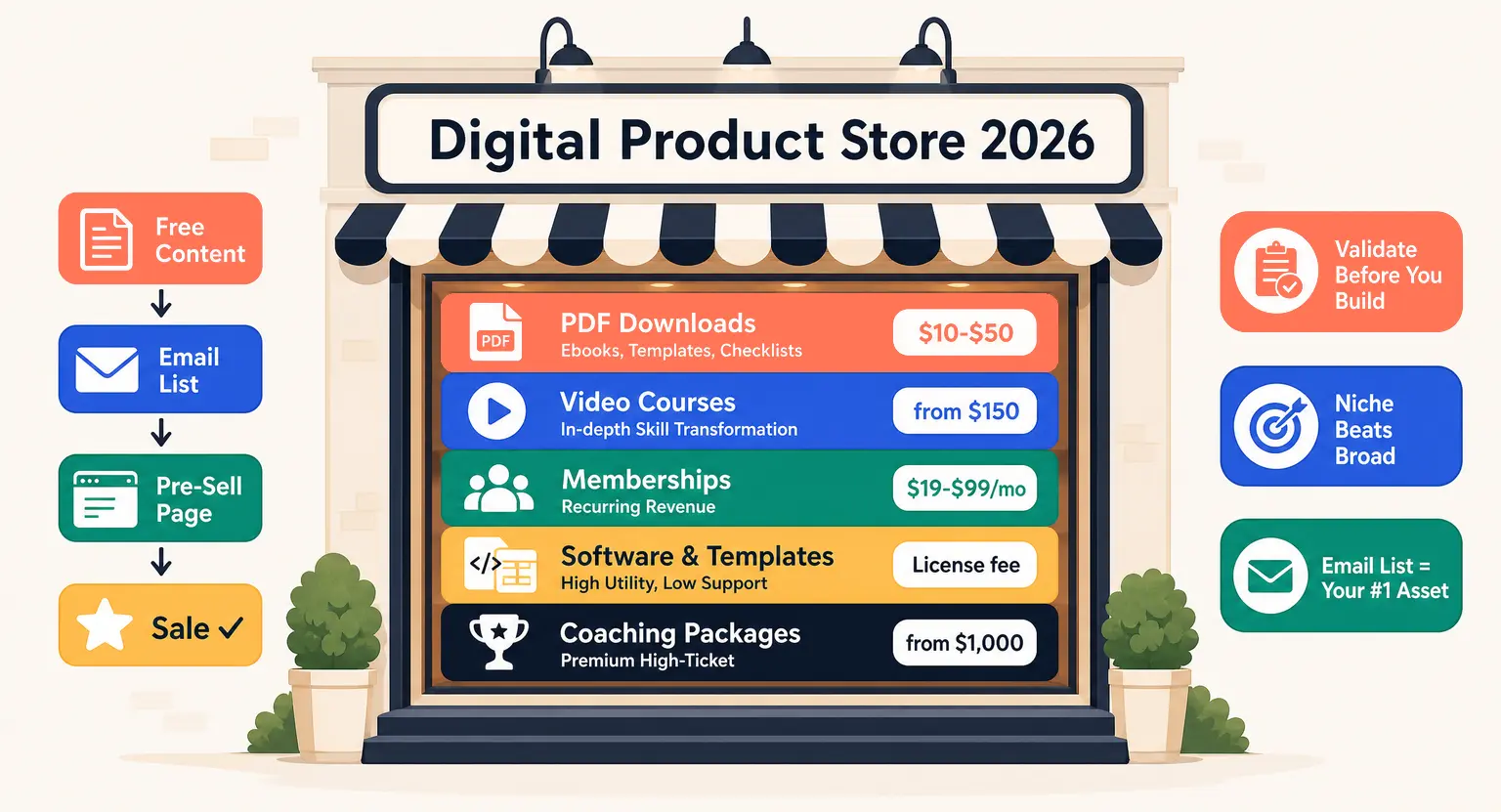 How to Sell Digital Products in 2026: The Complete Step-by-Step Creator Strategy
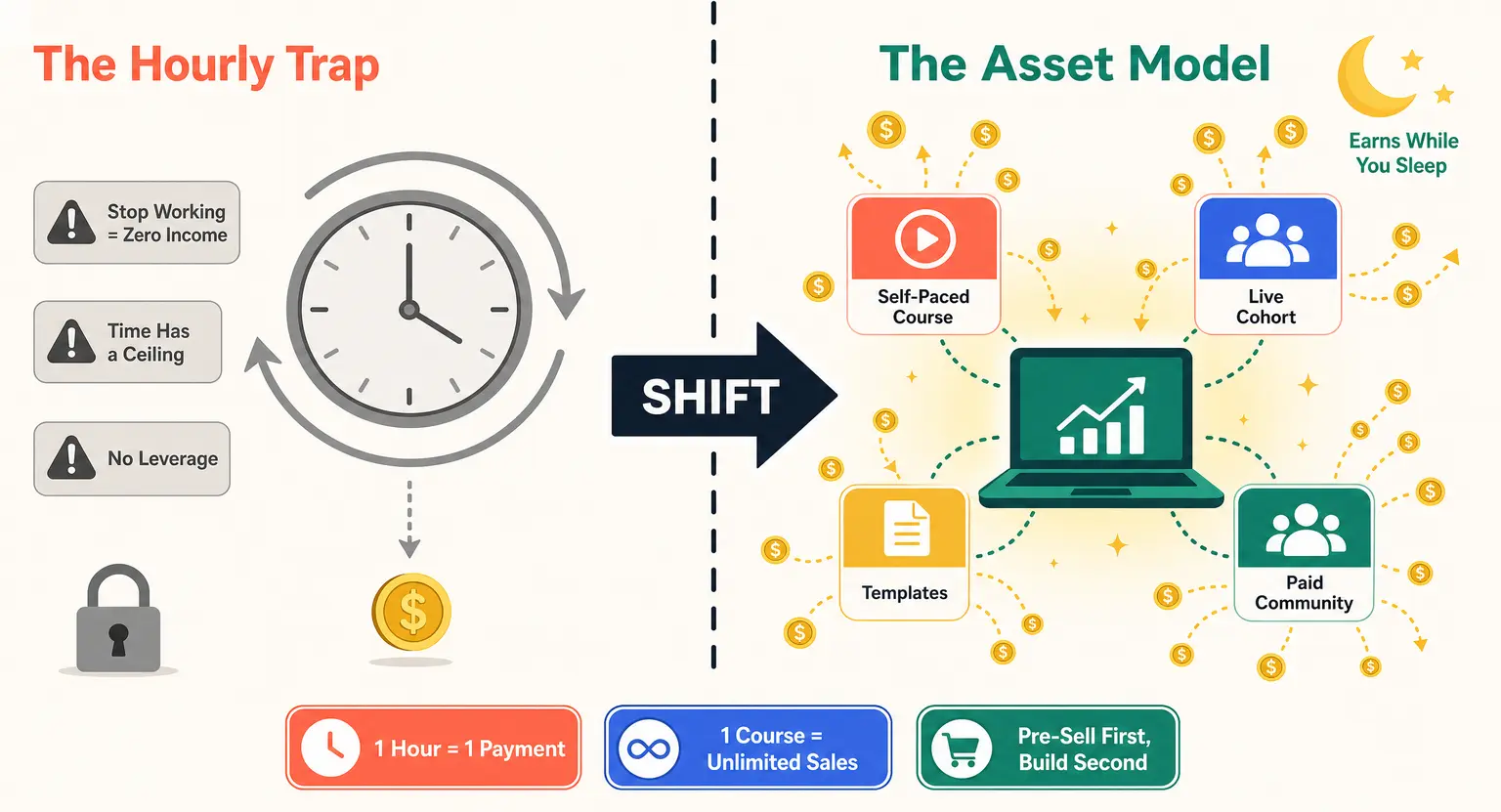 How to Monetize Your Knowledge: Step-by-Step Guide for 2026
 Affiliate Marketing for Beginners: Complete 2026 Blueprint