







How to Manage Cash Flow When Selling Online Courses (2026 Guide)
How to Manage Cash Flow When Selling Online Courses
Key Takeaways
-
Separate cash spikes from operational income to eliminate the feast-or-famine trap.
-
Use a percentage-based bank account distribution system to reserve money for taxes, refunds, and payroll automatically.
-
Understand the real cost of student payment plan defaults by factoring in a 10% to 15% drop-off rate when calculating your course break-even point.
-
Layer evergreen funnels, corporate training deals, and recurring community tiers to maintain baseline liquidity year-round.
Most course creators do not run out of passion or great ideas. They run out of money. And ironically, running out of money frequently happens right after a record-breaking launch.
You work for three months, open the doors, and collect $60,000 in two weeks. It feels incredible.
You pay off lingering bills, invest in fancy gear, boost your software tier, and take a well-deserved vacation. But three months later, ad costs come due, recurring software fees pile up, quarterly taxes hit, and the bank account looks alarmingly dry.
Managing cash flow in the knowledge commerce world is fundamentally different from managing a standard retail shop or a local service business.
Your revenue lands in volatile bursts, while your operating costs and living expenses tick upward every single day.
Let's look at how successful creators build bulletproof financial systems to stay profitable every single month of the year.
The Feast-or-Famine Trap of Course Launches
The traditional course launch model is built around excitement and scarcity. You build an audience, run a challenge or webinar series, open cart for five days, and bring in a massive lump sum.
While that spike feels like pure profit, it represents deferred revenue that has to sustain your business for months to come.
When you look at your Stripe or PayPal dashboard after a launch, you are not looking at your disposable income.
You are looking at the gross cash needed to cover customer onboarding, student support, refund windows, software overhead, marketing acquisition debt, and your own salary until the next launch.
Rather than riding the emotional high of every launch cycle, treat your revenue as working capital that must be metered out evenly. This mindset shift changes how you look at every dollar that enters your checkout system.
Building a Percentage-Based Reserve and Allocation System
If all your revenue sits in one single business checking account, your brain plays tricks on you. You glance at the total balance, assume you have plenty of room to spend, and make undisciplined purchasing decisions.
A proven method to counter this is setting up a multi-account allocation system.
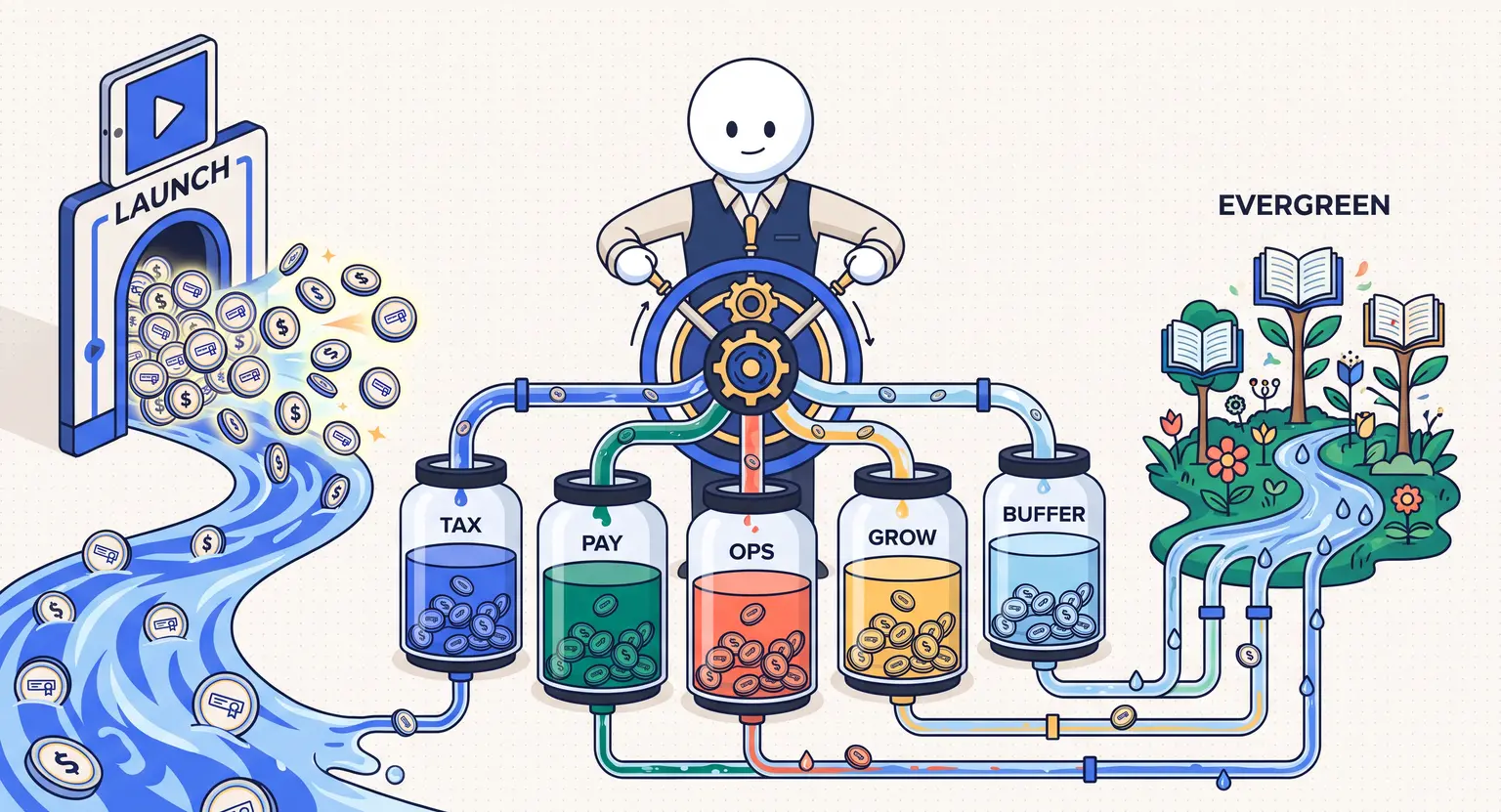
Every time customer payments clear, automatically distribute that money into dedicated accounts based on predetermined percentages :
-
Tax reserve (25% - 30%) : never touch this money for operating expenses. Move it into an account at a separate bank so you are never tempted to borrow from your future tax bill.
-
Owner pay & baseline draw (30% - 40%) : pay yourself a steady, predictable salary on the 1st and 15th of every month, regardless of whether you made $2,000 or $50,000 that week.
-
Operating expenses & software (15% - 20%) : cover your hosting, email software, learning platform, video hosting, and contractor wages.
-
Growth & paid acquisition (10% - 15%) : funnel money into audience testing, paid traffic experiments, and content production.
-
Refund & buffer vault (5% - 10%) : keep an emergency cushion for chargebacks, unexpected platform fees, and student refunds during promotional guarantees.
So when a $40,000 launch happens, you do not double your personal spending. You feed these buckets systematically.
Your personal income remains stable, your taxes are already paid for, and your business retains the runway it needs to operate smoothly.
Smoothing Volatility by Balancing Launch and Evergreen Revenue
Relying solely on two or three massive launches a year is inherently risky. If an algorithm update hurts your launch week reach, or an email deliverability glitch tanks your webinar attendance, half your annual revenue vanishes overnight.
Smart creators combine big promotional moments with automated, day-to-day conversion engines. Finding the right balance between a launch vs evergreen course model allows you to collect baseline cash every day while still capitalizing on the momentum of quarterly events.
An evergreen funnel brings in daily cash that covers your recurring baseline costs. This takes the immense psychological pressure off your major launches.
When a launch does occur, the resulting windfall becomes a bonus pool for reinvestment, business savings, and long-term profit distributions rather than survival cash.
Accounting for Payment Plans, Churn, and Float
Offering split payments (such as 3 payments of $199 instead of $499 upfront) is one of the easiest ways to lift total checkout conversions. But from a cash flow perspective, payment plans introduce distinct hidden costs that you must anticipate.
First, payment plans delay your cash collection. You spend full acquisition dollars on ads today, but you collect the revenue over 60 to 90 days. If your ad spend burns your cash reserves faster than the installments arrive, you run into an immediate liquidity shortage.
Second, failed payments and credit card expirations are a reality of selling digital products.
Across the online education industry, payment plan default rates typically land between 8% and 20%.
To keep your cash flow accurate, apply an automatic 15% "haircut" to your projected installment receivables.
Track your involuntary churn closely, implement automated dunning emails to recover failed cards, and incentivize upfront annual or one-time payments with compelling bonuses.
| Revenue / cash flow lever | Cash flow impact | Primary risk | Best management practice |
|---|---|---|---|
|
Pay-in-full discounts |
Immediate upfront liquidity; zero default risk. |
Slightly lower total lifetime revenue per student. |
Offer exclusive bonuses to make upfront payments irresistible. |
|
Multi-month payment plans |
Predictable recurring income over 3-6 months. |
10%-20% default rate on later installments. |
Use automated dunning sequences through a reliable processor like LearnyPay. |
|
Monthly membership add-ons |
Steady baseline recurring revenue (MRR). |
Member burnout, high community churn rates. |
Transition course graduates into recurring revenue business models with ongoing coaching. |
|
B2B team & group licensing |
Large, immediate 4-figure or 5-figure cash injections. |
Long sales cycles and custom procurement terms. |
Package turn-key seat tiers by selling bulk online course access to corporate clients. |
|
Paid ad spend scaling |
High top-of-funnel volume and rapid lead generation. |
Negative cash flow if payback period exceeds 30 days. |
Cap ad budget at 20% of previous month collected cash. |
Controlling Operating Expenses and Tool Sprawl
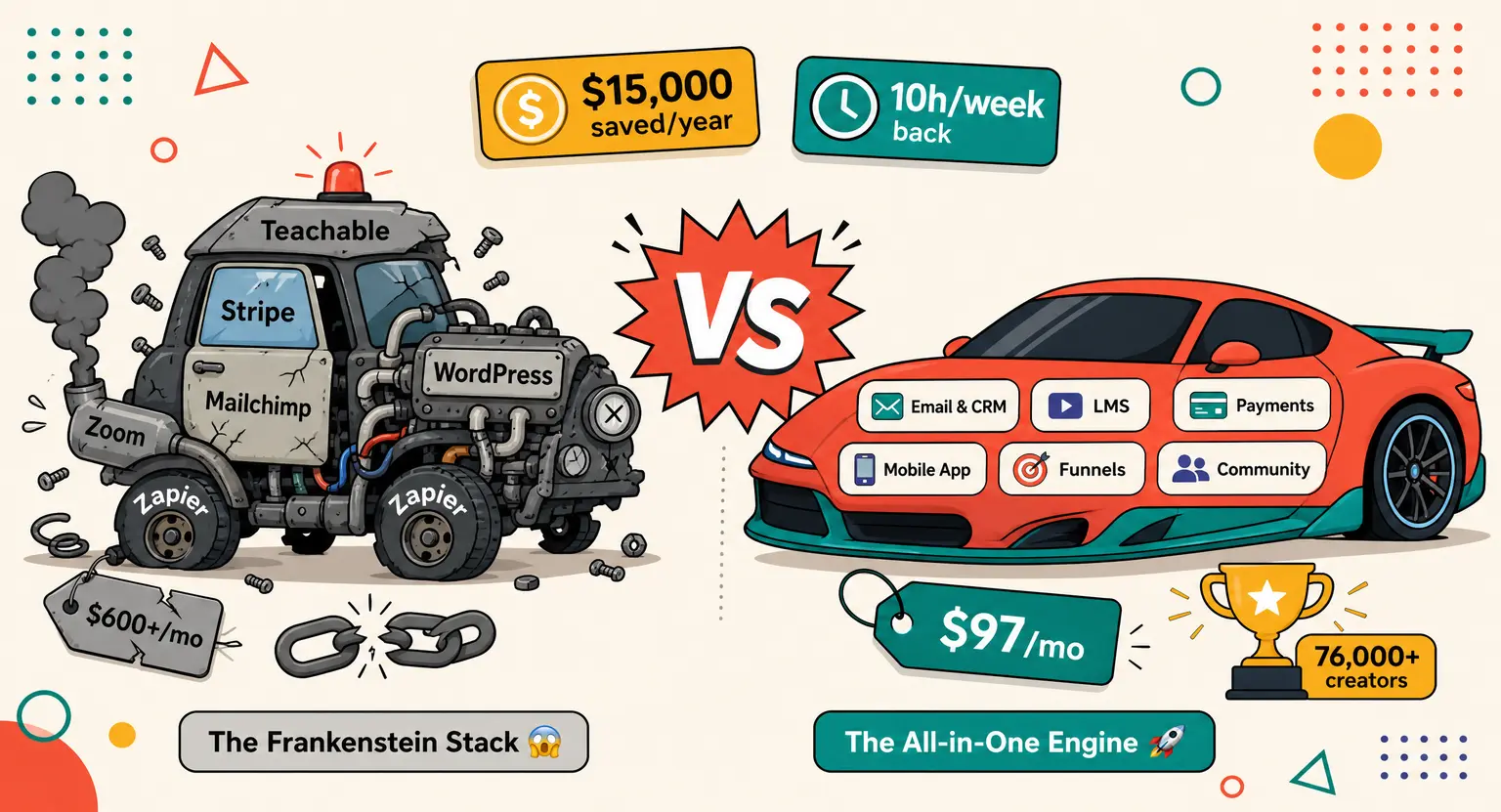
When revenue is flowing, it is easy to accumulate dozens of software tools. You subscribe to a video host, a separate community tool, an email marketing platform, an automation bridge, a funnel builder, and individual analytics plugins.
Before you realize it, your monthly fixed baseline overhead balloons to $1,500 or $2,000 every single month before you have earned a dime. In lean months, this software overhead suffocates your cash reserves.
Audit your tech stack quarterly. Consolidating your hosting, course delivery, checkout system, and email workflows into a unified ecosystem dramatically cuts overhead.
Every recurring hundred-dollar bill you remove from your fixed expenses directly lowers your monthly break-even threshold and protects your liquid cash.
Managing Refund Windows and Chargeback Protection
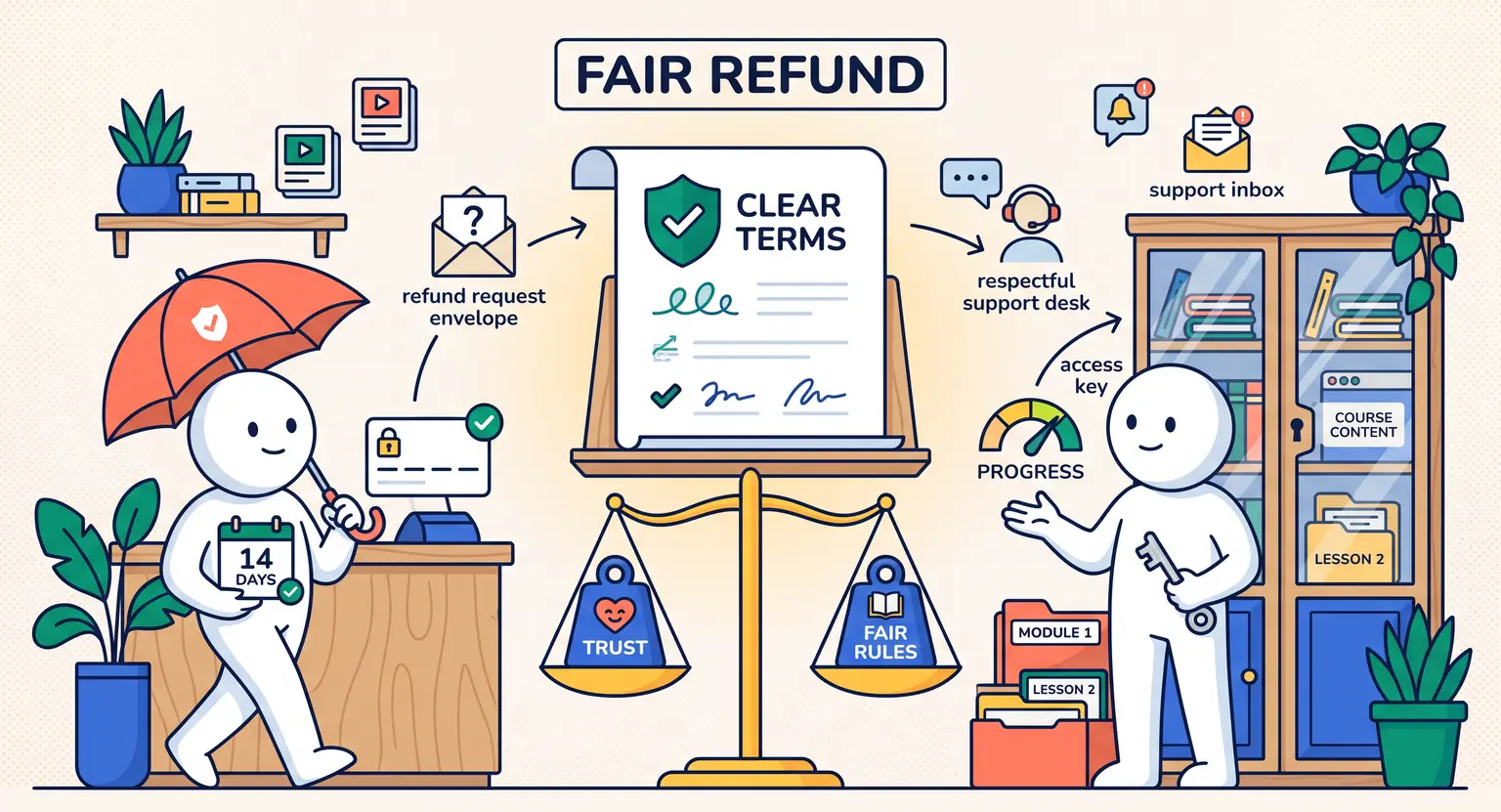
A liberal 30-day money-back guarantee is great for converting hesitant buyers. But if you spend the incoming revenue on day five, a cluster of refunds in week three will throw your bank balance into the red.
Always maintain a strict refund buffer account. If you make $30,000 during a promotion with a 30-day guarantee, set aside $3,000 (10%) in your buffer account. Do not touch or transfer those funds until day 31.
And keep detailed records of student progress inside your learning platform.
If an unreasonable student initiates an unjustified credit card chargeback, having timestamped login logs, lesson completion percentages, and download history is your best defense to dispute the charge and protect your merchant standing.
Diversifying Income Streams for Cash Resilience
Single-product businesses are vulnerable businesses. If your entire income depends on one course, any drop in demand hits your personal bank account instantly. Look for logical ways to diversify your cash flow horizontally :
-
Downsells and mini-courses : offer an entry-level $37 or $97 self-study module for leads who cannot afford your $800 signature program.
-
High-ticket VIP tiers : bundle 1-on-1 strategy sessions, personalized course audits, or private Slack access for an extra $1,000 to $2,500. Just two VIP buyers can fund your entire tool stack for a year.
-
Corporate seat packages : sell team licenses directly to businesses that have training budgets and can pay upfront via electronic transfer or invoice.
-
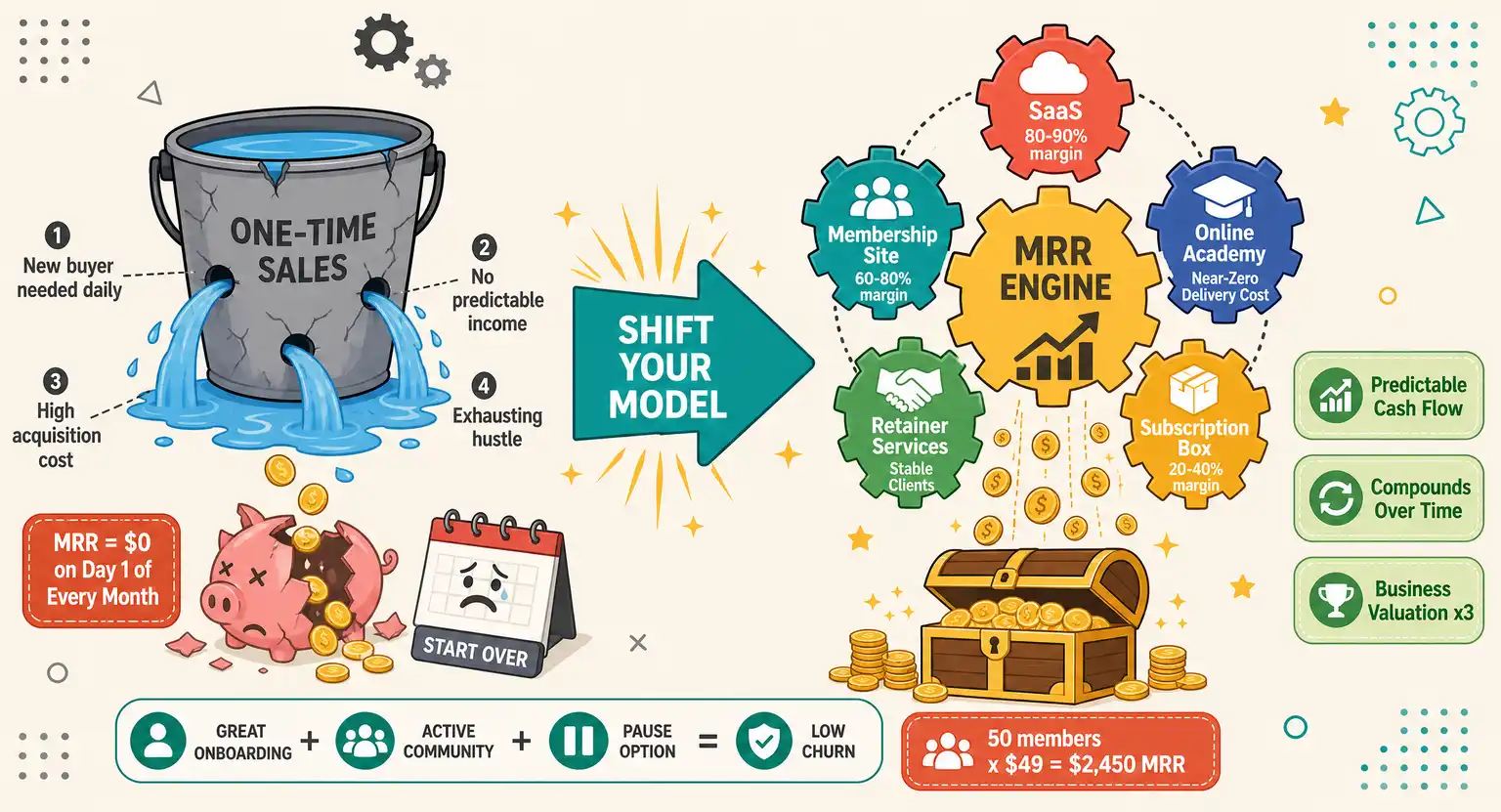
Continuity masterminds : give your course graduates an option to stay connected through a paid monthly mastermind group once their core curriculum ends.
Explore Further Resources
-
Refine your pricing structure with our complete online course pricing strategy framework.
-
Acquire students sustainably without draining cash using proven tips for paid ads for online courses.
-
Build cash-flow positive lead funnels with a tripwire funnel explained step-by-step.
-
Draft high-converting launch sequences using this pre-built email sequence for a course launch.
-
Consolidate your tools, checkout, and course delivery using an all-in-one platform to sell online courses.
Practical Financial Hygiene Habits for Course Creators
Cash flow management is not a task you do once a year during tax season. It is an ongoing rhythm that should become second nature to how you run your digital academy.
Block out 30 minutes every Friday for a financial checkup.
Check your merchant accounts, reconcile your pending payouts, track your weekly refund percentage, and verify that installment payments are clearing without issues.
Review upcoming contractor invoices and software renewals so nothing catches you off guard.
When you actively watch your numbers, you spot cash leaks before they turn into emergencies.
You will know exactly when you can afford to hire help, when you can scale your marketing, and how much money you can safely withdraw as owner profit without putting your operations in jeopardy.
Frequently Asked Questions
How much cash reserve should an online course creator maintain?
Aim for a minimum of three to six months of fixed operating expenses plus your personal baseline draw.
If your business model relies heavily on periodic big launches, keep up to nine months of baseline expenses in liquid reserves to survive dry spells.
How do payment plans affect monthly cash flow compared to upfront payments?
Payment plans increase initial checkout conversions by lowering the barrier to entry, producing steady recurring income over several months.
However, they carry an average default rate of 10% to 20%, which means you should always build an offset cushion into your projections.
What is the best way to handle student refund reserves?
Hold 5% to 10% of total revenue from every launch or monthly batch in a dedicated sub-account during your refund window (typically 14 to 30 days).
Do not treat that money as earned income until the guarantee period expires.
Can tax deductions help improve annual creator cash flow?
Yes, tracking legitimate write-offs like software, recording hardware, ad costs, and home office expenses through proper tax deductions for course creators significantly lowers your taxable income, preserving substantial liquid capital at tax time.
How can order bumps and upsells stabilize immediate cash inflow?
Adding high-margin order bumps and checkout upsells using proven upsell and order bump strategies raises your average order value right away, offsetting upfront ad acquisition costs and generating immediate positive cash flow before recurring installments begin.






 How to Create a Course Refund Policy (Templates & Best Practices for 2026)
 How to Run a Beta Version of an Online Course (2026 Guide)
 How to Create a Cohort-Based Online Course (2026 Guide)
 How to Sell an Online Course With a Quiz Funnel (2026 Guide)
 How to Sell an Online Course Through a Sales Call (2026 Guide)