







How to Sell Bulk Online Course Access to Companies (2026 Guide)
How to Sell Bulk Online Course Access to Companies
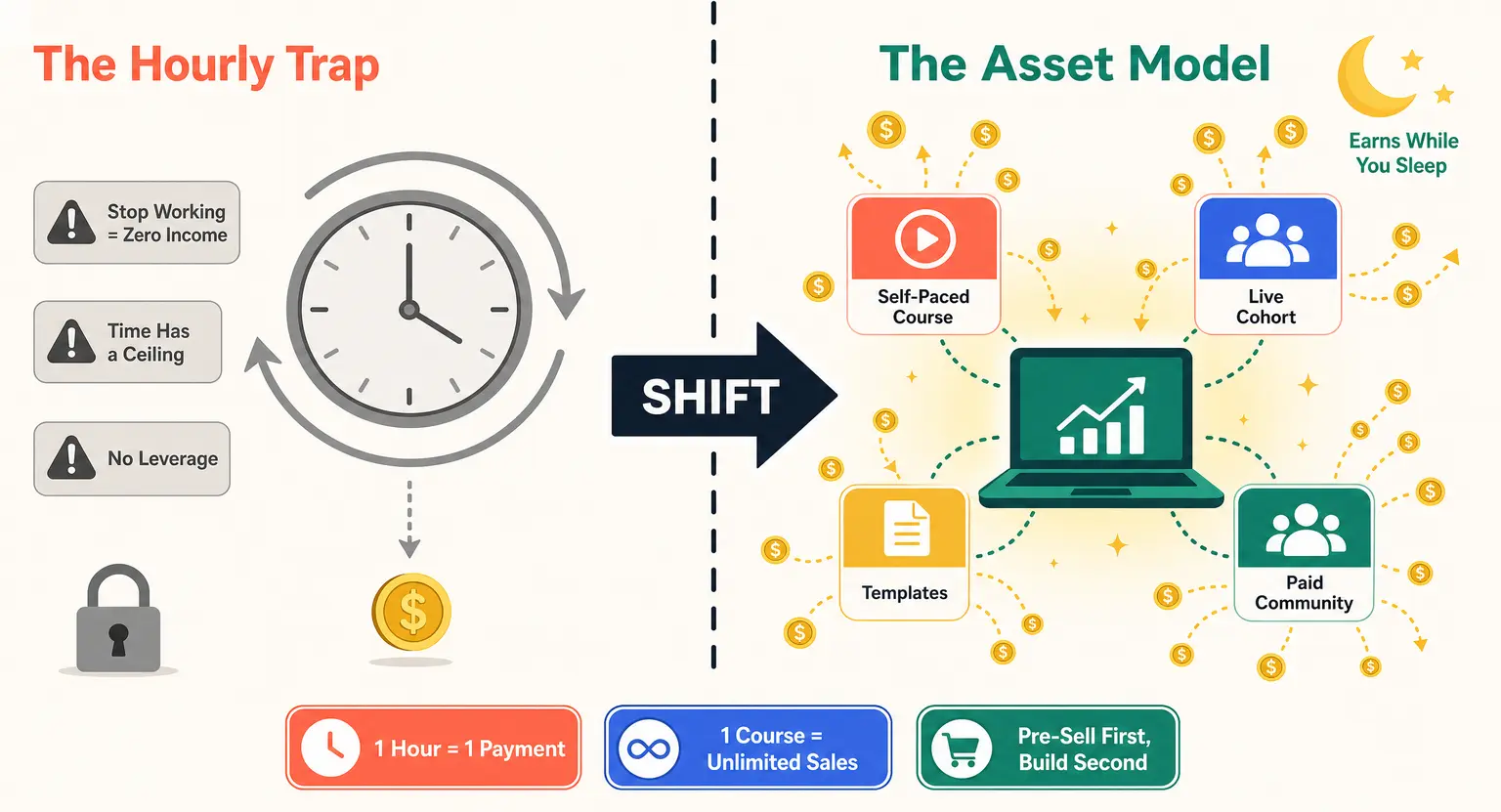
Selling individual courses directly to consumers can feel like a relentless treadmill. You spend weeks building a campaign, paying rising ad costs, and fielding support tickets for single $150 purchases. When the campaign ends, revenue drops to zero until your next big promotion.
That is why savvy educators are shifting their focus to B2B bulk sales. Instead of convincing 50 individual freelancers to pull out their personal credit cards, you pitch one department manager who has an allocated $15,000 professional development budget they must spend before the fiscal quarter ends.
Selling course access in bulk changes your business fundamentals. You get higher average order values, predictable cash flow, lower customer support overhead, and long-term corporate relationships that renew year after year.
Key Takeaways for B2B Course Licensing
-
Target business outcomes : companies do not buy hours of video lessons; they buy employee retention, faster onboarding, reduced compliance risk, and productivity gains.
-
Seat tiers drive volume : use tiered bulk pricing to make buying 50 seats significantly more attractive per learner than buying 10.
-
Protect your margins : corporate contracts create large upfront revenue bursts that help you manage cash flow effectively throughout quiet marketing quarters.
-
Flexible delivery matters : provide multiple technical delivery options, from dedicated cohort portals to modern enterprise LMS pricing packages for large corporate accounts.
Why Companies Buy Online Courses in Bulk
Corporate leaders face a constant battle : skills change faster than traditional university programs can teach them. Building in-house training programs is expensive, slow, and often results in clunky, uninspiring material that employees ignore. When an external expert has already created a world-class training curriculum on a vital topic, buying bulk access is a no-brainer for a smart director.
Companies buy bulk access for three distinct operational reasons :
-
Standardized team capabilities : when an entire team goes through the same frameworks, methodologies, and terminology, collaboration speeds up dramatically.
-
Rapid new-hire onboarding : instead of senior engineers or managers spending 20 hours coaching every new hire, they plug them into your structured modules.
-
Budget utilization : department heads often have dedicated "use-it-or-lose-it" learning and development (L&D) funds that reset annually.
When you understand these buying motives, your sales pitch changes completely. You stop talking about module counts and start talking about time-to-productivity for their new hires.
The 4 Proven Bulk Licensing Models for 2026
There is no one-size-fits-all model for corporate deals. The structure you choose depends on team size, technical sophistication, and how much ongoing support the client needs.
1. Tiered Per-Seat Licensing
This is the most common and intuitive model. The company buys a specific number of access passes (seats) for their staff. The more seats they purchase, the lower the per-seat rate drops. For example, if your retail course costs $500 per person : 5 to 14 seats at $400 per seat (20% discount), 15 to 49 seats at $325 per seat (35% discount), 50 to 99 seats at $250 per seat (50% discount), and 100+ seats at a custom enterprise quote.
2. Annual Departmental Site License
With an annual site license, you grant unlimited access to an entire team, department, or company branch for 12 months for a flat fee. This eliminates seat counting for the manager and provides you with substantial, predictable annual recurring revenue. A business with 120 employees might gladly pay $18,000 per year for company-wide access because it eliminates internal friction over who gets a login and who gets left out.
3. Enterprise Platform Integration (SCORM / SSO)
Large enterprise organizations often refuse to send employees to third-party consumer websites. They want all training hosted inside their central HR dashboard via single sign-on (SSO) or SCORM packages. In this model, you license your course content as exportable files or API-connected modules delivered straight to an enterprise LMS eLearning platform.
4. Hybrid License with Live Corporate Cohorts
Self-paced video alone often struggles with completion rates. You can charge premium corporate rates by pairing bulk video access with live monthly or quarterly Q&A sessions, executive debriefs, or private Slack channels for their managers. Adding two 60-minute live workshops to a 30-seat bulk license can easily turn an $8,000 deal into a $15,000 high-touch corporate package.
How to Identify and Pitch the Right Decision-Maker
Selling to companies requires talking to the person who feels the pain and controls the budget. In consumer sales, your buyer and your student are the same person. In B2B sales, the person signing the contract is rarely the person watching the videos.
Here is who you should reach out to based on company size : for small businesses (10-50 employees), target the Founder, CEO, or Managing Partner. For mid-market companies (50-500 employees), reach Department Heads (VP of Sales, VP of Engineering, Marketing Director). For enterprise (500+ employees), the Chief Learning Officer (CLO), VP of People & Culture, or L&D Directors handle these decisions.
Ditch generic templates. Reference specific challenges the company is facing, such as recent hiring sprees, new tool adoptions, or market expansions. Notice what an effective pitch does : it focuses on cutting ramp time, mentions relevant peer proof, and asks for a micro-commitment rather than a hard sale.
Comparison of B2B Course Delivery & Licensing Models
To help you decide which structure fits your course catalog, review how these licensing strategies compare across key business parameters :
| Licensing model | Typical contract value | Technical setup | Sales cycle length | Best for |
|---|---|---|---|---|
|
Per-seat bundles |
$2,000 - $8,000 |
Basic coupon code or student CSV batch import. |
1 to 3 weeks. |
Boutique teams, startups, fast pilot projects. |
|
Annual site license |
$10,000 - $35,000 |
Branded portal with team analytics manager. |
4 to 8 weeks. |
Companies building recurring revenue models with mid-size accounts. |
|
SCORM / LMS export |
$25,000 - $75,000+ |
SCORM 2004/xAPI packages + SSO setup. |
8 to 16 weeks. |
Large enterprises with strict IT security rules. |
|
Hybrid cohort package |
$15,000 - $45,000 |
Custom portal + live Zoom/webinar room. |
3 to 6 weeks. |
High-impact leadership & tactical execution programs. |
|
Custom white-label |
$30,000 - $100,000+ |
Fully branded academy with company domain. |
10 to 20 weeks. |
Organizations needing a bespoke consultative sales demo. |
Technical Setup : Provisioning Bulk Access Without Headaches
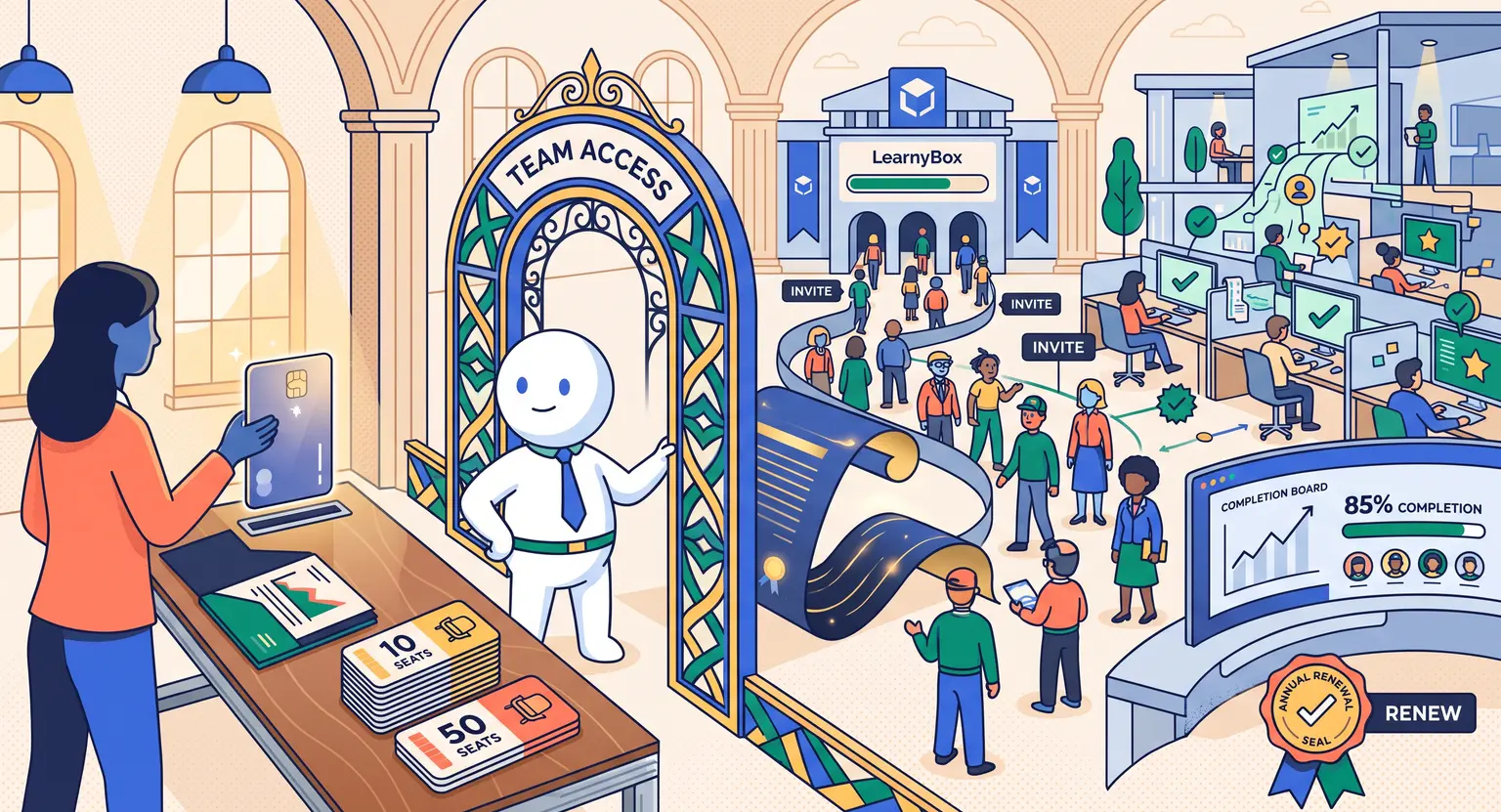
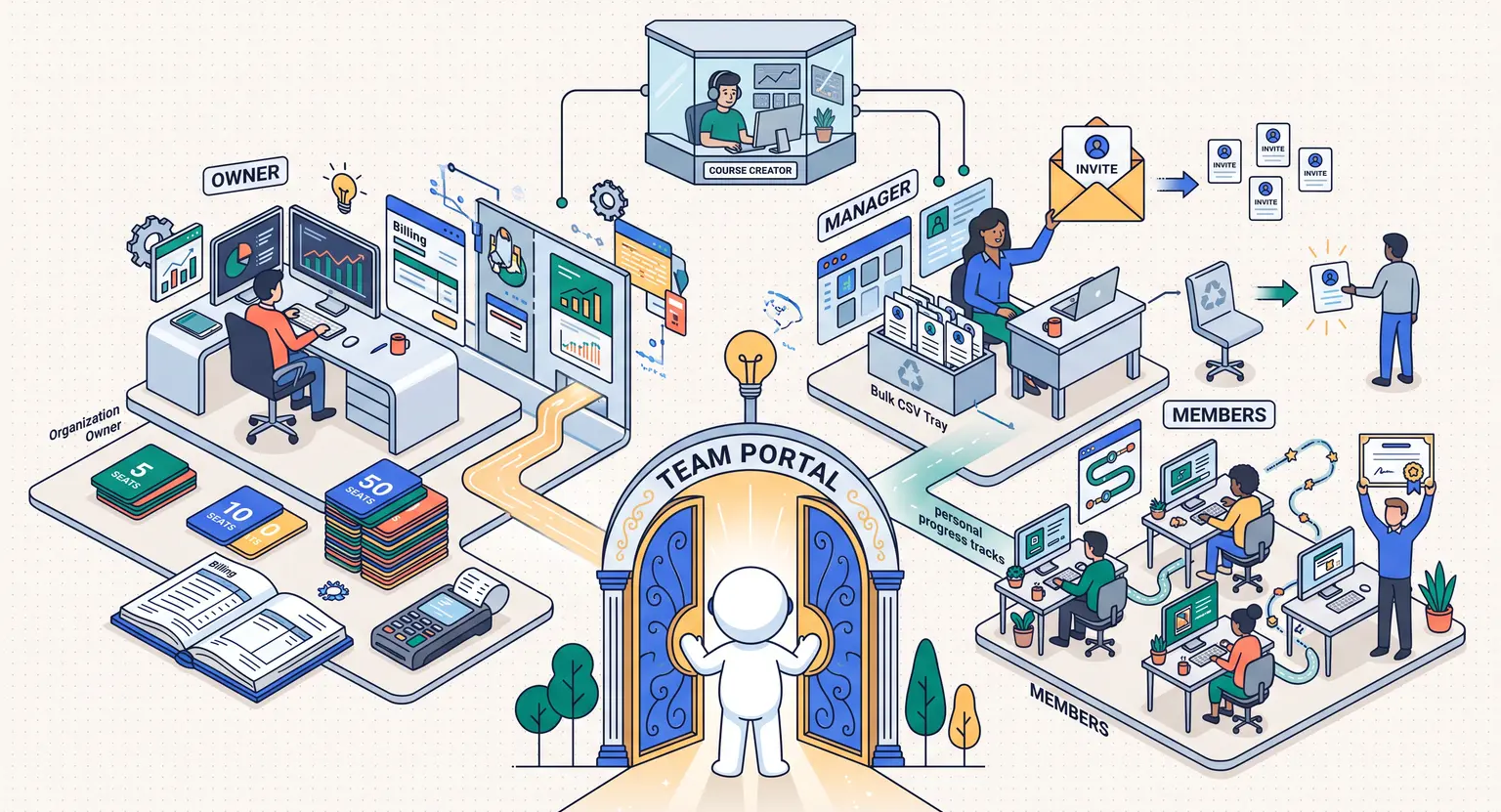
The biggest operational hurdle creators face during their first B2B deal is access provisioning. If a company buys 80 seats, manually creating 80 individual user accounts will waste entire days. Here are the three clean ways to handle corporate provisioning :
-
Manager-claim voucher codes : you issue the buyer a master coupon code or checkout link configured for exactly 50 redemptions. The manager emails the link to their team, and employees register themselves.
-
CSV bulk importer : the HR manager sends you a spreadsheet of names and corporate emails. You run a single bulk import through your LMS admin console, triggering automated welcome emails and temporary passwords.
-
Dedicated team workspaces : advanced platforms allow you to create a private organization account where the client's team leader can invite, remove, and monitor their own staff without involving you.
Drafting Simple B2B Contracts and Invoicing Terms
Do not rely on informal email agreements when closing multi-thousand-dollar corporate deals. A clean, straightforward two-page agreement protects your intellectual property and clarifies payment expectations. Key clauses your corporate agreement should include :
-
Seat definitions : explicitly state whether a seat belongs to a named individual or if it can be reassigned when an employee leaves the company. Named user licenses are standard.
-
Payment terms : most corporate accounting departments operate on Net 30 terms. Ensure you invoice immediately upon agreement signing, and include late fee provisions.
-
Intellectual property & non-distribution : clarify that purchasing seats grants a limited viewing license, not ownership of raw assets, slides, or proprietary frameworks.
-
Term and renewal : state the license start and expiration dates, along with renewal notice timelines (e.g., 30 days prior to annual expiration).
Explore Further Resources
-
Scale your operations with a proven one-to-many business model.
-
Learn the exact steps to package your expertise into lucrative corporate curriculums.
-
Explore modern tools designed to sell online courses seamlessly to global teams.
-
Transition from 1-on-1 services by discovering how to start an online coaching business with group training.
-
Refine your pricing strategy using our online course pricing strategy framework.
Frequently Asked Questions
How much should I charge per seat for bulk corporate course sales?
Standard B2B pricing relies on volume tiers. For 10 to 25 seats, discount 20% to 30% off your retail price; for 25 to 100 seats, discount 35% to 50%. Always run break-even point calculations before finalizing custom discount structures.
What technical setup do corporate buyers expect for employee tracking?
Most mid-sized buyers expect an administrative dashboard showing completion percentages, active login dates, and quiz metrics so they can report ROI to leadership.
How long is a typical corporate sales cycle for online training programs?
Small business sales (10 to 30 seats) frequently close within 2 to 4 weeks. Enterprise accounts requiring procurement, legal, and IT security evaluations usually take anywhere from 60 to 120 days.
Can I license my course content on an annual recurring retainer?
Yes. Many creators structure enterprise contracts as annual software-style subscriptions. You can also explore tax deductions for course creators on the business development expenses you incur while closing these recurring accounts.



 How to Create a Course Refund Policy (Templates & Best Practices for 2026)
 How to Run a Beta Version of an Online Course (2026 Guide)
 How to Create a Cohort-Based Online Course (2026 Guide)
 How to Sell an Online Course With a Quiz Funnel (2026 Guide)
 How to Sell an Online Course Through a Sales Call (2026 Guide)