






AI for Course Sales Pages: High-Converting Copy without AI Cliché
The Death of the Blank Screen : Why AI Is Your Secret Weapon
Writing your own copy is hard… Let's face it. You have spent weeks or months organizing your expertise, filming lessons, and putting together worksheets. But now comes the real monster : the sales page.
It is that long, intimidating blank document staring back at you, demanding headlines that sizzle, body copy that converts, and calls to action that make people reach for their credit cards.
But it does not have to be a painful struggle anymore. In 2026, artificial intelligence has shifted from a novel toy to an essential assistant for creators.
Using AI for course sales pages allows you to turn hours of agonizing writing into a structured, highly persuasive page in a fraction of the time.
Instead of starting from zero, you start with a fully formed draft. So, if you are tired of staring at a blinking cursor, it is time to change your workflow.
By pairing your unique human insights with the formatting power of modern AI engines, you can focus on what you do best - teaching - while the technology handles the heavy lifting of persuasive copywriting.
It is not about letting the machine do all the thinking. Rather, it is about using the machine to skip the worst part of writing : the beginning.
Key Takeaways
-
Speed over perfection : don't expect AI to write a perfect final draft instantly; treat it as an elite junior copywriter that gives you a massive head start.
-
Structure is everything : a great page requires proven copywriting frameworks to convert casual readers into paying students.
-
Optimize your elements : keep refining each chunk, using sophisticated landing page optimization techniques to boost performance over time.
-
Infuse brand voice : always review machine output to inject your actual tone, stories, and style so it sounds like a real human.
Anatomy of a High-Converting Sales Page (And How AI Speeds It Up)
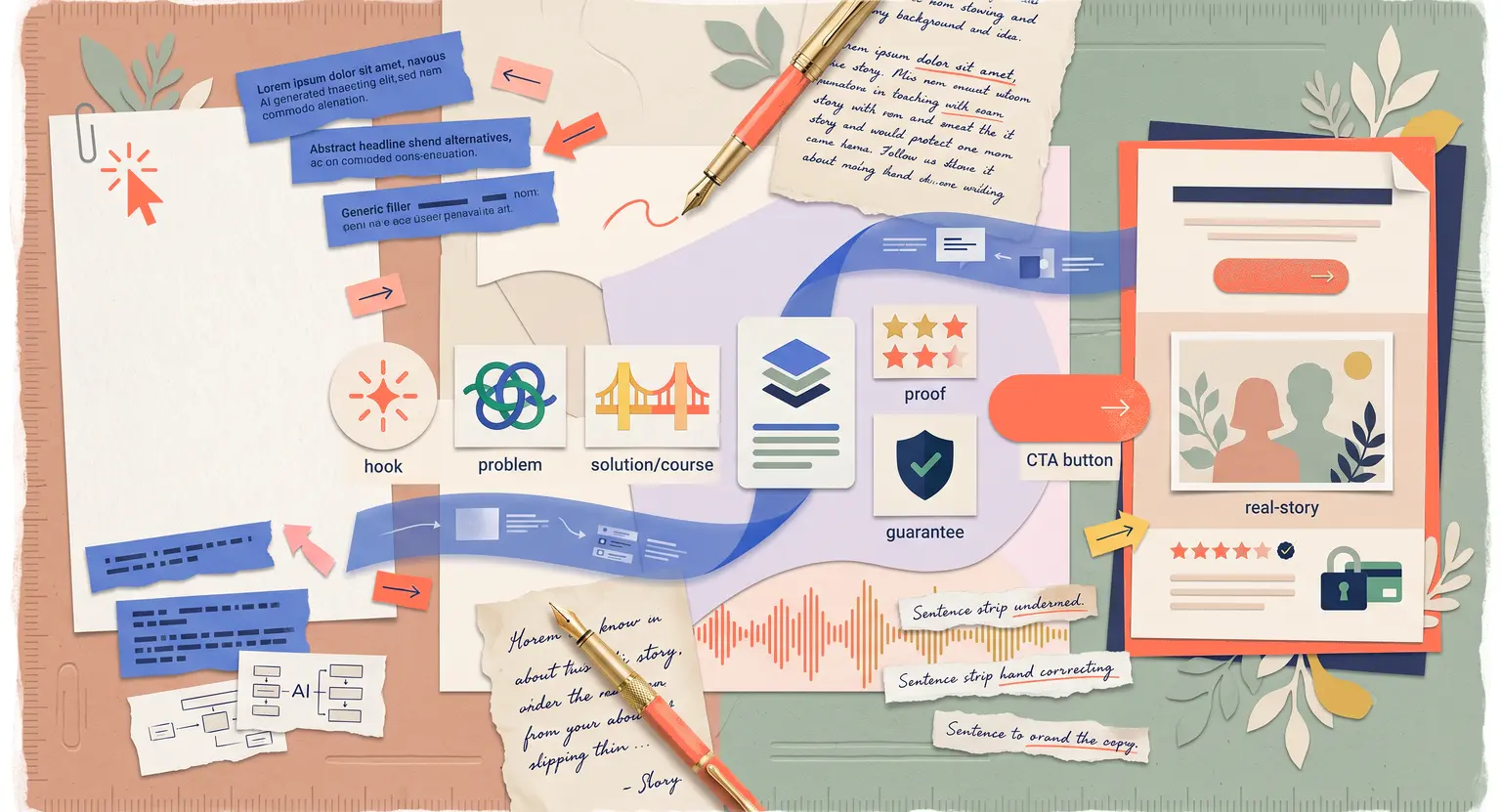
So, what actually makes a course sales page work? It is not just about dumping information on a page and hoping someone buys. It is a structured psychological journey. Before you even open an AI tool, you need to understand the structural pieces that will build your high-converting landing page layout.
But let's look at the basic building blocks first :
-
The hook / headline : your first impression. It needs to grab attention in under three seconds, stating exactly who the course is for and the big promise of the transformation.
-
The problem statement : before people care about your solution, they need to feel that you deeply understand their pain.
-
The agitation : this is where you explain why leaving the problem unsolved is costing them time, money, or happiness.
-
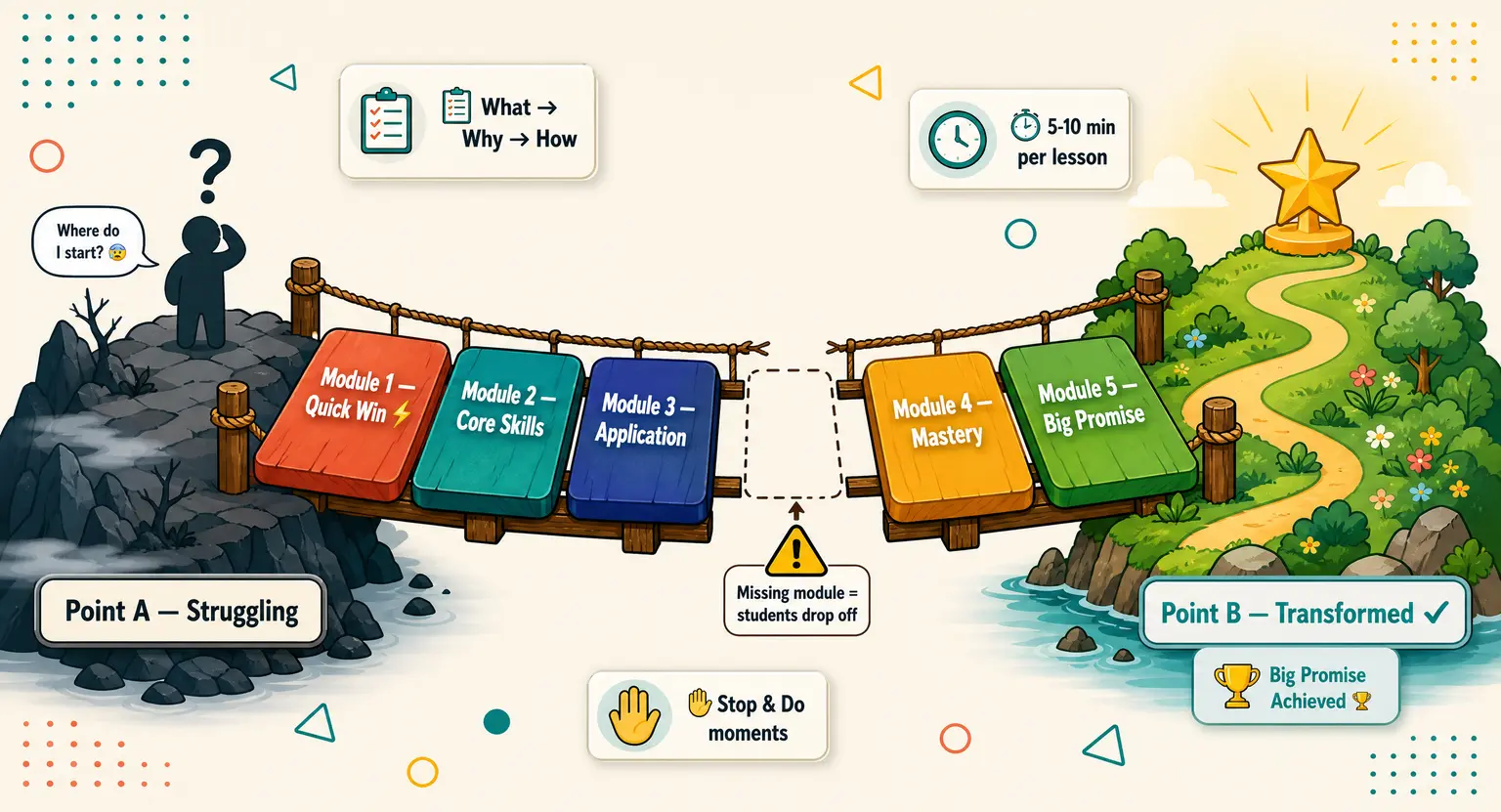
The solution / the course : here you present your course as the bridge between their current struggle and their desired outcome.
-
The outline : break down the modules clearly. Students need to know what they are paying for.
-
Social proof : testimonials and case studies prove that your method actually works for normal people.
-
Risk reversal : guarantees, refund policies, and simple terms reassure hesitant buyers.
-
The call to action (CTA) : clear, bold buttons telling people exactly what to do next.
AI can draft every single one of these components, but you have to feed it the right raw materials. If you just ask it to write a sales page, it will give you generic, boring fluff. But if you guide it piece-by-piece, you will end up with a masterpiece.
Prompting AI to Write Like a Six-Figure Copywriter
How do you get elite-level copy out of a machine? It all comes down to how you prompt it. Think of the AI as a highly competent writer who knows absolutely nothing about your audience yet. You must feed it the context.
For instance, instead of asking for a generic sales page, try using a structured prompt model. Start by assigning it a role. Tell the AI : "Act as a world-class direct-response copywriter who specializes in selling digital education."
Next, feed it your raw input. Tell it your course topic, who the ideal student is, and what major problems they face.
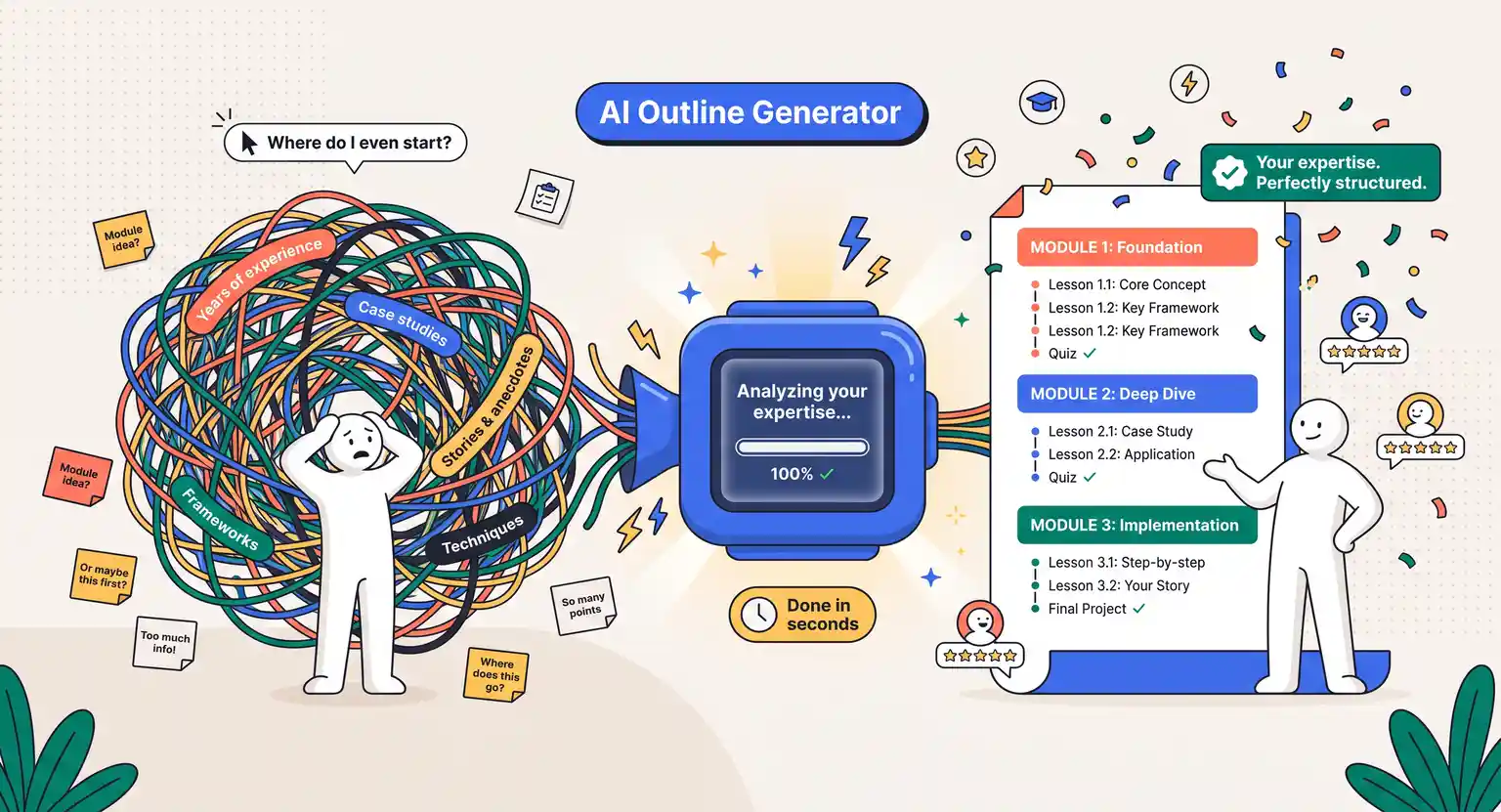
You should also lay out your basic course curriculum. If you haven't fully finalized the curriculum yet, you might want to spend some time drafting a solid course outline first, then feed that directly into your AI context window.
Now, tell the AI to use a proven copywriting framework like PAS (Problem, Agitate, Solve). Ask the AI to write the first three sections of the sales page focusing on the deep emotional frustrations of your target student.
And don't stop there. Once you get the initial copy, run it through interactive loops.
If a section feels too dry, prompt : "Rewrite this module description to make the benefit feel urgent and exciting, rather than just listing features."
If the headline is boring, demand : "Give me 15 counter-intuitive headline ideas that challenge conventional wisdom."
This iterative approach is how you get copy that actually converts.
Avoid the "AI Smell" : Injecting Human Soul
We have all seen it. That overly polished, repetitive, and slightly robotic copy that screams "written by a machine." Words like "delve," "unlock," "pivotal," or "nestled within" are dead giveaways. If your readers smell AI on your page, you lose credibility instantly.
But how do you completely strip away the machine-written vibe? You do it through active customization.
First, write the way you actually speak. Read your copy out loud. If you stumble over a sentence, it is too complex. Chop it in half.
Second, use irregular sentence lengths. Let some sentences be incredibly short. Like this one. Then follow it up with a slightly longer, more conversational explanation that carries a friendly, natural rhythm.
Third, replace generic placeholders with real personal stories. AI can write a brilliant explanation of a problem, but it cannot share the time you stayed up until 3:00 AM crying over your messy kitchen table trying to figure out how to pay your taxes.
That micro-story is what builds authentic trust.
Finally, align your page structure with a clean, professional layout. Using a solid, pre-built sales page template gives you a neat, high-converting canvas. It ensures that your unique human-edited copy is presented beautifully without messy formatting distractors.
Essential Elements : Where AI Shines vs. Where Humans Must Lead
Let's look at exactly how to divide the work. AI is great for speed, brainstorming, and structuring, but it lacks empathy, real experience, and true brand style.
Since you cannot rely entirely on automated systems to close high-ticket sales, knowing where to delegate to code and where to apply your own hand is the ultimate skill of the modern entrepreneur.
Here is a breakdown of how you should leverage AI across different sections of your sales page :
| Sales page section | AI best use case | Human touch required | Optimization goal |
|---|---|---|---|
|
Hook & headlines |
Generates twenty alternative options quickly. |
Choosing the most realistic tone; removing hype. |
Immediate curiosity. |
|
Problem & agitation |
Identifying common anxieties in your industry. |
Adding real quotes from student messages. |
Deep emotional connection. |
|
Module breakdowns |
Drafting clear, readable bullet lists. |
Clarifying the exact timeline and workload. |
Frictionless readability. |
|
Call to action (CTA) |
Creating action verbs and secondary CTAs. |
Setting up payment security badges. |
Clear path to buy. |
|
FAQ section |
Brainstorming potential objections about tech/time. |
Defining real refund terms with complete honesty. |
Overcoming final barriers. |
|
Pricing strategy |
Formulating tier breakdowns and plan labels. |
Setting prices using a smart course pricing strategy based on math. |
Maximizing average order value. |
Organizing Your Launch Funnel for Maximum Impact
A gorgeous sales page is just one piece of the puzzle. Once your copy is polished and placed on your site, you need to drive the right traffic to it. An isolated sales page won't do much if nobody sees it.
But how do you draw people in? You build a modern marketing stack. Ideally, you want to use all-in-one platforms like LearnyBox that connect your pages, payments, and emails under one single roof.
Your sales page is actually the centerpiece of a larger conversion engine. For instance, before you send people directly to a high-ticket offer, you might want to try pre-selling your course first to secure interest and fund production.
And once the launch begins, you need supporting systems. You will want automated emails reminding people of your offer. Make sure you use a tailored copy style for perfecting your email follow-ups.
And if you write emails manually, study the art of writing high-performing sales emails so that the messaging matches your page perfectly. This consistent voice builds momentum and moves subscribers smoothly down your funnel.
Marketing Your Course with Direct Sales Models
Once everything is up, you still have to tackle the daily chore of getting new students. Knowing how you plan on marketing your course online will dictate the tone of your copy.
Are you running cold Facebook ads? If so, your sales page needs to be highly educational. It needs to explain the basic concepts before pitching.
Are you launching a warm email list? Then your page can jump straight to the point, focusing on the specific benefits and the active launch bonuses.
By deploying an integrated layout, like a fully integrated course platform, you can easily track which traffic converts best. You can see whether your blog readers, social media fans, or email subscribers are actually clicking the buy button.
And when you are ready to expand, you can study full guides on launching an online course successfully to plan out a stress-free launch schedule.
Ultimately, remember that AI is your assistant, not your replacement. Use it to do the heavy lifting, keep your energy high, and construct a compelling, persuasive narrative. But always stay in the driver's seat. Your students are buying your expertise, not a machine's algorithms.
Frequently Asked Questions
Can AI write my entire sales page without any edits?
No, you should never copy and paste raw AI output directly.
While AI tools are incredible at creating outlines, finding logical arguments, and generating bulk headlines, they lack your real-life experiences, brand personality, and distinct human tone.
If you use unedited AI copy, your page will sound highly generic and fail to build the trust needed for conversions. Always treat AI as a draft assistant and edit the output to match your true voice.
What is the best AI prompt framework for sales copywriting?
The best approach is the PAS model, which stands for Problem, Agitate, Solve.
You instruct the AI to act as an elite copywriter, detail your target student's main struggle, and ask it to write copy that first emphasizes the problem, then agitates the emotional cost of that problem, and finally introduces your course as the perfect solution.
Running this step-by-step yields far more persuasive results than a single, broad prompt.
How long should my course sales page be?
That depends entirely on the price of your online course. If you are selling a lower-priced product under fifty dollars, a short, punchy sales page works great.
However, if you are selling a high-ticket program over five hundred dollars, your readers will need a lot more convincing. They will want to see deep module breakdowns, extensive FAQs, plenty of student testimonials, and strong risk-reversal guarantees, which means a much longer page is required.
Do search engines penalize AI-generated content on sales pages?
No, major search engines do not automatically penalize AI content as long as it provides high value to users… However, they do penalize thin, repetitive, or low-quality copy that offers no unique insights.
By editing your AI-generated draft, inserting your own real stories, and pairing it with a clean user experience, your sales pages will perform beautifully in search rankings and convert traffic reliably.


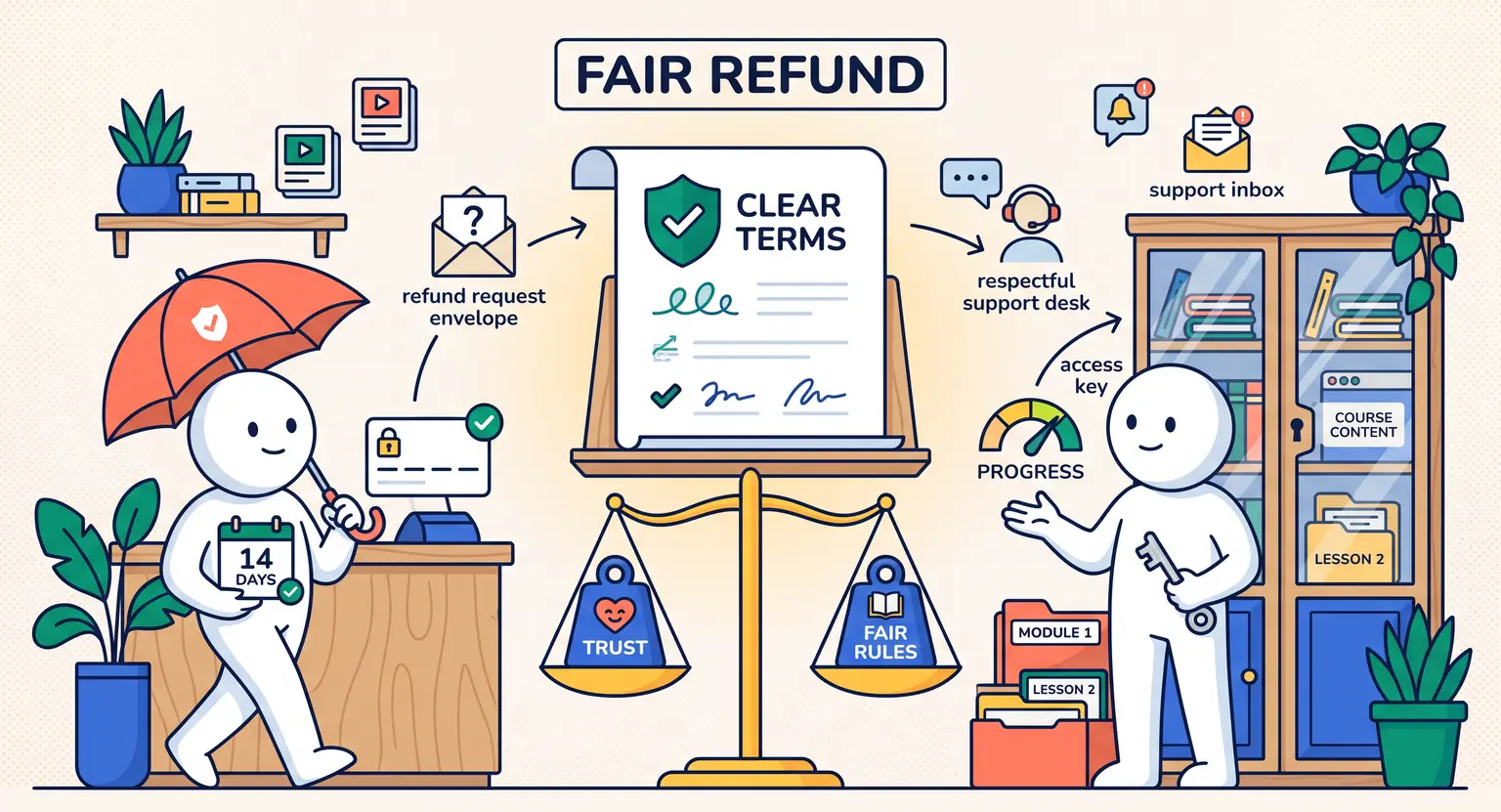 How to Create a Course Refund Policy (Templates & Best Practices for 2026)
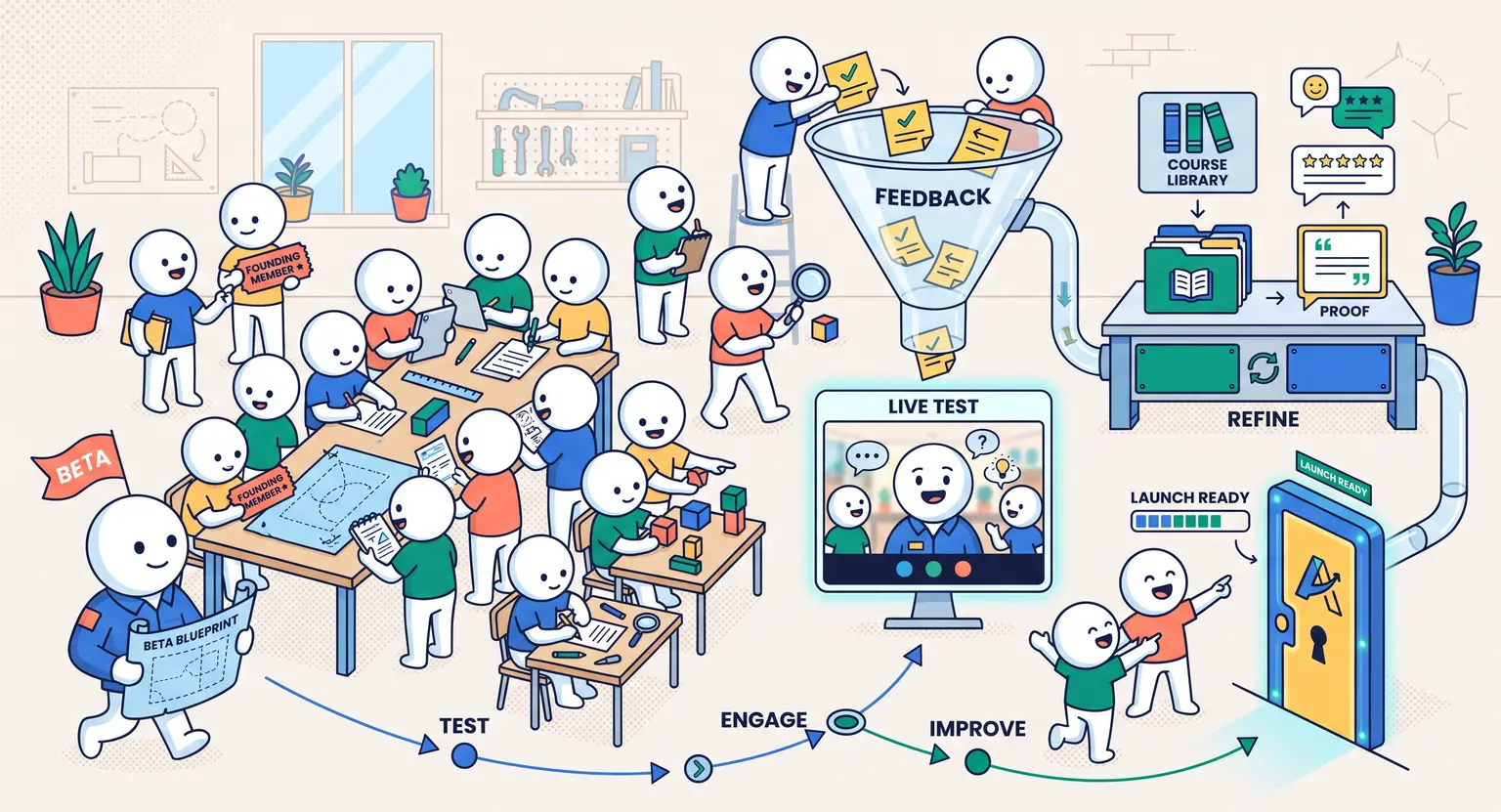 How to Run a Beta Version of an Online Course (2026 Guide)
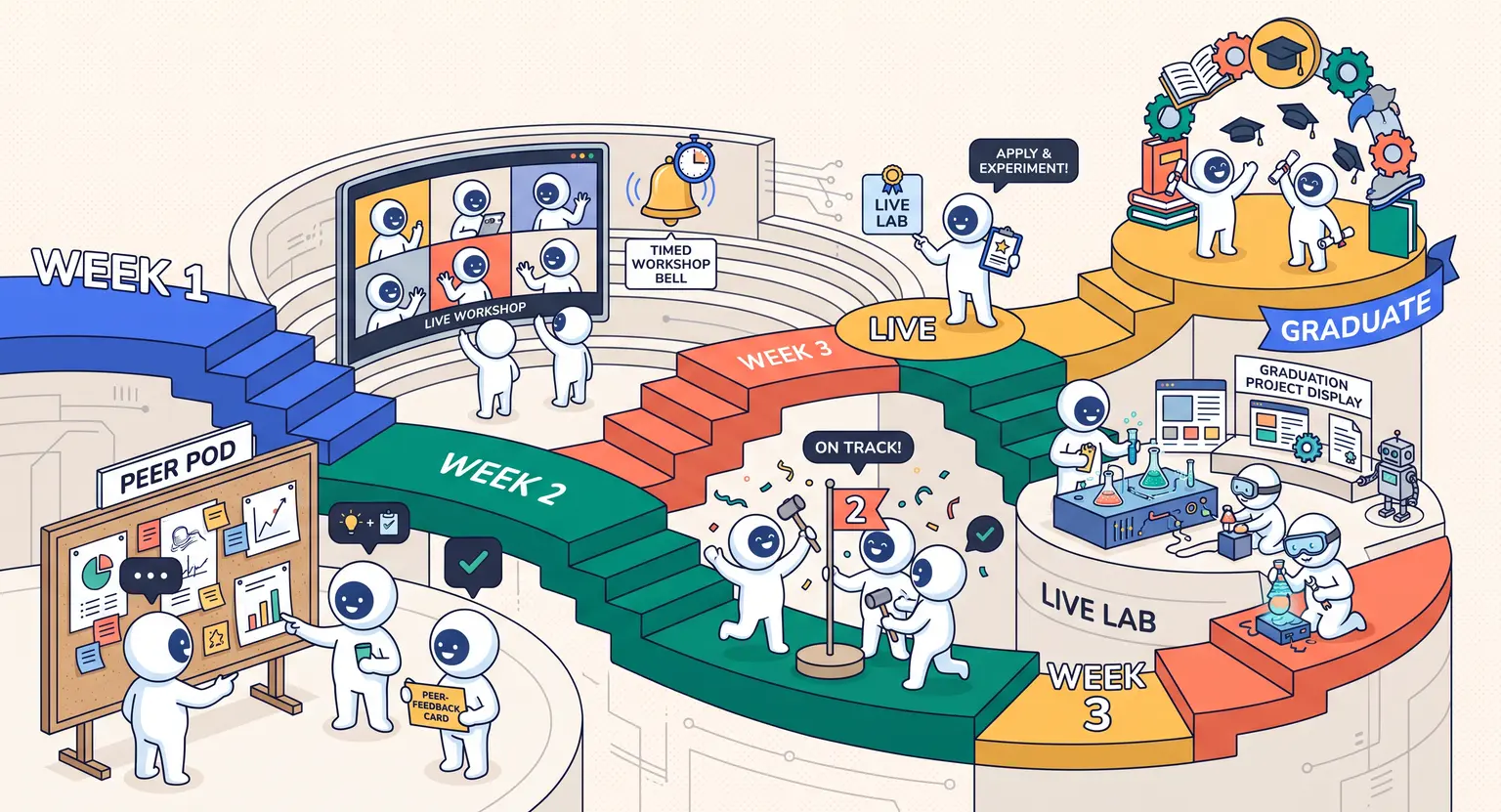 How to Create a Cohort-Based Online Course (2026 Guide)
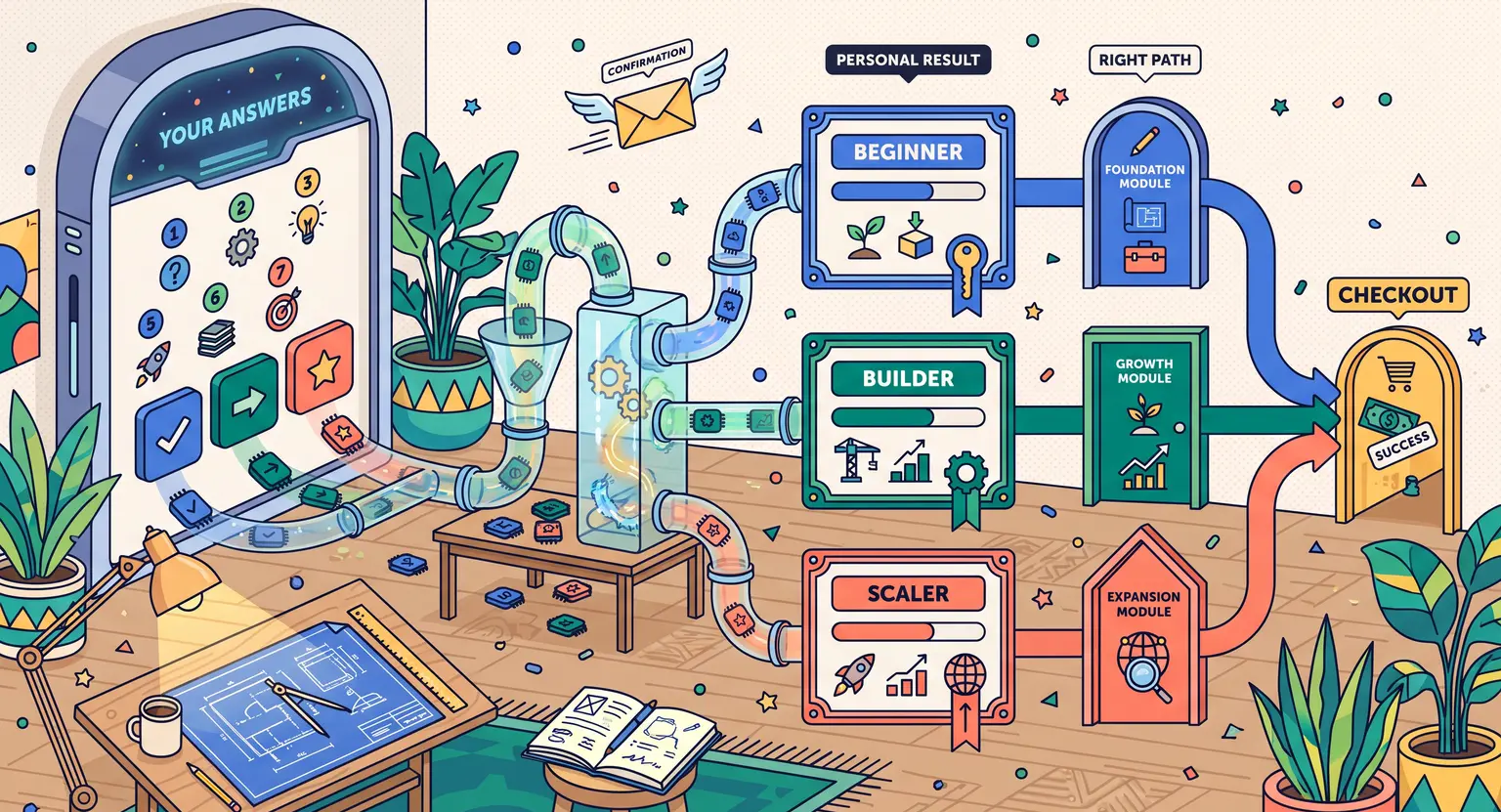 How to Sell an Online Course With a Quiz Funnel (2026 Guide)
 How to Sell an Online Course Through a Sales Call (2026 Guide)