








 French
How to Create an Online Course - Complete 2026 Guide
How to Create and Sell an Online Course in 2026: The Complete Guide
Not that long ago, creating an online course felt like navigating an obstacle course.
You had to juggle a video hosting tool, a payment processor, an email marketing platform, webinar software - and hope everything would actually talk to each other.
In 2026, the landscape has shifted dramatically. Tools are more accessible than ever, learners are comfortable with digital formats, and the very real income potential draws tens of thousands of new online instructors into the space every year.
But here’s the thing: accessibility doesn’t guarantee success.
Creating an online course that actually sells requires a solid, structured approach. That’s exactly what this guide delivers : a concrete, step-by-step action plan to take you from idea to first sale - without getting lost along the way.
1. Why create an online course in 2026?
Online education is no longer a niche. It’s a global industry worth hundreds of billions of dollars - and it’s still growing.
Freelancers, coaches, consultants, craftspeople, teachers, subject matter experts of all kinds... Thousands of them have turned their knowledge into a meaningful income stream, whether as a side hustle or a full-time business.
What’s different in 2026 is market maturity. Learners are used to consuming content online.
They know what e-learning is, and they’re willing to pay for well-packaged expertise - as long as it delivers real, tangible results.
The real benefits of online training
-
Passive or semi-passive income: create a course once, sell it hundreds of times.
-
Total flexibility: work from wherever you want, whenever you want.
-
Scalable impact: train hundreds of learners simultaneously, without adding hours to your week.
-
Monetizing your expertise: your knowledge becomes a lasting, compounding asset.
LearnyBox customers have collectively generated over 800 million euros in revenue. That’s not a small number. It’s proof that the model works - when you approach it the right way.
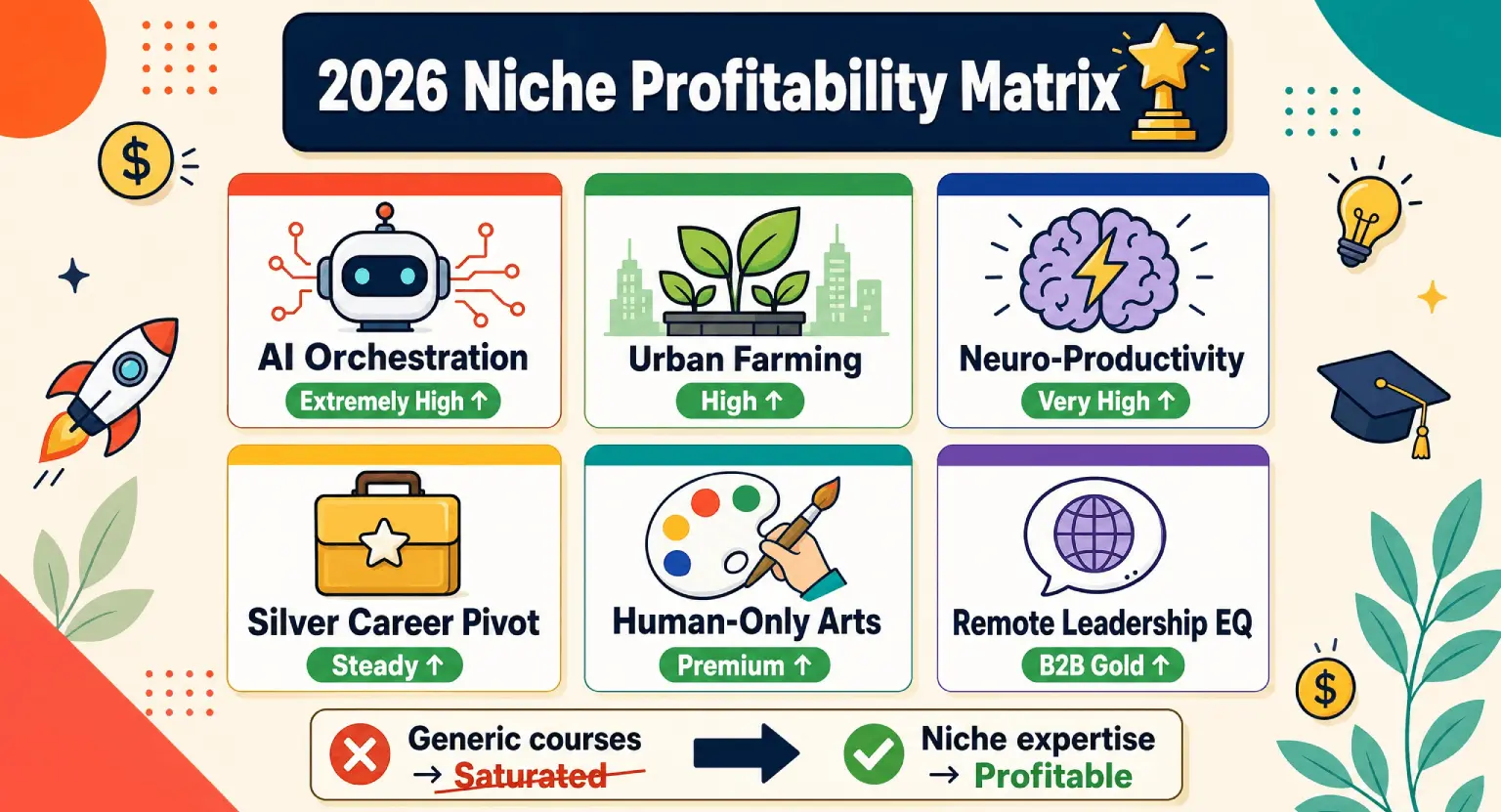
2. Finding the right topic: turning your expertise into a product
The first question everyone asks: “But what would I even teach?” The answer is usually simpler than you think.
You already have knowledge, skills, or experiences that others would love to learn from.
The real question is: which ones are valuable enough to your audience to be worth paying for?
Identifying your area of expertise
Start by listing everything you can do better than the average person. You don’t need to be the world’s top expert - you just need to be far enough ahead of your target audience to provide genuine value.
A passionate amateur photographer can absolutely teach complete beginners. A former HR professional can help freelancers build better hiring processes.
Ask yourself these three questions:
-
What do friends, family, or clients regularly ask me to explain?
-
In what area have I achieved concrete, measurable results?
-
What topic could I talk about for hours without losing interest?
Where those three answers overlap is usually your sweet spot.
Checking market demand
Being passionate about a topic is great. Having a topic people are actively searching for is even better.
Spend a few minutes on Google Trends, browse questions in relevant Reddit threads or Facebook groups, and run keyword research with tools like Ubersuggest or Semrush.
If people are actively searching for solutions to a specific problem, there’s a market waiting for you.
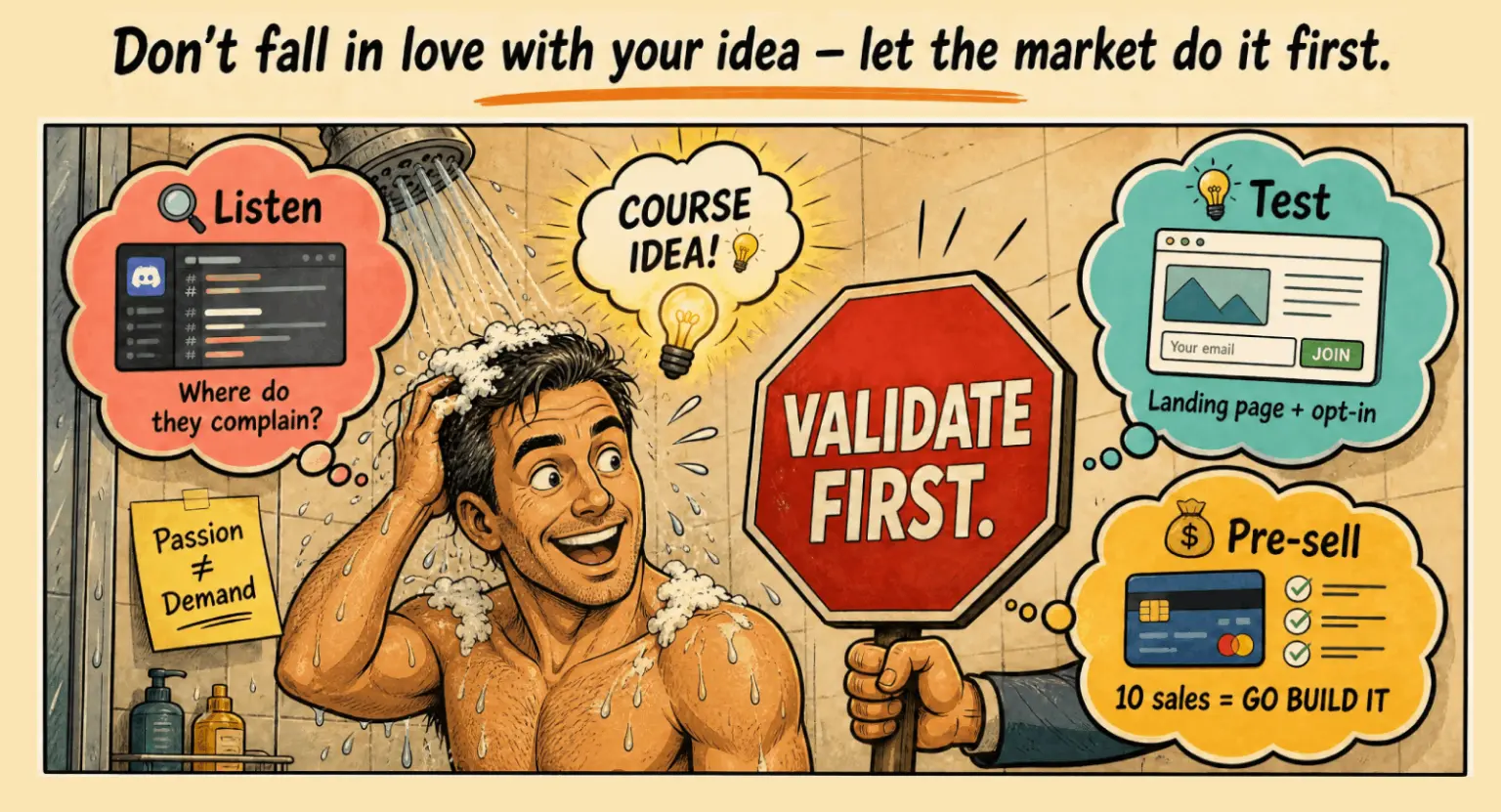
3. Validate your idea before you build anything
This is the step most first-time instructors skip - and it’s often where things go wrong.
Creating an online course takes time, energy, and sometimes money. Before you invest all of that, make sure there are real people out there willing to pay for what you’re offering.
The pre-launch technique
A pre-launch means selling your course before it’s fully built. You present the program, the value proposition, and the expected outcomes - then open up registration.
If people buy (or at least sign up for a waitlist), that’s a strong signal your idea has legs.
It’s also a smart way to fund the creation itself : use the early revenue to produce the content, so you’re not taking on financial risk upfront.
Using surveys as a validation tool
Send a short survey to your audience (even a small one) and ask direct questions:
-
What’s their biggest challenge in your area?
-
How much would they realistically pay for a comprehensive solution?
-
What frustrates them most about the resources already out there?
The answers are invaluable - and they’ll also help you shape your content.
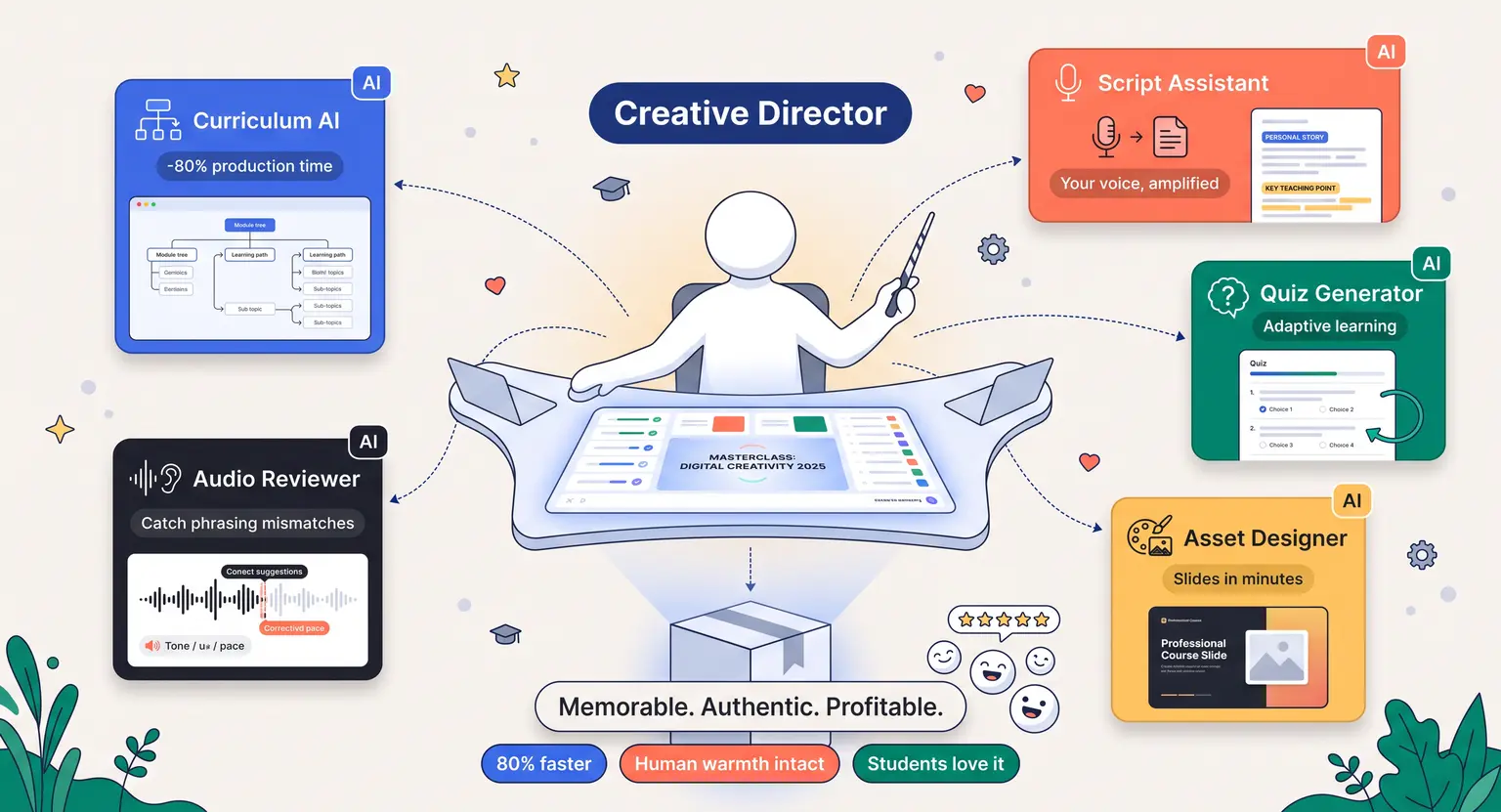
4. Building Your Course Content
Your topic is validated, your idea holds up. Time to actually build the thing.
And this is where a lot of people get stuck chasing perfection.
Spoiler: a perfect course that doesn’t exist won’t sell anything;
an imperfect course that exists will.
Structuring your curriculum
Start with the end result your learner will walk away with. Then work backward: what steps do they need to take to get there?
Each step becomes a module; each sub-step becomes a lesson.
A strong curriculum follows a clear, logical progression. Learners need to feel like they’re building momentum and gaining skills. Avoid overly theoretical modules with no hands-on exercises - that’s what kills engagement.
Choosing the right content format
In 2026, learners have high expectations around format. Here are the most effective options:
-
Videos: the go-to format for explaining, demonstrating, and showing your personality. A decent camera and a good microphone are all you need.
-
PDFs and worksheets: great as video companions, giving learners something to refer back to.
-
Quizzes and assessments: essential for reinforcing learning and keeping learners engaged.
-
Live sessions or webinars: ideal for answering questions and building a real connection with your community.
LearnyBox lets you bring all of these formats together in one place. Explore all the possibilities on the online training page.
Instructional design: a real differentiator
Don’t overlook the pedagogical structure of your content.
Well-designed content—with clear objectives for each lesson, relevant exercises, and a logical flow—makes all the difference when it comes to learner satisfaction and word-of-mouth.
Learners who get real results will naturally recommend your course to others.
Dive deeper into this topic in our comprehensive guide to instructional design.
5. Choosing the Right LMS Platform
This is a big decision - and one that’s easy to underestimate. The platform you choose to host your online course will shape your learners’ experience, your ability to sell, and how much complexity you deal with day to day.
What a solid LMS platform needs to offer
-
Hosting and delivery of your videos and course content.
-
Access management and member accounts.
-
Learner progress tracking.
-
Built-in payment processing.
-
Marketing tools (sales funnels, email automation, webinars).
-
An intuitive interface - no technical background required.
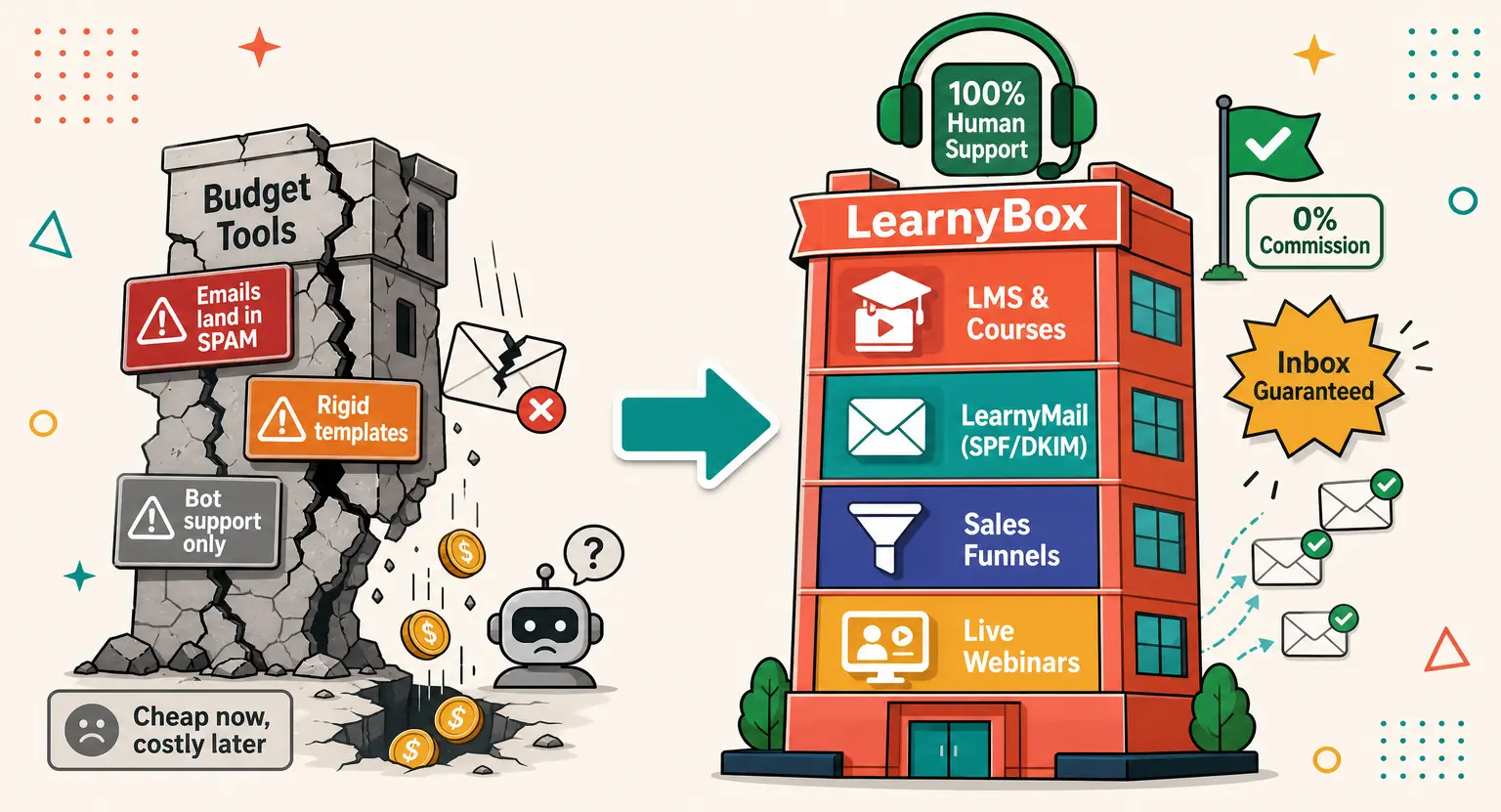
The problem with most available solutions is that they only cover part of the picture.
You end up stitching together 5 or 6 different tools - often with inconsistent results and costs that keep climbing.
Why LearnyBox is the ideal all-in-one solution
LearnyBox is built to centralize everything in one place: course creation, your online academy, sales funnels, email marketing, webinars, payments, and even a mobile app.
Everything is integrated, everything works natively together—no plugins, no code.
In short, LearnyBox replaces Podia, Thinkific, ClickFunnels, Kajabi, WordPress, Mailchimp, and Stripe - all in a single platform.
Customers who’ve done the math save an average of $1,176 per year - not counting the hours saved every week.
The platform offers several plans designed to grow with you:
-
Free: try it out with no commitment and no credit card required.
-
Launch ($49/month): everything you need to get your first online business off the ground.
-
Boost ($99/month): the most popular plan, built to take your business to the next level.
-
Scale ($179/month): for unlimited growth.
See the full breakdown on the LearnyBox pricing page.
6. Pricing your course
However, pricing your course too low can actually work against you.
Different pricing models
-
One-time payment: the learner pays once and gets lifetime access to the course.
-
Monthly subscription: access to a regularly updated content library.
-
Payment plan: makes a higher-priced product more accessible without devaluing it.
-
Premium offer with coaching: includes one-on-one support, commands a higher price, and maximizes perceived value.
How to land on the right price
Start by looking at what your direct competitors charge. Not to copy them, but to understand where you fit in the market.
Then think about the value your course delivers: if someone follows your program and earns an extra $5,000 a month, your course is worth far more than $197.
As a rule of thumb, it’s almost always better to sell 10 courses at $500 than 100 at $50.
Your margins are better, customers tend to be more committed, and the support load is lighter.
7. Building your sales funnel
A sales funnel is the path you design to take a complete stranger and turn them into a paying customer.
Without one, you’re relying on luck. With a well-built funnel, you have a system working for you around the clock—even while you sleep.
The key steps of an effective sales funnel
-
Landing page : offer something valuable (a PDF guide, a mini-course, a free webinar) in exchange for the visitor’s email address.
-
Email sequence : build the relationship, deliver value, and gradually introduce your paid offer.
-
Sales page : present your course, its value, its benefits, customer testimonials, and a clear call to action.
-
Checkout page : keep it simple, clear, and reassuring—with the right payment options.
-
Upsell/downsell : offer a complementary product or a lighter version immediately after purchase.
LearnyBox includes a full-featured sales funnel builder with ready-to-use templates you can customize in just a few clicks—zero coding required.
Want to go further? Our article on how to optimize your sales funnel walks you through concrete techniques to boost your conversion rates.
8. Driving traffic and landing your first sales
The best sales funnel in the world is useless if no one ever sees it. Traffic is the lifeblood of your business. The good news : you don’t need a big advertising budget to get started.
Free (organic) traffic sources
-
SEO content: blog posts optimized for Google. A long-term play, but one of the most powerful channels available.
-
Social media: Instagram, TikTok, LinkedIn, YouTube - pick the platform where your audience hangs out and show up consistently.
-
Word of mouth and referrals: your first satisfied learners are your most powerful marketing asset.
-
Affiliate program: partners promote your course in exchange for a commission.
Webinars: a powerful sales tool
In 2026, webinars remain one of the most effective formats for selling online courses.
They let you demonstrate your expertise live, build genuine trust, and present your offer to a qualified audience that has voluntarily carved out time to hear what you have to say.
LearnyBox offers a live and evergreen webinar tool built directly into the platform.
You can run live webinars, but also set up evergreen - pre-recorded - webinars that play automatically on a set schedule.
9. Automating for consistent, ongoing sales
This is where things really start to click. Once your system is in place - sales funnel, email sequence, automated webinar - your course can sell around the clock without you having to manually step in for every transaction.
Email marketing at the core of your automation
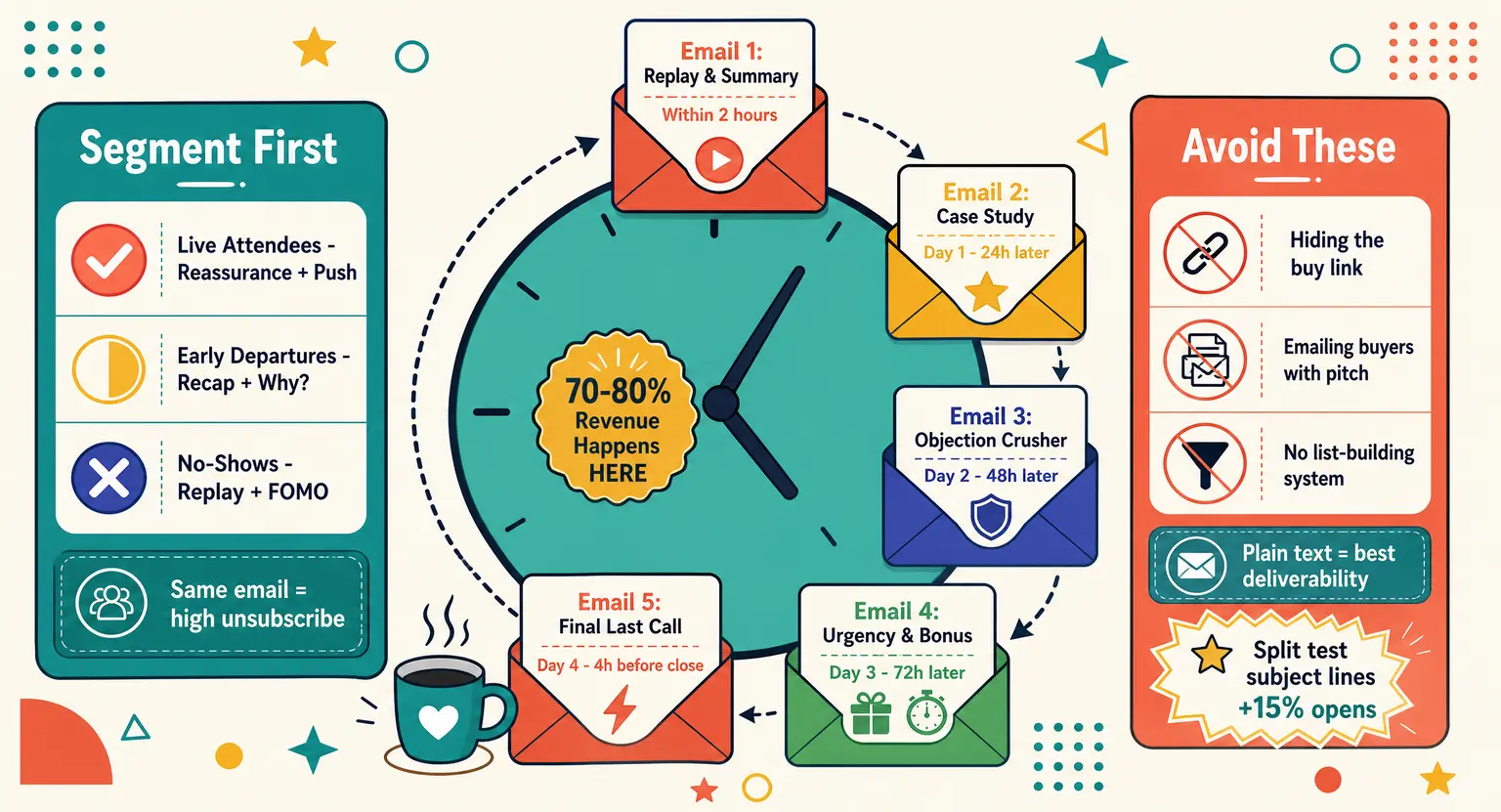
Automated email sequences are your number one tool for staying connected with prospects and guiding them toward a purchase. You can set up targeted scenarios: a welcome email on sign-up, a series of educational emails over 5 to 7 days, followed by a time-limited sales offer.
LearnyMail, the email marketing tool built into LearnyBox, makes it easy to create these sequences, segment your contact list, and track the performance of every campaign in real time.
Automated webinars: selling without showing up
An automated webinar (or evergreen webinar) is a pre-recorded session that plays automatically on a set schedule.
For your prospect, the experience feels almost identical to a live webinar. For you, it’s a sales engine that runs completely on its own.
This format works especially well for courses priced between $197 and $997—a range that justifies an in-depth presentation, but doesn’t require you to show up live every time.
10. Retaining learners and scaling your business
Making a sale is great. Having learners who get real results, who talk about you to others, and who come back for your next course - that’s even better.
Retention is the most underrated growth lever in online education.
Building a community around your course
An active community around your course multiplies its perceived value and keeps learners engaged long after they finish.
It can take the form of a private group integrated into your platform, where members support each other, share their progress, and ask questions. That sense of belonging is a powerful driver of long-term retention.
LearnyBox includes a community feature built directly into your academy—no reliance on external algorithms like Facebook.
Collecting reviews and testimonials
Social proof is one of the biggest factors in a buying decision. As soon as a learner achieves a concrete result thanks to your course, ask them for a testimonial. Video if possible, written if not.
These testimonials fuel your sales page, your emails, and your social media—and they do more to reassure potential buyers than any sales pitch ever could.
Expanding your product lineup
A happy learner is a potential customer for your next course.
From the start, think in terms of an ecosystem: an entry-level course to bring in new prospects, a core course, and a premium offer with personalized support for your most committed learners.
Conclusion
Creating and selling an online course in 2026 is one of the smartest ways to monetize your expertise, break free from the constraints of a traditional work schedule, and build a sustainable business. But like any serious project, it takes a solid approach to get right.
Pick a specific topic, validate it before you build, create high-quality content, set up an effective sales funnel, and use the right tools.
On that last point, LearnyBox is the platform that brings everything together—without the technical headaches, with 100% French-speaking support in your corner.
✨ Get started for free on LearnyBox - no credit card required, no commitment ✨
FAQ - Frequently Asked Questions About Creating Online Courses
How much does it cost to create an online course?
Costs vary widely depending on your setup. With a recent smartphone and a decent microphone (between $50 and $150), you can produce perfectly watchable video content.
Your main ongoing expense will be your LMS subscription - LearnyBox starts at $49/month. Bottom line: you can launch your first course for under $200 in upfront investment.
Do you need to be a recognized expert to sell a course?
Not at all. You don’t need to be the world’s leading authority on your subject. You just need to be far enough ahead of your target audience to deliver genuine value.
First-time instructors consistently get great results by targeting a very specific niche and offering clear, actionable content.
How much can you earn with an online course?
It depends heavily on your niche, your audience size, your price point, and how much effort you put into marketing.
Some instructors bring in a few hundred euros a month; others generate tens of thousands.
LearnyBox customers have collectively generated over 800 million in revenue - which speaks to the very real potential of this market.
What’s the best platform for hosting an online course?
LearnyBox is the most comprehensive solution for instructors, coaches and trainers : it combines course creation, sales funnels, email marketing, webinars, payments, and even a mobile app - all in one tool.
It’s the all-in-one platform that replaces 5 or 6 separate tools - and the headaches that come with them.
How long does it take to create an online course?
A short course with 3 to 5 hours of content can be produced in 2 to 4 weeks if you’re focused and consistent.
For a more comprehensive program, budget 1 to 3 months. The key is not to aim for perfection out of the gate: launch an MVP, gather feedback from your first learners, and improve from there.
Can you sell a course without an existing audience?
Absolutely - it’s harder, but very much doable.
Webinars, paid advertising on Facebook or Google, partnerships with other content creators, and affiliate programs are all effective ways to generate your first sales without an established following.
How does LearnyBox help sell courses automatically?
LearnyBox brings together all the tools you need for automated sales: no-code sales funnels, automated email sequences via LearnyMail, evergreen webinars that replay on autopilot, and a secure payment system through LearnyPay.
Once your system is set up, your courses sell 24/7 - no manual intervention needed.




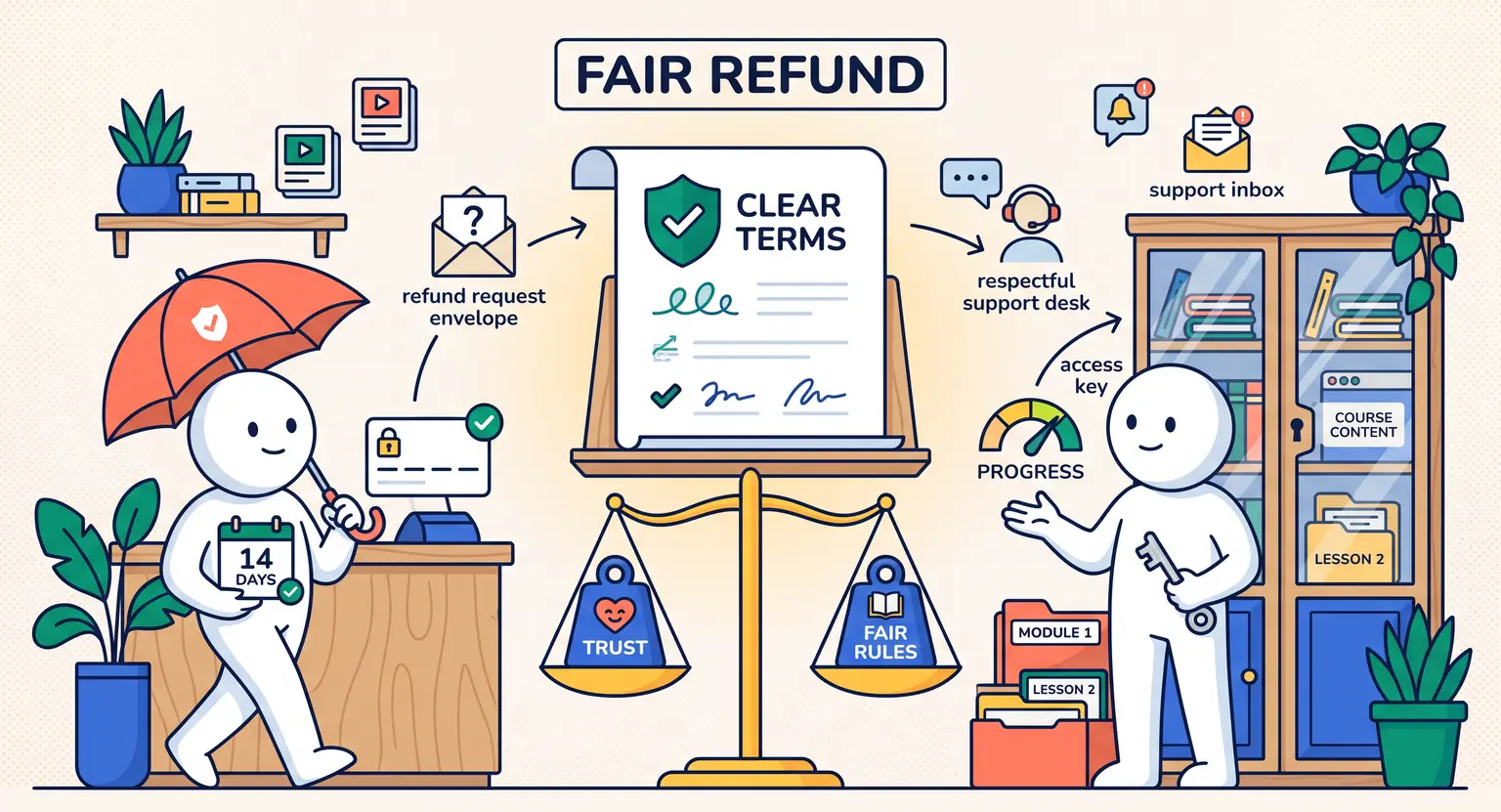 How to Create a Course Refund Policy (Templates & Best Practices for 2026)
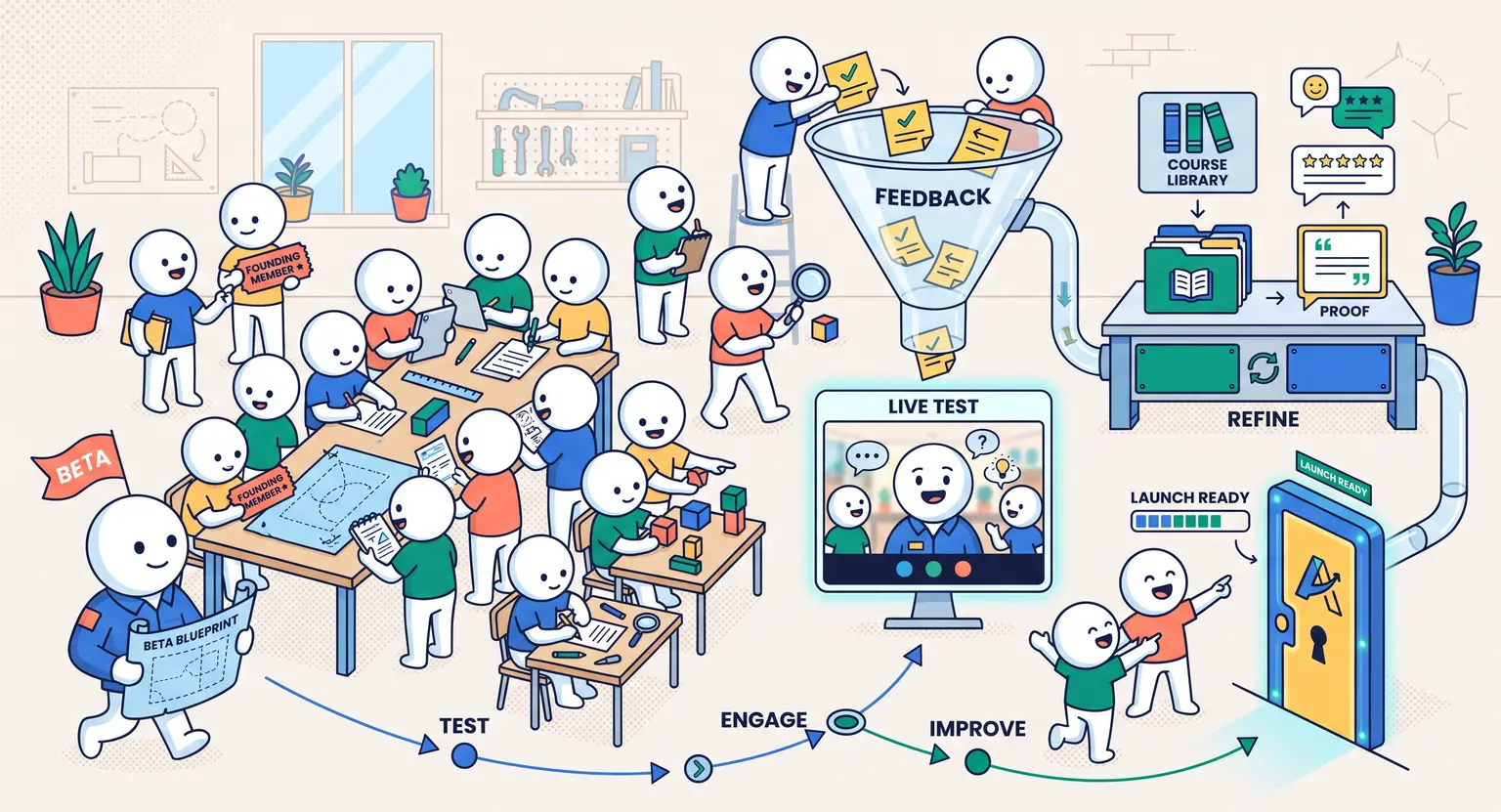 How to Run a Beta Version of an Online Course (2026 Guide)
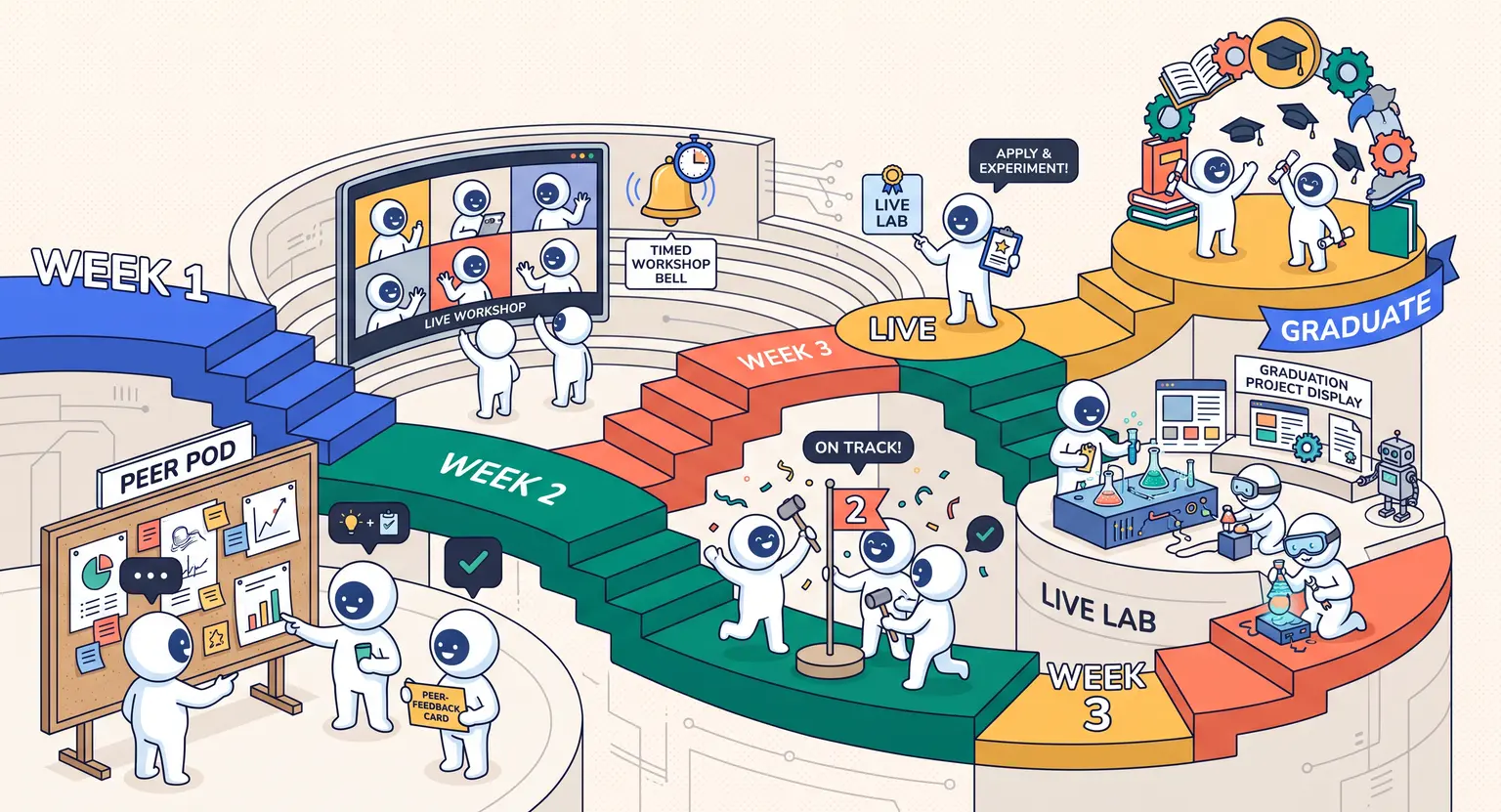 How to Create a Cohort-Based Online Course (2026 Guide)
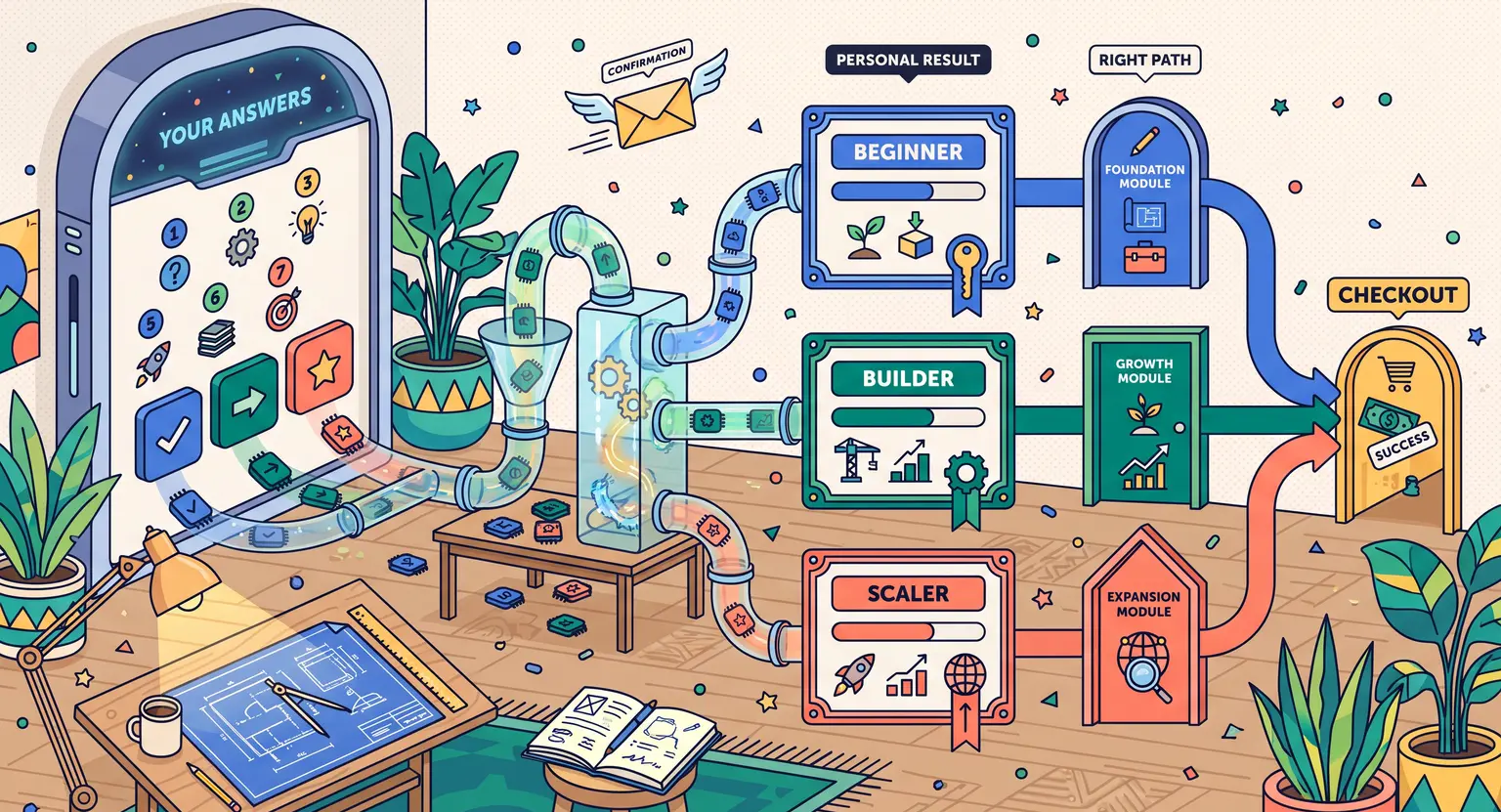 How to Sell an Online Course With a Quiz Funnel (2026 Guide)
 How to Sell an Online Course Through a Sales Call (2026 Guide)