






Social media for course creators: 2026 conversion blueprint
Social Media for Course Creators
You have spent weeks, maybe months, building an incredible academy. The slides are polished, the scripts are tight, and the worksheets are ready… But when you look at your sales dashboard, it is dead quiet.
It is an uncomfortable reality that hundreds of brilliant educators face daily.
Creating the curriculum is only half the battle. If nobody knows you exist, you cannot help anyone learn.
That is where social feeds come into play. But let us be honest : the digital landscape has completely shifted over the past couple of years.
The golden era of posting generic "3 tips for X" graphics on Instagram and expecting a flood of buyers is long gone. Algorithms are smarter, feeds are noisier, and audiences are highly skeptical of generic advice. They want authentic authority, not polished sales pitches.
If you want your knowledge to sell, you need an approach designed specifically for the social dynamics of today.
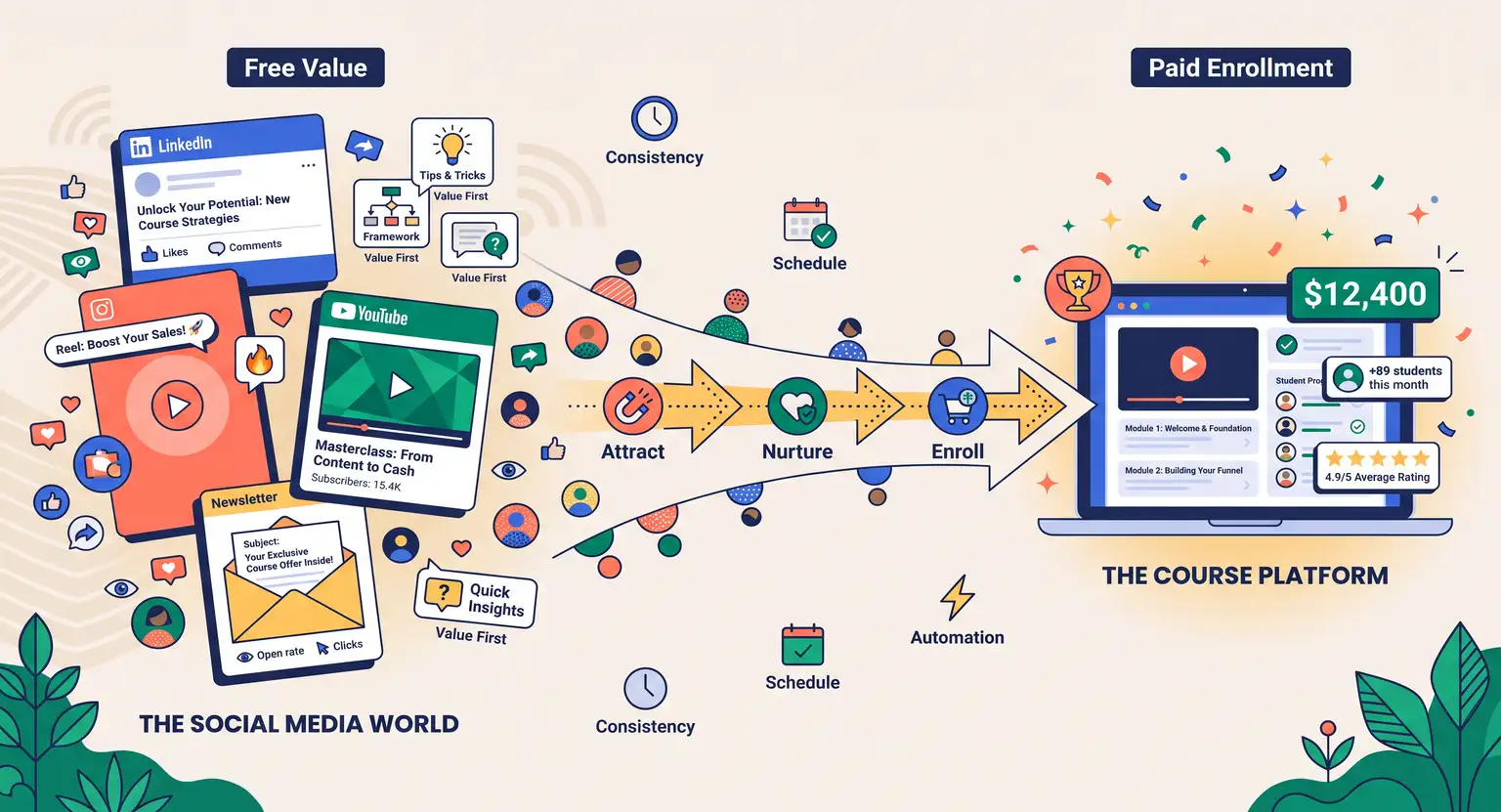
This is not about chasing random viral trends or dancing on camera to trending audio files. It is about building a systematic bridge between casual content consumption and active, paid enrollment.
Let us walk through the exact blueprint that successful digital educators are using to build hyper-engaged audiences right now.
Quick Summary : Maximizing Your Social Presence
-
Choose Depth Over Reach : going viral for memes will not sell a high-value program. Focus on specific, educational insights that attract high-intent leads.
-
Build Multi-Touch Funnels : social media is just the handshake. You need a fast, low-friction way to move followers into your ecosystem where they can buy.
-
Pick Your Target Wisely : do not stretch yourself thin. Mastering one platform where your ideal students spend their free time beats being mediocre on five platforms at once.
-
Convert Instantly : streamline your sales system by utilizing proven online course marketing strategies that leverage interactive DM automation.
-
Nurture Warm Leads : your ultimate goal is getting active students, so construct systematic pipelines designed to teach how to get students for an online course through organic social warmth.
The 2026 Shift : Why Traditional Social Media Marketing Failed Course Creators
Let us look at the facts. In the past, you could get away with treating your social profiles like a digital billboard. You would post an announcement, share a link, and watch the traffic roll in.
Today, the platforms are desperate to keep users inside their own walls. If you share a post that screams "click this external link to buy my course," the algorithm will bury it.
But there is an even bigger shift happening. Audiences are suffering from absolute content fatigue - they can spot an automated marketing funnel from a mile away.
When someone sees a polished video that says "DM me the word MASTERCLASS to learn my secrets," they immediately feel the upcoming pitch.
So, what works instead?
Value first, friction-free education.
Instead of holding back your best secrets, you must share your finest insights directly on the feed - this sounds counterintuitive to many digital instructors. Why would any user buy my program if I give away my best material for free?
The reality is that people do not buy information. Information is infinite and free.
They buy organization, accountability, and community.
When you share your highest-caliber frameworks openly on LinkedIn, TikTok, or YouTube, you are not giving away your business. You are establishing yourself as the undeniable authority in your domain.
Before you launch, you must make sure people trust your teaching style. If you are still struggling to find your primary target angle, it helps to spend time validating your core concept before filming.
This guarantees you are building a feed around topics people actually search for.
Social algorithms now heavily reward retention and shares. If your content actually teaches someone a practical skill in sixty seconds, they will save it and share it with their network.
That organic endorsement is worth more than a thousand dollars in ad spend.
Finding Your Ideal Platform Pairings (Quality Over Quantity)
One of the fastest ways to burn out as a content creator is attempting to show up everywhere.
You do not need to be a LinkedIn expert, a TikTok star, a YouTube giant, and an Instagram influencer all at the same time - instead, pick one primary distribution channel based on where your prospective students naturally hang out.
If you are selling B2B programs, advanced corporate training, or career development courses, LinkedIn is your absolute goldmine.
The professional network has evolved into an educational powerhouse. Users there are actively looking to level up their careers and are willing to pay premium prices.
Writing descriptive text posts, publishing native PDF sliders, and sharing professional milestones will establish huge trust.
On the other hand, if you are teaching creative skills, hobbies, fitness, or visual arts, Instagram and TikTok are your go-to platforms.
These are highly visual spaces where you can show direct proof of your methods. You can reveal before-and-after results, share quick visual tutorials, and use Reels to build a personal connection.
But what if your topic requires deep, analytical explanations?
That is where YouTube thrives. It acts more like a search engine than a standard social platform. When you create searchable, highly specific video lessons, you build an asset that generates passive leads for years.
For this to work, you must design a brilliant content strategy for education that aligns your long-form videos with your core academy curriculum.
To help you decide where to direct your creative energy, let us break down the exact performance metrics of the major channels in the current year.
| Platform target | Primary format | Lead quality | Key growth play | Optimal conversion strategy |
|---|---|---|---|---|
|
LinkedIn professional |
PDF carousels & text. |
Very high (B2B buyers). |
Comment networking & thought leadership. |
Direct messaging nurturing and newsletter signups. |
|
YouTube long-form |
Wide HD video lessons. |
High (active seekers). |
Optimized video SEO & clickable thumbnails. |
Free download links in video descriptions. |
|
Instagram creative |
Reels & story polls. |
Medium-high. |
Interactive comment triggers & trend audio. |
Keyword DM automations pointing to lead magnets. |
|
TikTok micro-vids |
Vertical short clips. |
Medium (broad reach). |
Unfiltered behind-the-scenes & fast edits. |
Profile bio link leading to high-value webinars. |
|
Threads / X platform |
Short educational threads. |
Medium-high. |
Aggressive viral commenting & networking. |
Auto DM funnels on high engagement threads. |
The Core Content Framework (The Three-Hook Method)
Once you have selected your playground, you must master the actual delivery of your posts. Too many educators write social updates as if they are drafting a dry academic paper… And that is a quick way to get ignored.
Instead, structure your creative assets using the Three-Hook Method. This is a framework specifically designed to stop the scroll, educate immediately, and steer the warm audience to the next step.
The first step is the Hook. This is the first three seconds of your video or the first line of your written post.
It must break the user out of their passive scrolling patterns. Avoid boring greetings like "Hey guys, today I want to talk about..."
Instead, use high-contrast statements or state a painful reality. For example : "I analyzed 50 sales pages that failed to convert a single user, and they all made this exact layout mistake."
But the hook only buys you attention. The second step is the Micro-Lesson. This is where you deliver on the promise of your hook.
Do not gatekeep the answer. Give them the exact solution immediately.
Break down your method into three distinct, actionable steps. Show them the raw spreadsheet, the diagram, or the code.
When you offer immediate clarity without demanding an email address, you build massive credibility.
And finally, you need the Pivot. This is where most educators fail. They either do not include a call to action at all, or they push too hard for a paid sale.
In 2026, the best pivot is a soft invitation to a low-barrier next step. Do not ask them to buy your thousand-dollar masterclass on the first interaction. Invite them to join your newsletter, try a free mini program, or download a workbook.
If your content was brilliant, they will happily take that step. To make these lead magnets highly effective, invest time in studying best online course platforms to choose a backend system that handles these seamless micro deliveries without manual effort.
Building the Bridge : From Casual Followers to Paying Students
But how do you make sure these followers do not remain passive fans? You must build a structured path to turn social attention into direct sales.
The primary mistake is pushing people straight from a social post to a credit card landing page. It is a massive intellectual jump for a user. They went from looking at cat videos to being asked for three hundred dollars.
Instead, think of social media as the entry point to your relational funnel. Your main objective on social media is to move individuals off the platforms and onto your own private platform - once they are inside your email system, you can build a deeper human connection.
This is where a strategic launch plan makes a massive difference. You can run automated live sessions or pre-sell your concept.
If you want to build momentum before your official launch, you should check out our guide on how to pre-sell an online course. It shows you how to use simple social polls and interactive waiting lists to fund your curriculum development before filming a single lesson.
Once they are on your list, you can coordinate your broader launch. This involves mapping out systematic sequences that show how to build authority.
By understanding how to launch an online course, you can sync your daily social content with your promotional calendar - this ensures your public posts match the promotions happening inside your subscribers' inboxes.
Direct Messaging Funnels (The Secret Sauce of 2026)
And we cannot talk about modern social media without mentioning direct message automation - this has completely transformed how modern educators generate leads on visual channels.
When you tell a viewer to "click the link in my bio," you are asking them to leave their current feed, navigate to your profile, find the link, and wait for a browser to open. Let's be honest : it is a terrible user experience.
By using tools that trigger an automatic DM when a user comments a specific word on your video, you eliminate all friction.
They stay on their feed, they receive your free resource directly in their chat inbox, and you start a private conversational relationship instantly.
It is direct, it is friendly, and it works incredibly well. Once you have initiated that private chat, you can seamlessly ask them about their current business challenges and recommend the exact educational modules they need.
Measuring Your Metrics : What Actually Matters
Do not get distracted by vanity metrics. High follower counts and massive view counts look impressive on paper, but they do not pay the bills.
If you want a sustainable academy, you must track conversion metrics that indicate deep audience interest. Focus on saves, shares, and incoming direct messages.
When someone saves your tutorial, it means they find it genuinely valuable. When they send a direct message, they are starting a real human relationship.
These high-intent actions are what ultimately drive course sales.
Explore Further Resources :
-
Build your digital academy on LearnyBox.
-
Discover the complete guide to email marketing for course creators.
-
Structure your lessons using our how to structure online course blueprint.
Frequently Asked Questions
How often should I post educational content?
Aim for consistency over volume. Three premium posts weekly will beat daily low-effort updates.
Do I need to show my face?
Not necessarily, but showing your physical presence builds human trust much faster with modern students.
Which visual platform is best for beginners?
Instagram remains the absolute easiest starting ground because of its simple video formatting tools.
Can I sell with purely organic social?
Yes, organic networking combined with systematic DM outreach remains a stellar framework for launches.


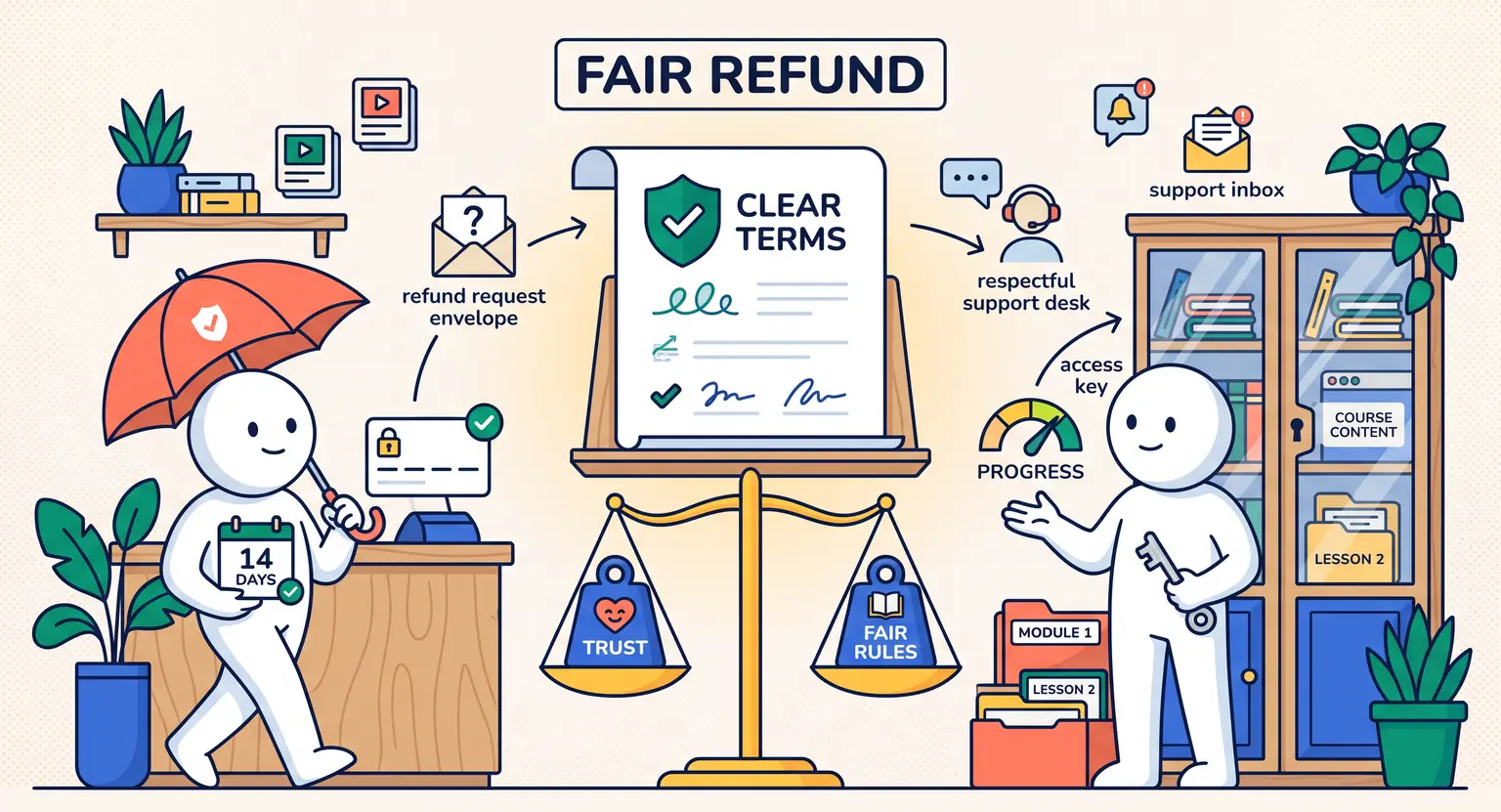 How to Create a Course Refund Policy (Templates & Best Practices for 2026)
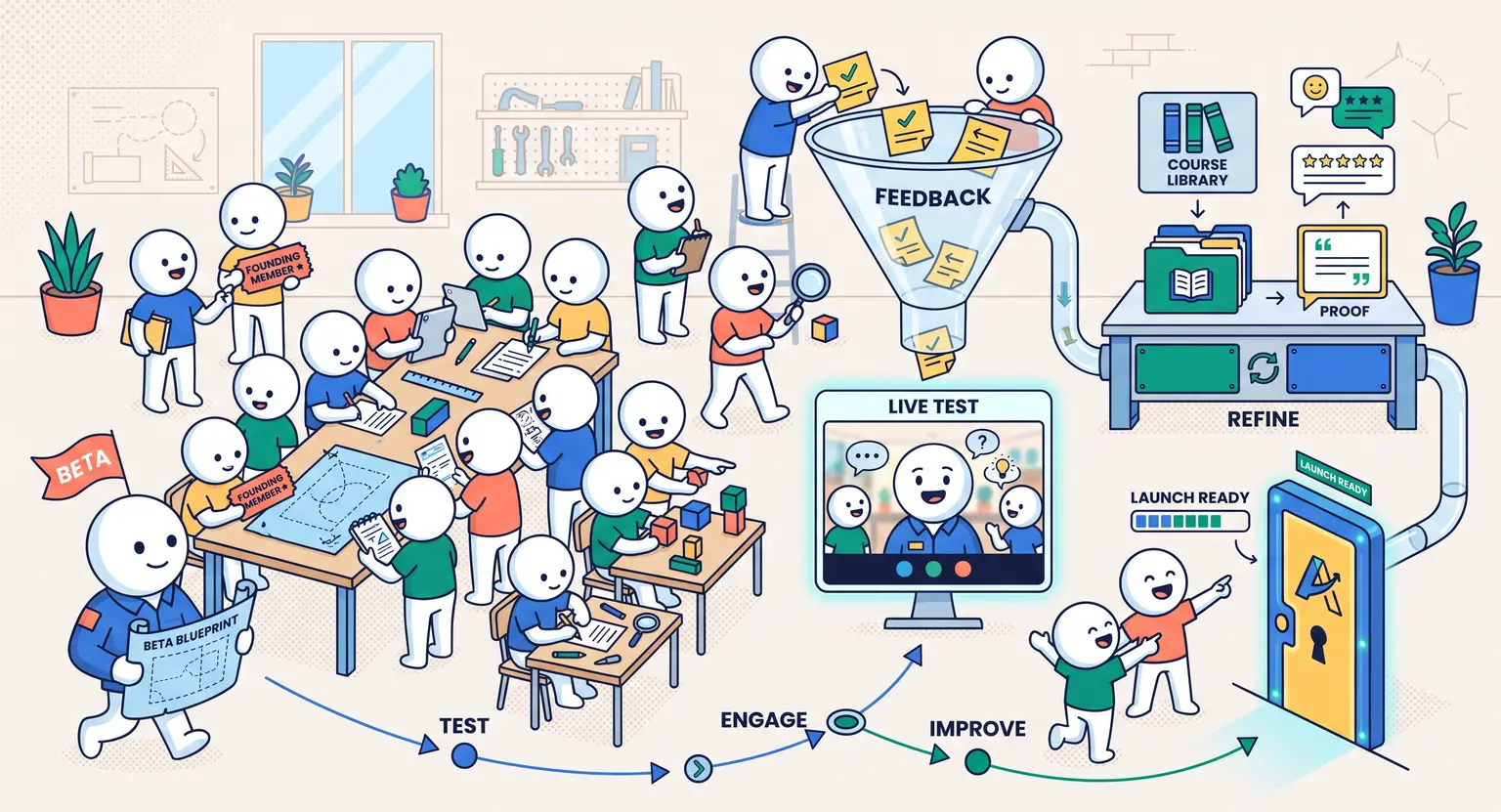 How to Run a Beta Version of an Online Course (2026 Guide)
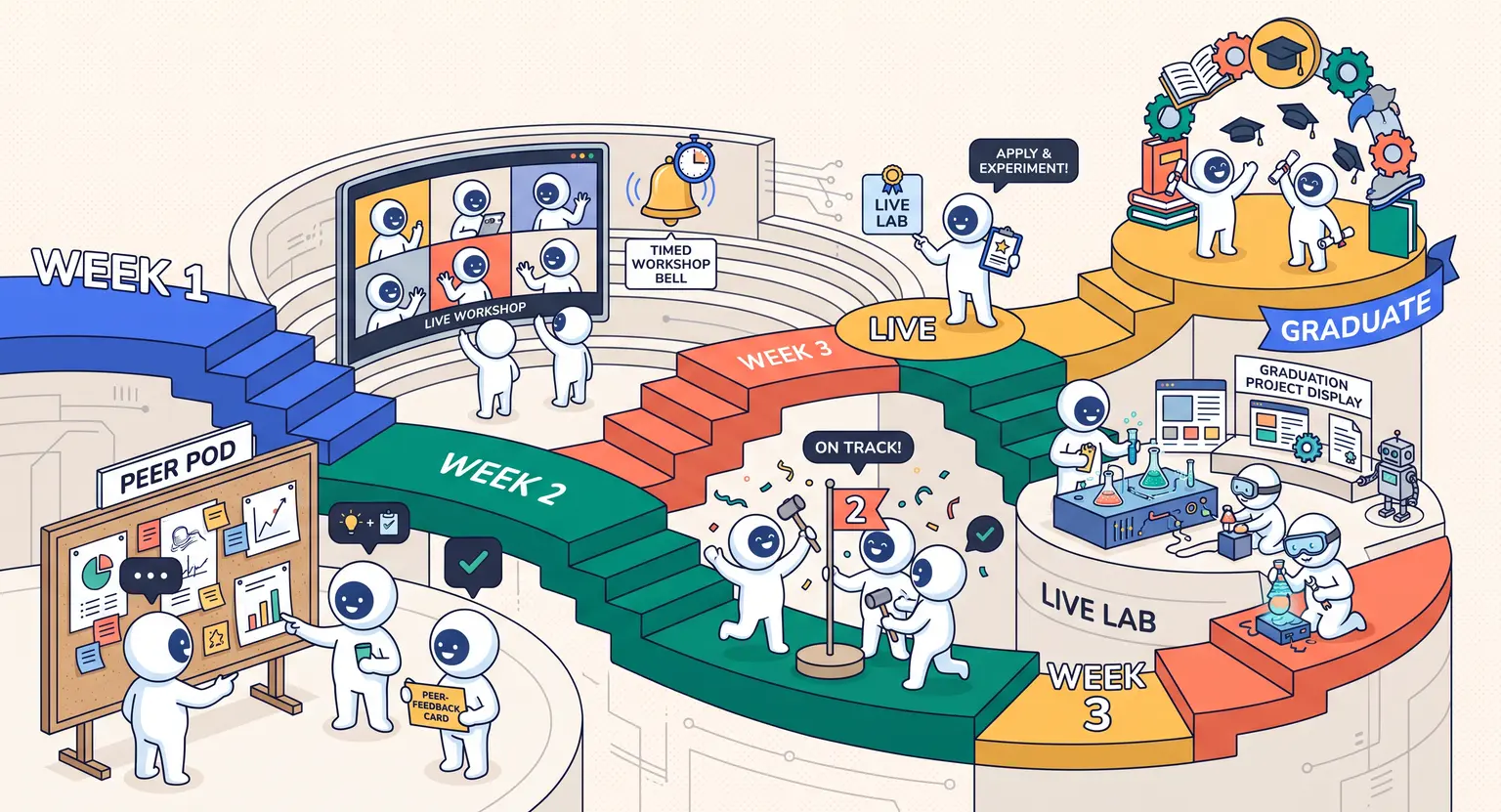 How to Create a Cohort-Based Online Course (2026 Guide)
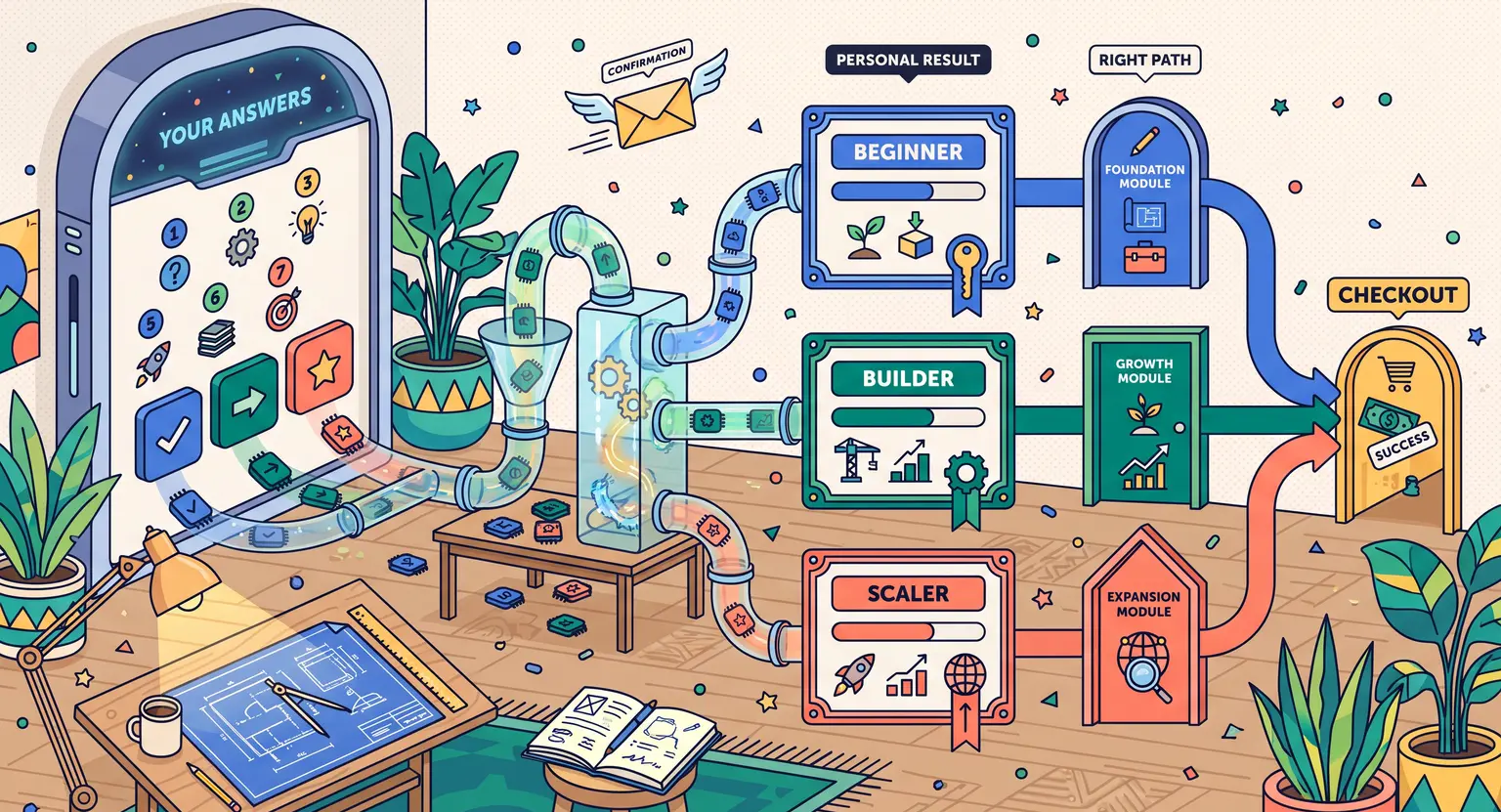 How to Sell an Online Course With a Quiz Funnel (2026 Guide)
 How to Sell an Online Course Through a Sales Call (2026 Guide)