







How to Sell Digital Products in 2026: The Complete Step-by-Step Creator Strategy
How to Sell Digital Products
You have seen the screenshots : a clean checkout dashboard, a massive spike in revenue, and a caption boasting about automated digital sales. It looks easy.
Selling digital products is incredibly lucrative, but the path from a blank page to a thriving business is paved with small, critical decisions that most people skip.
So, how do you make this work?
It isn't about chasing every fleeting trend - it is about understanding what your audience desperately needs and delivering it in a format they love.
Whether you want to package your professional expertise, sell templates, or design deep-dive guides, this playbook covers the exact steps to make your first online sale and scale it.
Let's make it happen !
Key Tactics for Success :
-
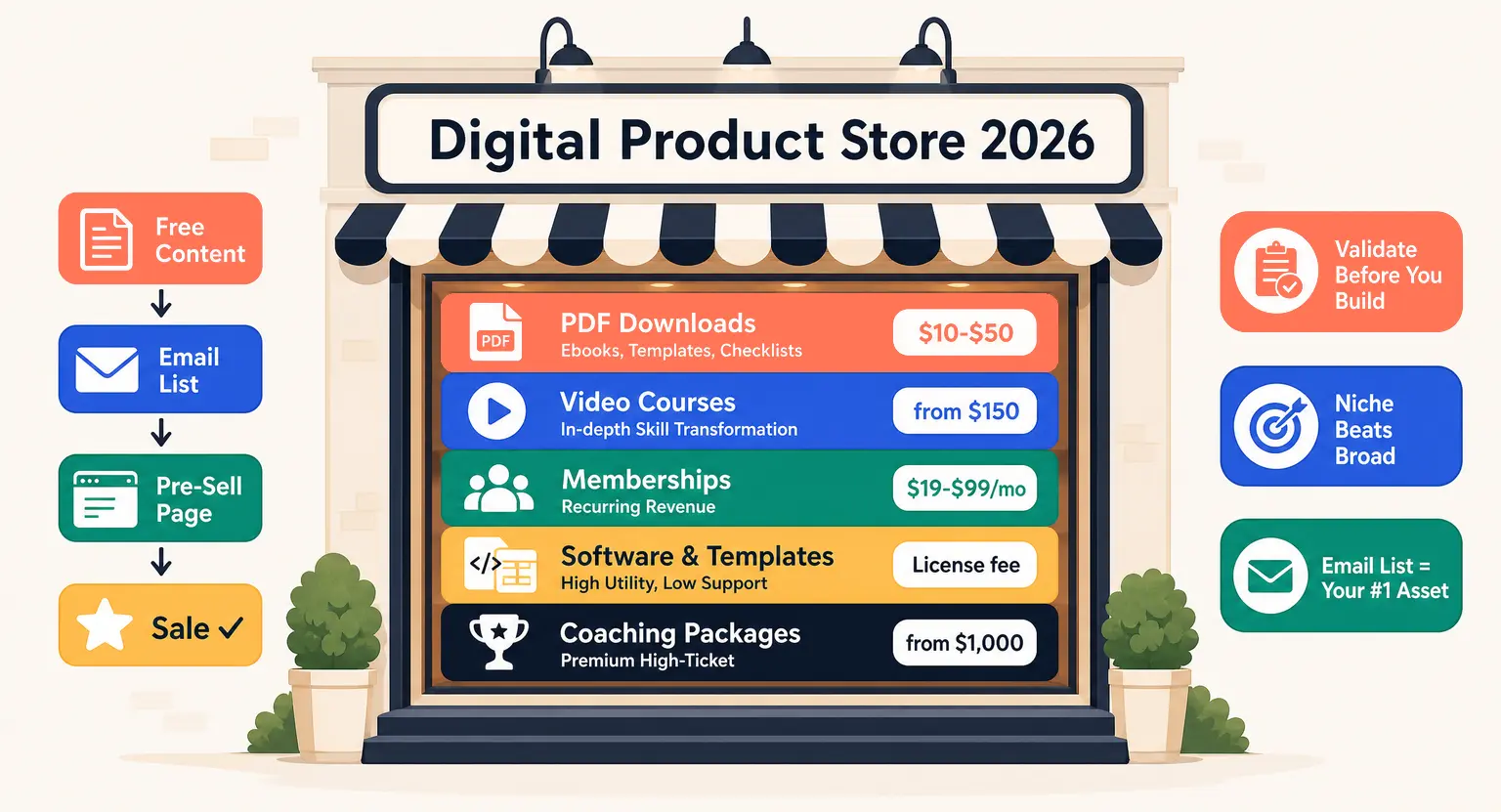
Validation is non-negotiable. Always pre-sell or test interest before spending weeks building anything. Refer to how to validate an online course idea to make sure your audience actually wants what you are making.
-
The riches are in the niches. Specific beats broad. Have a look at digital product ideas to find your specific angle.
-
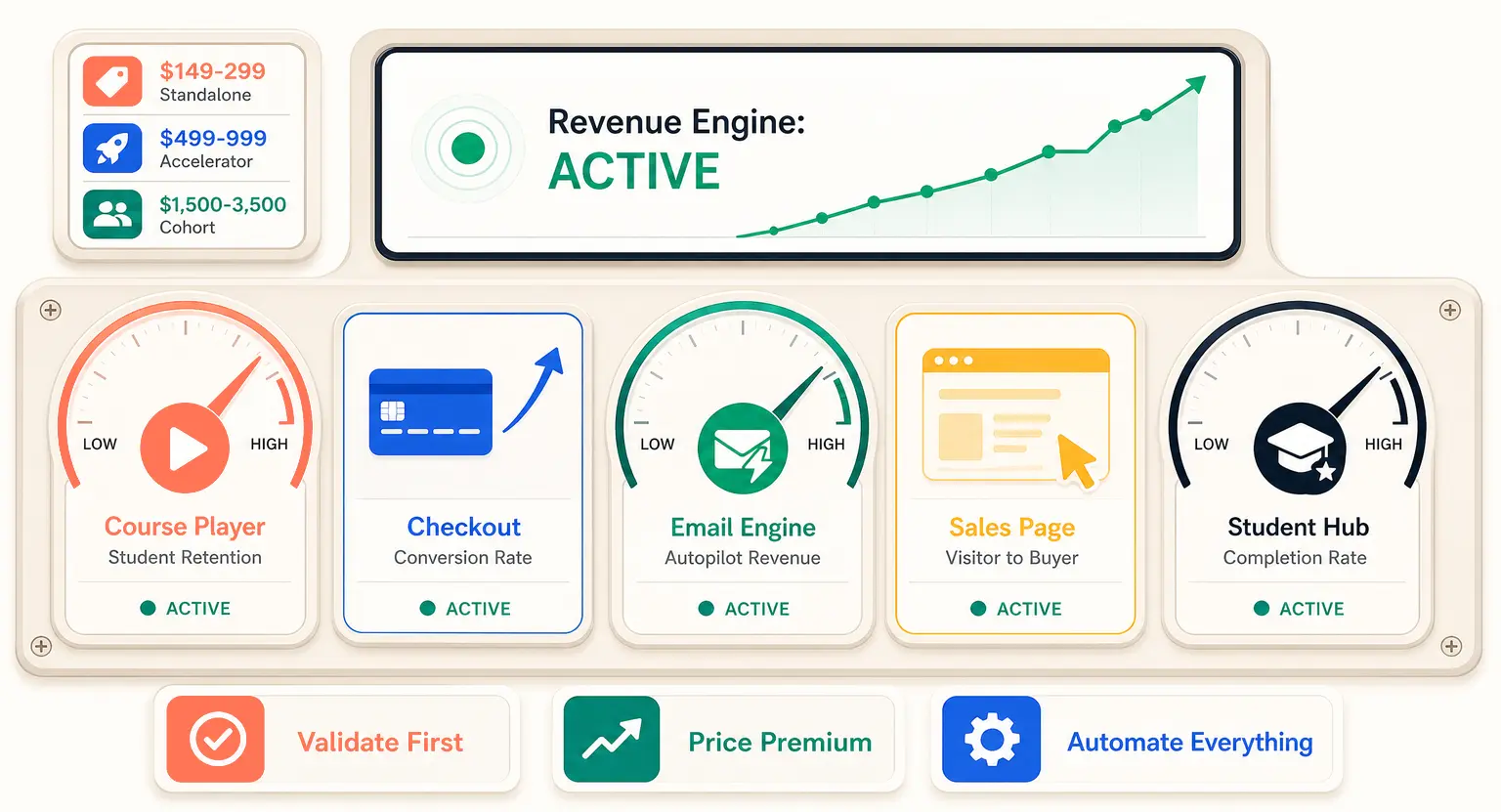
Simplify your tools. Avoid tying together multiple platforms. Using an all-in-one platform to sell online courses keeps your business clean, fast, and organized.
-
Your email list is your biggest asset. Start building your subscriber base on day one. Learn how to build an email list to cultivate direct sales.
1. Zeroing In on Your High-Value Product Idea
You don't need a groundbreaking, world-changing idea to build a profitable digital business.
You just need to solve a specific, painful problem for a clearly defined group of people.
If you find yourself repeatedly answering the same questions for clients, you already have the raw materials for a digital product. Package that advice.
But here is the catch : some formats are much easier to sell than others. Learn how to monetize your knowledge to turn abstract wisdom into structured, sellable digital materials.
Think about what you do naturally that others struggle with. Build systems templates, checklists, or short video tutorials. The goal is to save your buyer time, money, or frustration.
If your product does one of those three things, people will happily open their wallets.
2. Why Pre-Selling Is Your Secret Weapon
The biggest mistake aspiring digital creators make is disappearing into a cave for three months to build what they think is the perfect product…
And when they finally emerge, they are met with dead silence. No sales. No clicks. It is complete silence. This is completely avoidable.
You must validate your idea before you write a single line of copy. And the ultimate form of validation is cold, hard cash. Set up a simple landing page, offer a discounted pre-order price, and see if people buy.
This strategy is incredibly powerful when launching structured assets. Learning how to launch an online course through pre-selling allows you to fund your creation phase with the money your future customers provide.
If people do not buy during a pre-sale, it is not necessarily a failure.
It means your messaging is off, your offer needs tweaking, or there is no market - you saved yourself months of wasted labor.
If they do buy, you now have the ultimate motivation to build the absolute best version of that product.
3. Selecting the Right Tech Stack for Growth
It is easy to get bogged down in technology. You start looking at page builders, email tools, carts, and hosting, and suddenly you are paying four subscription fees for tools that do not talk to each other.
It is a recipe for tech headaches and high expenses.
Keep things clean. You want a tool that lets you manage your sales, host files, take payments, and communicate with customers under one roof.
Minimizing your toolchain frees you up to focus on creating and selling.
But as you grow, make sure your setup can scale with your ambitions.
Let us break down the common options you will face when deciding how to deliver your digital products to your audience.
| Delivery model | Best suited for | Key advantage | Typical pricing style |
|---|---|---|---|
|
PDF downloads |
Ebooks, templates, checklists, and guides. |
Incredibly low barrier to entry. |
One-time payment ranging from $10 to $50. |
|
Video courses |
In-depth tutorials and comprehensive skill transformations. |
Highest perceived value and student trust. |
One-time payment starting around $150. |
|
Membership communities |
Ongoing resource updates and user networks. |
Predictable and recurring monthly cash flow. |
Monthly subscription ($19 to $99). |
|
Software utility |
Spreadsheets, scripts, boilerplates, and plugins. |
Highly functional with very low support. |
One-time license or small upgrade fee. |
|
Coaching packages |
Mentorship, direct support, and live questions. |
Commands premium high ticket pricing. |
Premium pricing starting from $1,000. |
4. Cracking the Code on Digital Product Pricing
Pricing is psychological. If you price your digital guide at $5, people will assume it is a basic blog post saved as a PDF and treat it with little respect.
If you price it at $150, they will expect a masterclass that solves a massive pain point.
Align your pricing strategy with the actual value your product delivers, not just the file format.
Remember, a cheap product is not always easier to sell. Selling a $100 product to 10 people requires far less traffic and marketing effort than selling a $10 product to 100 people.
Implementing a clever online course pricing strategy will help you tier your offers. This appeals to beginners while capturing high-paying customers.
Do not get paralyzed trying to find the perfect starting price. Pick a sensible tier, launch it, and observe how your audience behaves - you can always run promotions or adjust your model later based on real purchase data.
5. Designing High-Converting Sales Funnels
A sales page that reads like a bland manual will never convert. Your page needs to read like a story where your potential customer is the hero and your digital asset is the tool that helps them win.
Focus heavily on outcomes rather than features - do not just list what is inside the download; explain how their daily life improves once they have used it.
So, how do you get people to that sales page? This is where a targeted, organic lead generation flow comes into play.
You can build a steady stream of traffic by creating highly valuable, free social content or blog posts that tease the solution, then offering an email newsletter to nurture those readers.
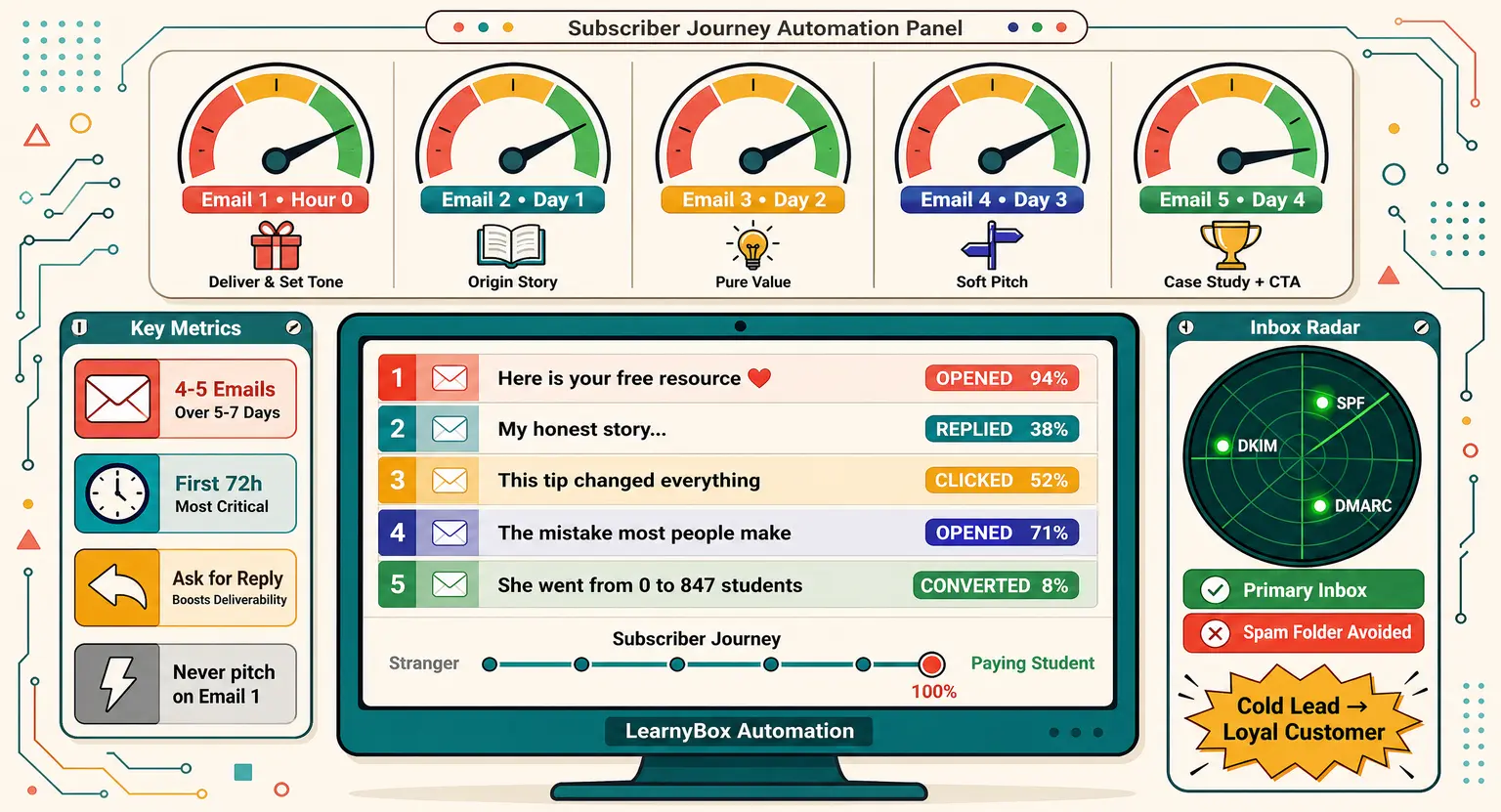
Utilizing a dedicated email marketing platform lets you automate this relationship. You can automatically send warm-up sequences that educate subscribers and transition into pitch emails.
6. Nurturing a Dedicated Customer Audience
Creating your digital product is only half the battle; keeping your audience engaged is what sustains your business long-term.
If you want consistently high sales, you need to turn casual buyers into raving fans who buy everything you release. This starts with providing exceptional customer support and continuing to offer value long after the transaction has cleared.
But how do you handle this without wasting hours?
Set up post-purchase email sequences that check in on customers, ask for feedback, and offer helpful tips.
This establishes professionalism and builds trust.
Do not forget to leverage your happy customers' success. Collecting written feedback and video testimonials is the single most powerful way to slash objection rates on your sales pages - when a hesitant browser sees a success story from someone who was exactly in their shoes, their resistance completely melts away.
Explore Further to Grow Your Sales :
-
Discover how simple it is to get started by establishing an LMS free account today.
-
Get inspired with high-yielding templates and profitable online course ideas designed for practical niches.
-
Start package sales quickly by learning the mechanics of how to make money teaching online with a structured curriculum.
Frequently Asked Questions
Do I need to be an absolute expert to sell digital products?
No, you do not. You only need to be a few steps ahead of the people you are helping.
If you have solved a problem for yourself or resolved it for a client, you can package that exact solution into a digital format. Many successful creators sell simple checklists or systems templates that merely organize open-source information in a highly usable, timesaving way.
Do not let imposter syndrome hold you back; focus strictly on providing exceptional utility to your specific buyers, rather than worrying about academic credentials or professional certifications.
What is the most profitable digital product to sell online?
The most profitable products are those that provide high-perceived transformation or massive timesaving utilities.
Structured premium learning material and templates lead the pack. Check out the top online course ideas expert guide to see how creators package specialized knowledge into high-margin offers.
Ultimate profitability depends on targeting a niche that has a very clear and urgent business or personal pain point that people are already actively spending money to try and solve.
How can I protect my digital products from being pirated?
The hard truth is that you cannot prevent digital piracy entirely. If someone is determined to share your PDF, they will find a way.
However, you can significantly minimize theft by hosting your assets on a secure web portal that requires logins or contains dynamic elements.
It is much wiser to focus your energy on marketing to honest, high-value customers who respect your intellectual property than constantly stress about minor file sharing.
Do I need a large social media following to make sales?
You do not need thousands of organic followers to build a highly successful digital business.
A tiny, highly engaged, hyper-targeted email list of just one hundred people will easily outperform a massive, disengaged following of ten thousand people on social platforms.
Focus all your marketing energy on finding your ideal customers in niche communities and driving them into your private newsletter list where you can pitch your products cleanly.
Are there any hidden transaction fees when selling products online?
Yes, standard payment gateways usually charge a small base percentage per transaction plus a flat fee. This typical cost represents about three percent.
You can combat this overhead by using optimized platforms with integrated payment options.
Some web hosting platforms offer built-in financial portals that integrate payment processing efficiently, allowing you to bypass multiple layer structures. Keep a close eye on your transaction pricing structures to maintain clean margins.







 How to Create a Course Refund Policy (Templates & Best Practices for 2026)
 How to Run a Beta Version of an Online Course (2026 Guide)
 How to Sell an Online Course With a Quiz Funnel (2026 Guide)
 How to Sell an Online Course Through a Sales Call (2026 Guide)