






Top 7 Mistakes to Avoid When Creating Online Courses in 2026
Mistakes to Avoid When Creating Online Courses
Key Takeaways
-
Focus on outcomes : students are buying results, not your time.
-
Avoid data dumping : strip away anything that doesn't lead directly to the goal.
-
Engagement is king : use active learning tools like workbooks and quizzes.
-
Scalable systems : use an all-in-one platform to sell online courses to manage everything in one place.
The world of digital education changed massively over the last couple of years... Back in the day, you could throw together a few shaky PowerPoint presentations, record some muffled audio, and people would still buy your course because the options were limited.
But we are in 2026 now.
The "information economy" has transitioned into the "implementation economy."
People don't want more information; they are actually drowning in it.
They want a bridge from where they are now to where they want to be, and they want it built with as little friction as possible.
And that is where the trouble begins for most creators. I see brilliant experts - people who are genuinely masters of their craft - falling into the same traps over and over again.
They launch with high hopes, only to see their completion rates plummet and their refund requests climb.
It isn't because they don't know their stuff.
Usually, it's because they made one of the fundamental mistakes that turn a great idea into a frustrating student experience.
Let's walk through these landmines so you can steer clear of them.
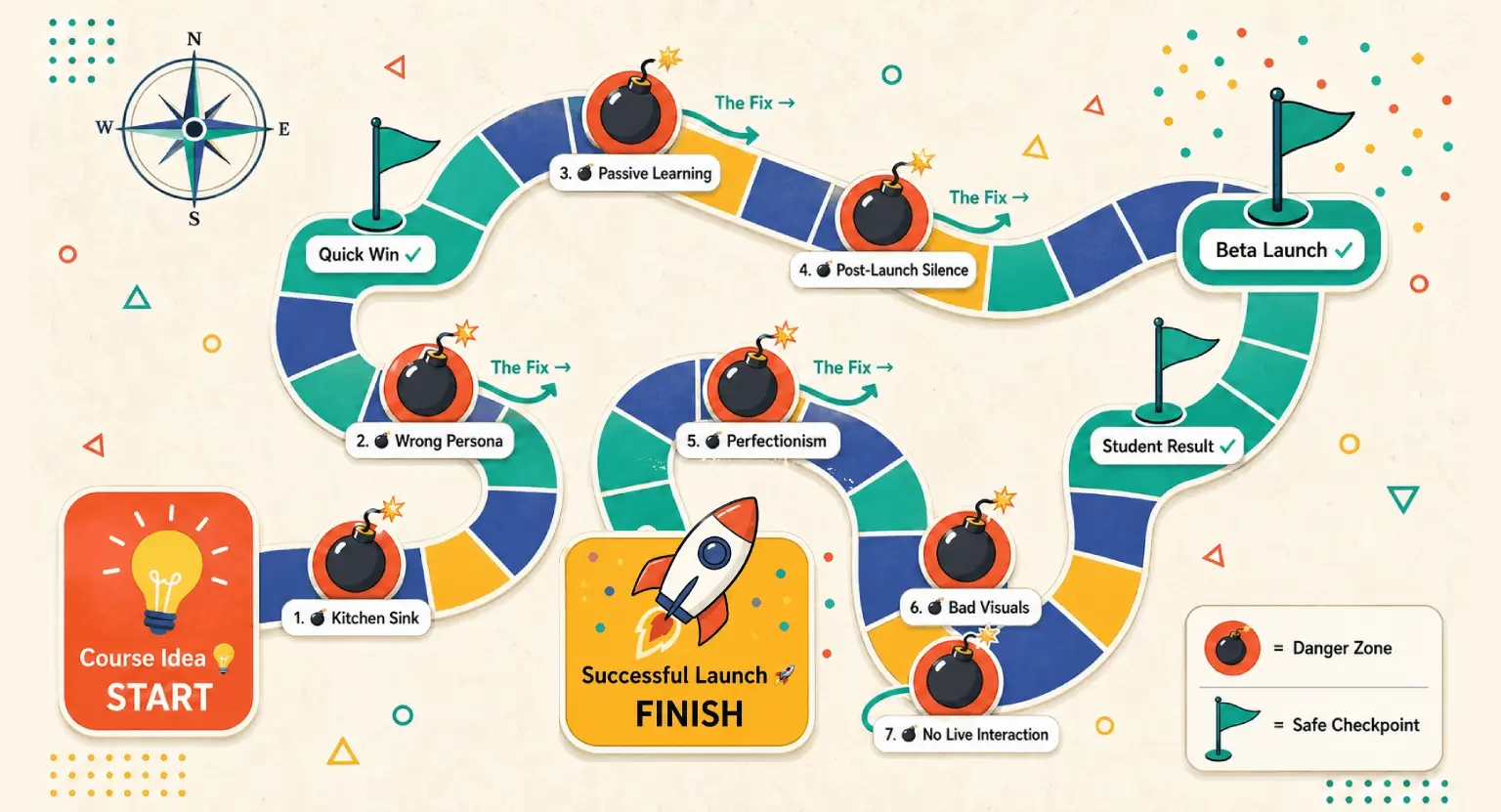
1. The Fatal 'Kitchen Sink' Content Overload
This is easily the most common mistake I see, and it comes from a place of insecurity.
You want to make sure your students feel they got their money's worth, so you decide to include everything you have ever learned about the subject.
You add bonus modules on top of deep-dive lectures, creating a 40-hour behemoth that would take someone months to finish.
In your head, you are providing massive value. In the student's head, they are looking at a mountain they have no hope of climbing and... They feel overwhelmed before they even finish the first module.
The smartest creators in 2026 are focused on "curated minimalism."
Your job isn't to give them every piece of the puzzle; it's to give them only the pieces they need to finish the picture.
If a piece of information doesn't directly contribute to the student achieving the specific result you promised, cut it out. You can always save that extra gold for a "Level 2" course later on.
Focus on the most efficient path. When you strip away the fluff, your students get results faster, and nothing builds a reputation like a student who actually achieves what they set out to do.
Irregularities to watch for in your content structure :
-
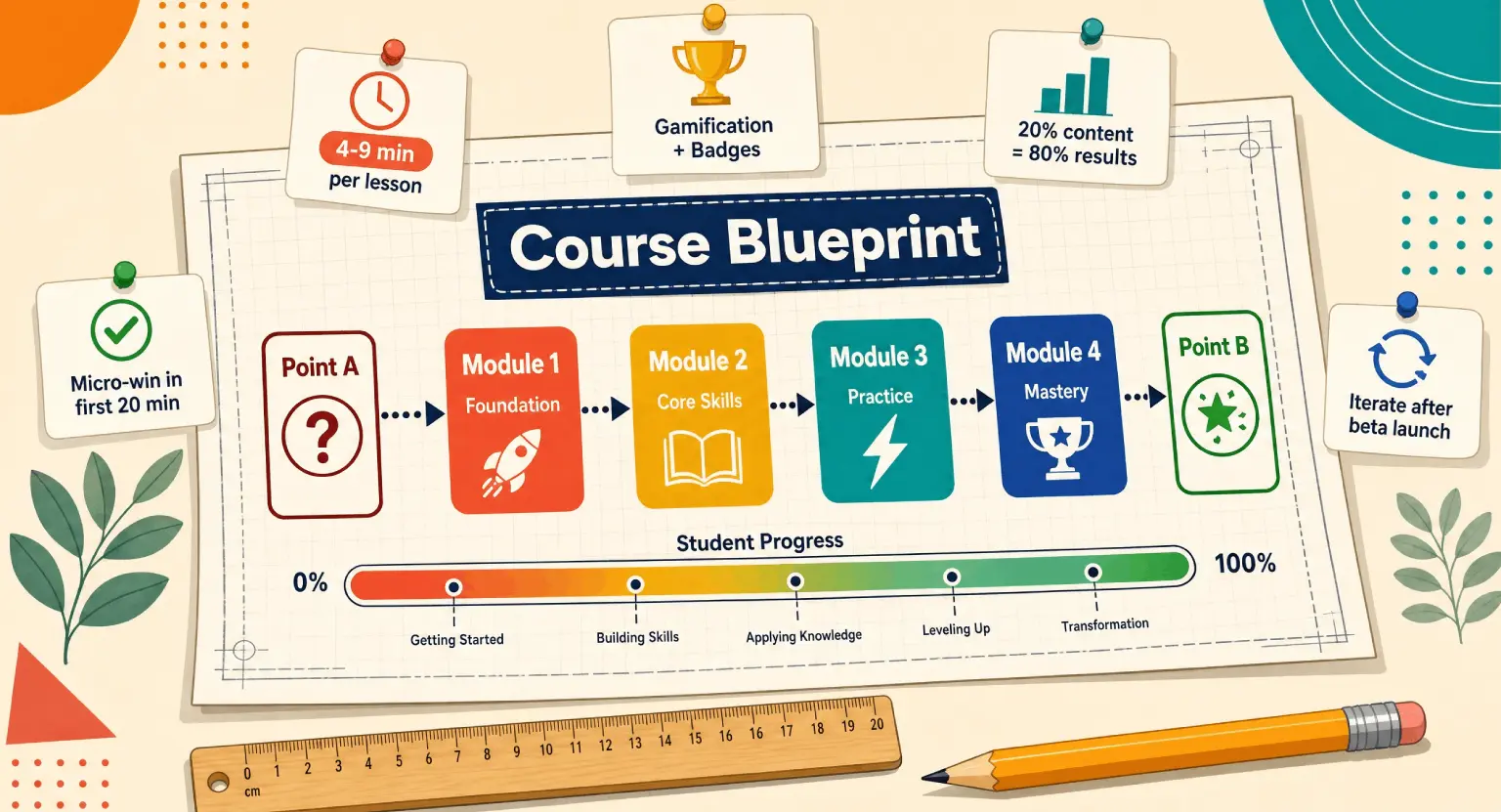
Modules that last more than 15 minutes (keep them bite-sized!).
-
Introductory videos that spend 10 minutes talking about your life story instead of the student's problem.
-
Case studies that are inspiring but don't offer actionable steps.
-
Vocabulary and jargon that make you sound smart but leave the student feeling confused.
2. Building for Everyone Instead of Someone
If you try to teach a course that works for a 20-year-old college student and a 60-year-old retiring executive at the same time, you'll likely fail both.
Their motivations are different.
Their technical skills are different.
Even the language they use to describe their problems is different.
One of the biggest mistakes is failing to define your persona using an essential marketing method before recording a single second of video. You need to know exactly who you are talking to, what keeps them up at night, and what their specific "Aha!" moment looks like.
When your messaging is vague, your marketing feels "salesy" because it isn't hitting home. But when you know your persona intimately, your course feels like it was whispered directly into their ear.
You use their specific pain points as examples. You anticipate their exact objections. This builds an incredible amount of trust.
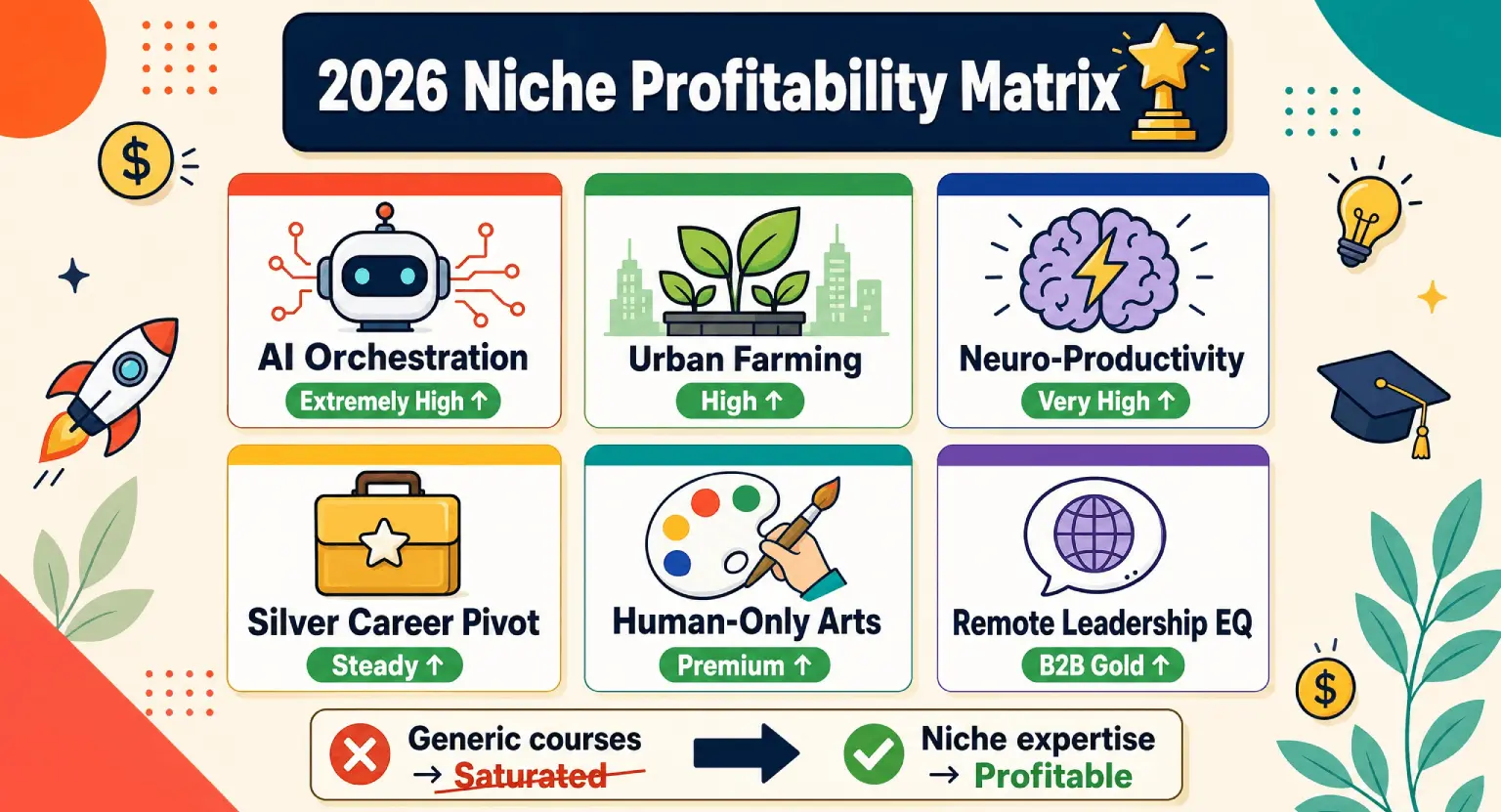
In 2026, niche courses are outperforming broad ones every single day.
Being the world's leading expert on "Gardening for High-Rise Balcony Owners" is much more profitable than being just another "Gardening Expert."

3. The "Passive Learning" Trap
We've all been there - buying a course, watching the first three videos, and then never logging back in again.
Why does this happen?
Usually, it's because the course creator treated the student like a spectator rather than a participant.
If your course is just a series of videos, it's not really a course; it's a documentary. To avoid this, you have to bake engagement into the very DNA of your curriculum. Students need to be doing things, not just watching things.
This is where many creators fail; they forget to bridge the gap between "hearing" and "doing."
But how do you fix this?
You need to implement "checkpoints."
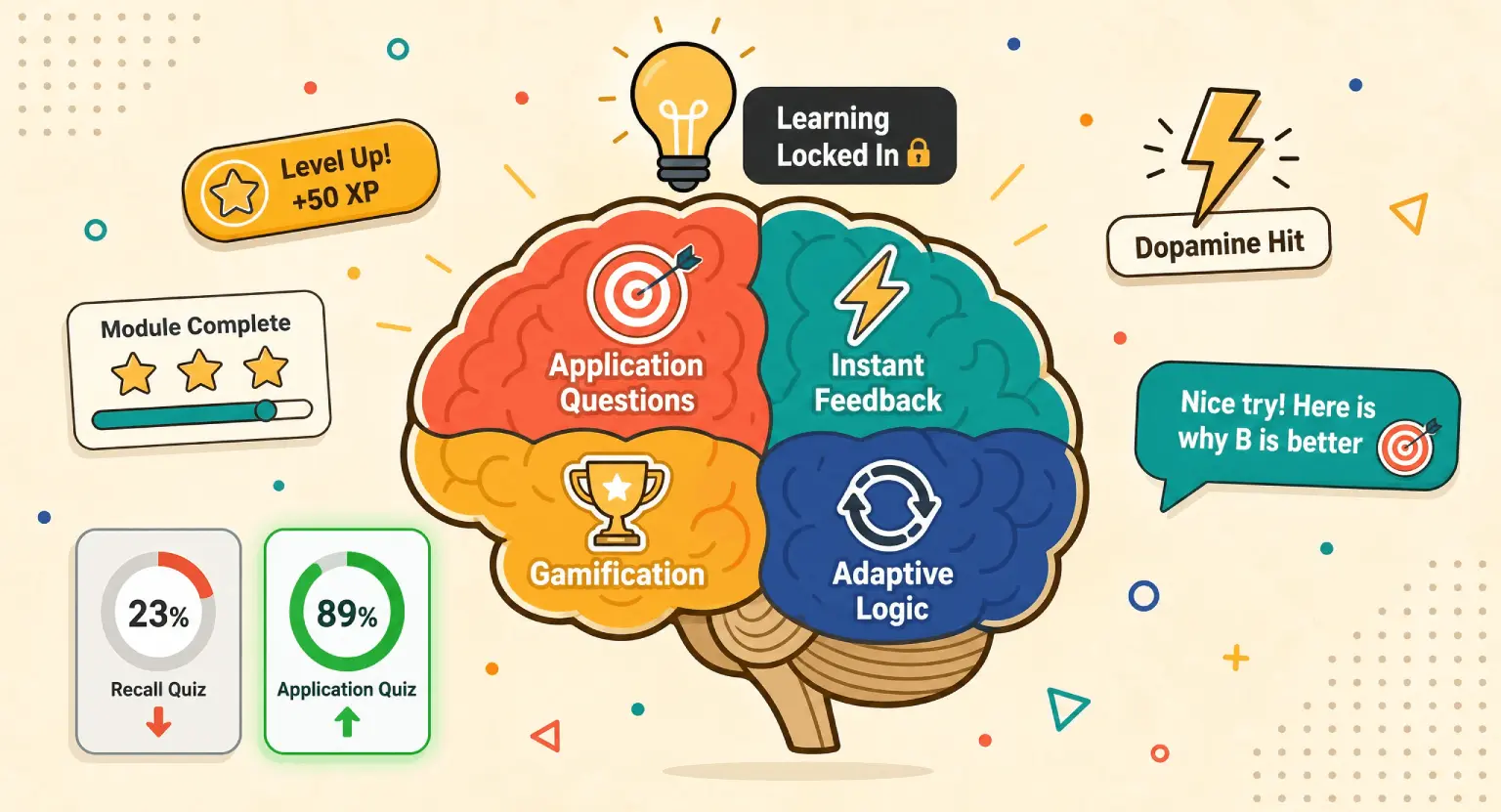
These can be small wins that the student achieves at the end of every module. Using tools to create quizzes for online courses is a perfect way to do this. It forces the brain to retrieve the information it just processed, which is the only way real learning actually sticks.
If they can pass a quick quiz or finish a small exercise, they get a hit of dopamine that carries them into the next lesson.
Without these checkpoints, the momentum dies out by module three.
Comparison : Mistakes vs. Expert Solutions
| Common Mistake | Why it Fails | The 2026 Solution |
|---|---|---|
| Information Dumping | Total student overwhelm and "analysis paralysis." | Curated content focusing only on the "Minimum Viable Knowledge." |
| Bad Audio Quality | High cognitive load makes it physically tiring to listen. | Investing in a quality dynamic mic and basic soundproofing. |
| Missing Action Steps | Students learn theoretically but never implement. | Provide a how to create a course workbook guide for every module. |
| "Ghosting" Students | Students feel abandoned and lose motivation quickly. | Implementing community forums or weekly Q&A office hours. |
| Ignoring Feedback | The course becomes outdated or misses the mark. | Iterative updates based on real user data and completion rates. |
4. The "Post-Launch" Marketing Silence
And here is another heartbreaker : a creator spends three months perfecting their curriculum, they have a big launch week, they get a few dozen sales, and then... they stop.
They think the work is done. But a course isn't a "set it and forget it" business model if you want it to grow.
The biggest mistake you can make is thinking that once the product is live, the sales will just keep rolling in via magic.
You need a way to keep the top of your funnel full of new people who are discovering your expertise for the first time.
So, the real pros focus on long-term authority building. They don't just rely on ads; they use educational marketing. They learn how to launch an online course as a repeatable cycle rather than a one-time event.
Whether that's through consistent content on social media, guesting on podcasts, or running regular live events, you have to stay visible - If you disappear after your launch, your course will die on the vine, regardless of how good it is. Keep the conversation going.
5. Perfectionism Over Validation
Do you know what's worse than launching a course that's 80% perfect? It's never launching a course at all because you were waiting for it to be 100% perfect.
Many experts get stuck in the "creation phase" for years. They tweak the slides, they re-record the intro, they change the color scheme of their sales page. But they haven't actually asked anyone to buy it yet.
This is a massive mistake because you are building based on your assumptions, not on actual student feedback. You might spend months building a feature or a module that nobody actually wants or needs.
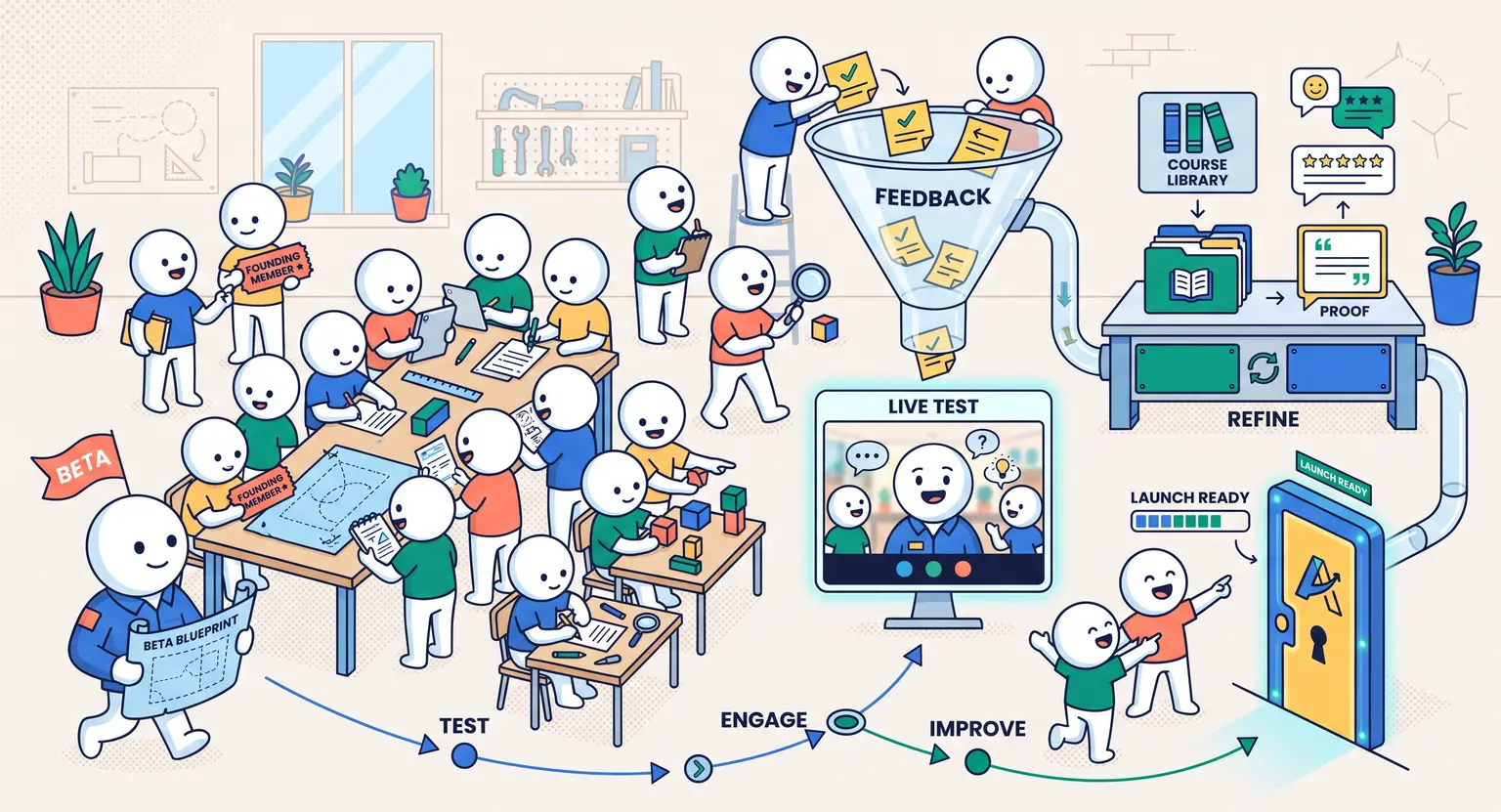
The better way? Launch a "Beta" or a "Minimum Viable Product" (MVP). Get a small group of people in at a discount. See where they get stuck. See which lessons they skip. Use that real-world data to refine the course before you go for the massive, "official" launch.
This takes the pressure off you to be perfect from day one and ensures that when you do finally go big, you are selling something that is already proven to work.
It's about being agile, not about being flawless from the jump. Honestly, your first version will never be your best version anyway, so just get it out there.
And if you are worried about the technical side of managing all this, don't overcomplicate it.
Use a solid foundation like the LearnyBox free trial to test out the tools without a massive upfront investment.
You need a platform that scales with you, not one that requires a PhD in computer science just to upload a video.
Focus your energy on the teaching, and let the tech handle the heavy lifting. That's the secret to staying sane as a creator in 2026.
6. Neglecting the "Visual Story"
Now, I'm not saying you need a Hollywood film crew, but I am saying that your visual presentation matters because it signals professionalism.
If your slides are cluttered with too much text, students will stop listening to you and start trying to read - and the brain can't do both effectively at the same time.
A major mistake is using your slides as a teleprompter. Your slides should illustrate what you are saying, not repeat it.
Use high-quality imagery, clear diagrams, and plenty of white space to give the student's eyes a rest.
But it's not just about the slides. It's about your presence. If you're on camera, make sure your lighting is coming from the front, not the back. Make sure your background isn't distracting.
These small details aggregate into an overall sense of "Is this worth my $500?" If the course looks like it was made in a basement during a power outage, students will struggle to perceive the value, even if the information is pure gold.
Clean up your visual act, and your perceived authority will instantly jump five notches.
To keep people engaged, consider these visual anchors :
-
Use a physical whiteboard or digital drawing tablet to sketch concepts live.
-
Switch between "talking head" shots and screen shares to break the monotony.
-
Keep your fonts large and readable (especially for mobile users).
-
Incorporate short B-roll or relevant stock footage to emphasize key points.
7. Underestimating the Power of Live Interaction
Even though we are talking about "online courses," which often implies pre-recorded content, the most successful programs in 2026 are "hybrid".
A huge mistake is thinking you can just hide behind your recorded videos forever. People crave human connection now more than ever because everything else is so automated.
If you don't offer any way for students to interact with you - even if it's just a monthly group Zoom call - they feel like they are just another number in your database.
But you can actually turn this into a major selling point. You can teach them how to organize a successful webinar as part of your own course to show them how you handle live questions.
Adding a "live" component doesn't just help the students; it helps you. You hear their questions in real-time, which tells you exactly what parts of your pre-recorded modules need more clarity.
This feedback loop is the fastest way to turn a "good" course into a "legendary" one that people recommend to all their friends. It's the difference between being a teacher and being a mentor.
At the end of the day, creating an online course is one of the most rewarding things you can do for your business and your life.
It allows you to scale your impact and stop trading every single hour of your life for a paycheck.
But it requires you to be intentional. Avoid these common mistakes, focus on your student's success above all else, and you'll find that building a high-impact course is a lot more achievable than you think.
The market is waiting for someone to teach them the right way - it might as well be you.
FAQ Section
What is the biggest mistake first-time course creators make?
The most frequent error is content over-stuffing, also known as the "Kitchen Sink" syndrome.
Creators feel the need to prove their value by including every single thing they know about a topic. This actually overwhelms students and prevents them from taking action.
In 2026, students pay for the fastest route to a specific result, not for the most hours of video content. Focus on the transformation, not the duration.
How can I ensure my course content stays engaging?
Engagement comes from active participation rather than passive watching. You should build interactive elements like assessments or specialized tools.
Many experts now focus on how to create quizzes for online courses to break up long lectures and provide immediate feedback.
This keeps the learner's brain active and helps them retain information much more effectively than just watching videos.
If they aren't "doing," they aren't "learning."
Is video quality more important than the actual teaching method?
Not at all. While professional lighting and audio are expected in 2026, they cannot save a poorly structured course.
It is a massive mistake to prioritize expensive gear over sound instructional design.
Focus on the transformation and the clarity of your message first.
Your students would rather have a life-changing lesson filmed on a smartphone than a boring, useless lecture in 8K resolution.
Audio is actually more important than video, so get a good mic first.
Why do most courses fail to sell after the initial launch?
Most post-launch failures happen because the creator stops marketing once the course is live.
Creating the course is only half the battle. You need a sustainable ecosystem to continue reaching new people.
This involves understanding how to organize a successful webinar to build trust and demonstrate your expertise to fresh audiences consistently throughout the year.
You have to treat your course like a living business, not a finished project.
Can I launch a course if I'm not a world-renowned expert?
Absolutely. One of the biggest mistakes is "imposter syndrome" keeping you from starting.
In 2026, people don't just want the "guru" on the mountaintop; they want someone who is just a few steps ahead of them and remembers what the struggle feels like.
You don't need a PhD; you need a process that works. If you have solved a problem for yourself or for a client, you have something worth teaching to others who are still stuck in that problem.



 How to Create a Course Refund Policy (Templates & Best Practices for 2026)
 How to Create a Cohort-Based Online Course (2026 Guide)
 How to Sell an Online Course Through a Sales Call (2026 Guide)