






Webinar Follow Up Email Sequence: The Ultimate 2026 Guide to Double Sales
Webinar Follow Up Email Sequence : The Ultimate 2026 Guide to Double Sales
Key Takeaways for High-Converting Webinar Sequences
-
Timing is Everything : send your first email within two hours of wrapping up to hit while the topic is warm.
-
Smart Segmentation : treat live attendees, early departures, and no-shows differently to maximize relevance.
-
Urgency Wins : use genuine bonuses and closing deadlines to encourage quick decision-making.
-
Integrated Tools : set up automated triggers easily on LearnyBox.
-
Blueprint Foundation : map your email flow following a high-converting webinar script template.
-
Scalable Funnels : constantly test and refine your loops to build long-term student relationships.
The red "End Webinar" button. You click it. Your heart slows down, you lean back in your chair, and you take a deep, slow breath... The raw rush of presenting to a live crowd is finally winding down.
But if you shut your laptop and wait for sales to roll in on their own, you are making a massive business mistake.
Most people think the main event is where the transactions happen. They believe that a stellar pitch on screen is the absolute end of the sales process.
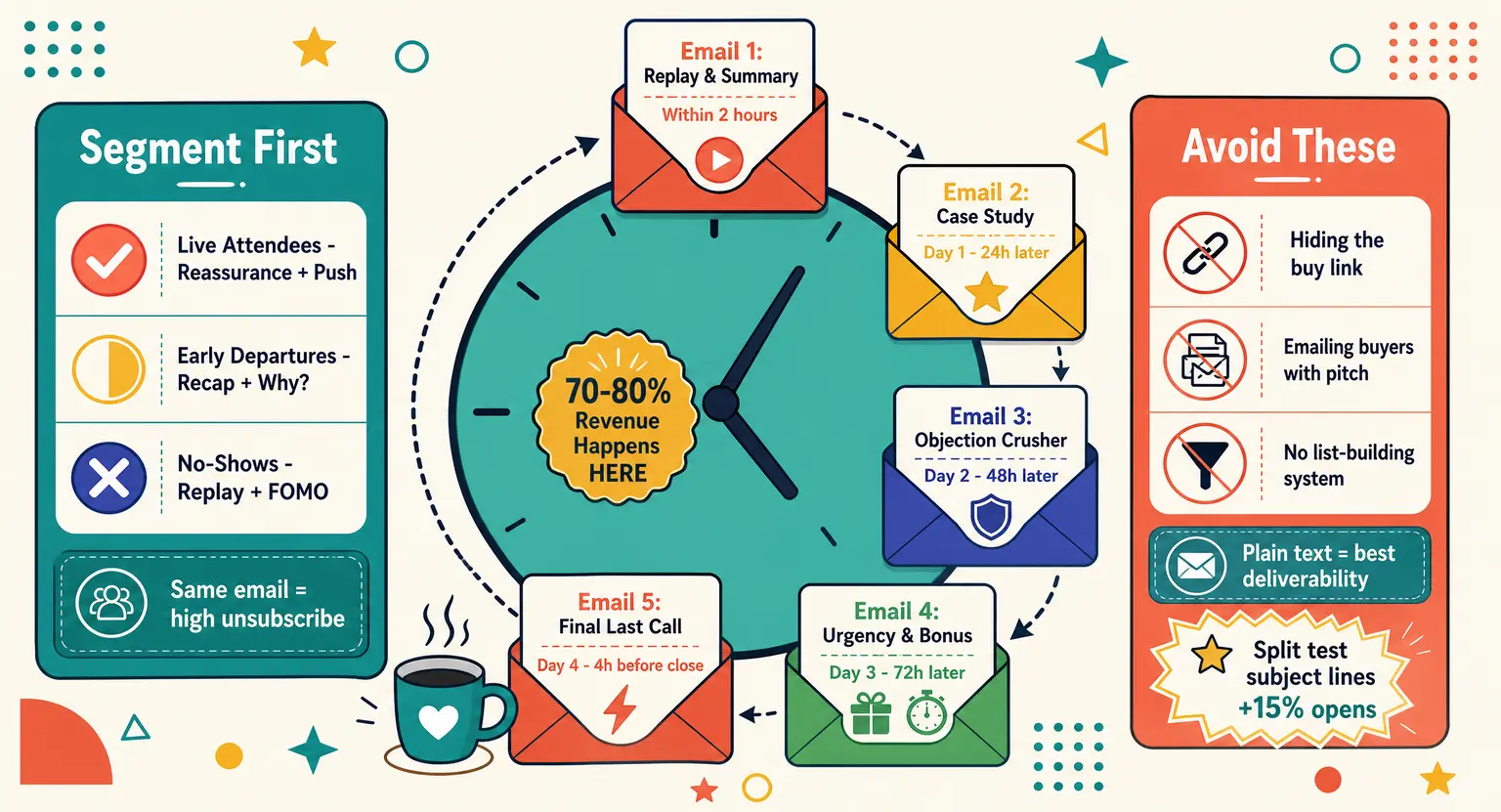
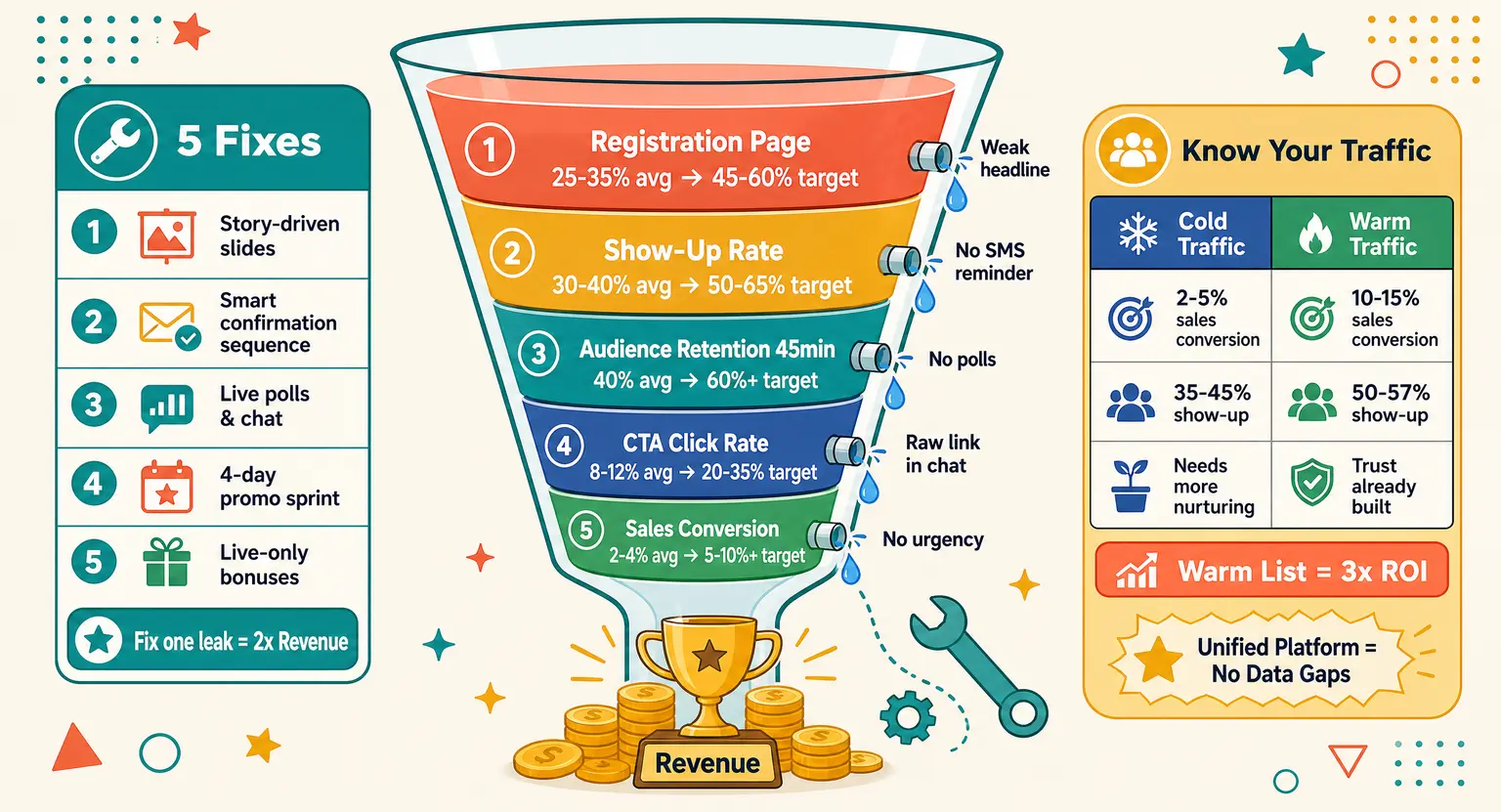
Yet, the actual data paints an entirely different picture. The harsh reality of modern online sales is that easily seventy to eighty percent of your revenue does not happen while you are talking live - it happens over the next few days in the quiet space of your recipient's inbox.
People are incredibly busy - they might have loved your live offer, but their kid started crying, their doorbell rang, or they simply wanted to sleep on the decision before typing in their credit card details.
So, if you do not follow up with a highly intentional, friendly, and structured campaign, you are essentially throwing money away.
Let us break down exactly how you can build a webinar follow up email sequence that converts hesitant lookers into passionate buyers without sounding like a pushy salesperson.
We will look at how human psychology drives purchasing decisions long after the broadcast finishes and how you can capture that momentum easily.
The Critical Foundation of Segmentation
Treating your entire email list like a single, massive monolith is a fast track to high unsubscribe rates and low engagement.
If someone sat through your entire ninety-minute presentation, they do not need the same message as someone who signed up but forgot to attend because they were stuck in traffic. And a person who clicked away after ten minutes needs a different hook entirely.
Let us look closely at how we segment these groups to make every email feel highly relevant...
First, we have the live attendees. These are people who heard your pitch, saw your offer, and stayed to the end. They are closest to purchasing. They need reassurance, answers to questions, and a gentle push.
Second, there are the early departures. They showed up, but they dropped off before the pitch.
Why? Maybe they had a hard stop, or perhaps they felt the content was not a perfect fit. You want to offer them a quick recap and find out what made them run.
Third, we have the no-shows. These registered users never entered your virtual room - but do not write them off. They are still highly interested leads !
They just encountered a scheduling conflict. They need a link to the replay, clear lessons summarized, and a dash of genuine fear of missing out.
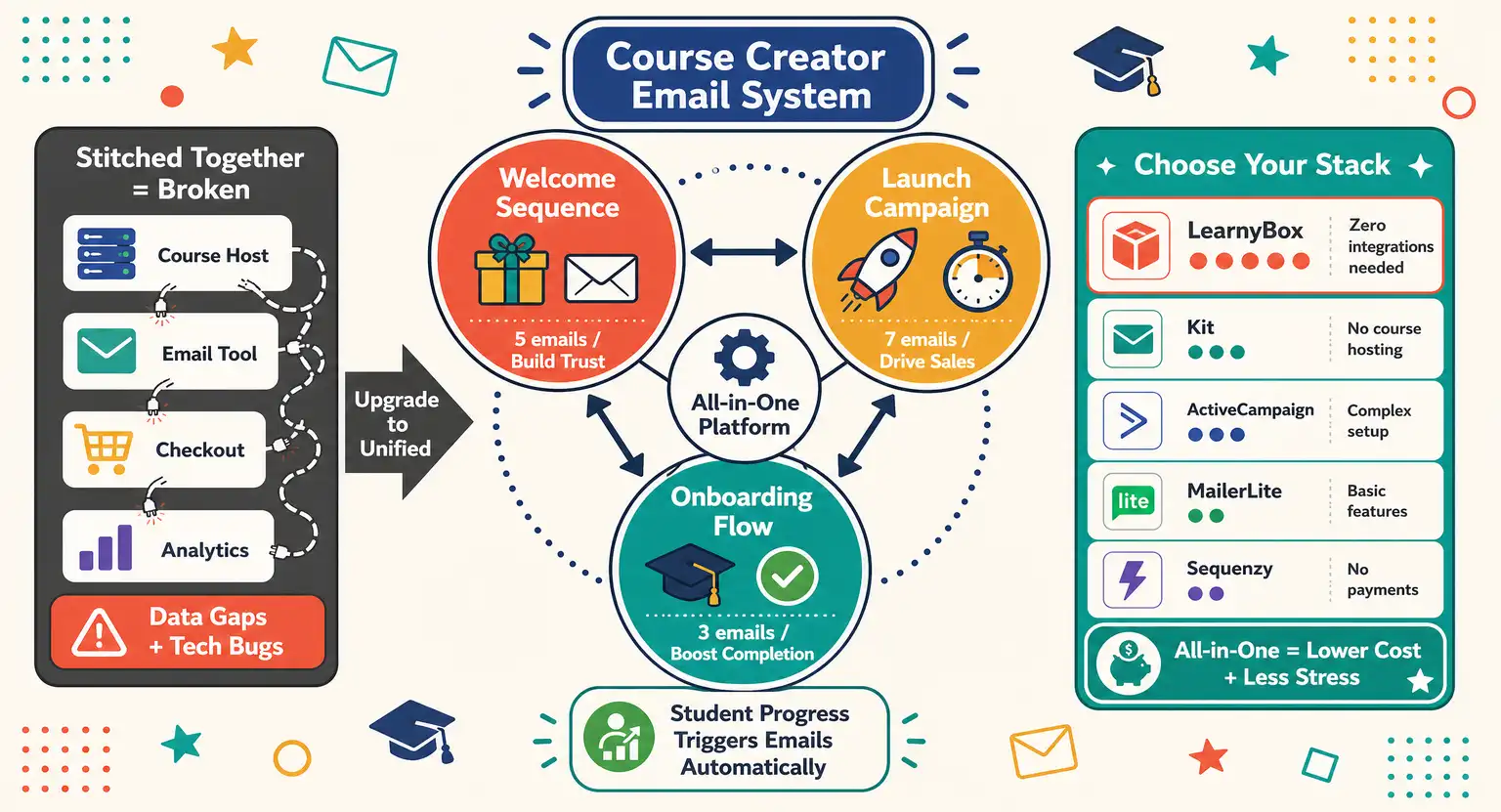
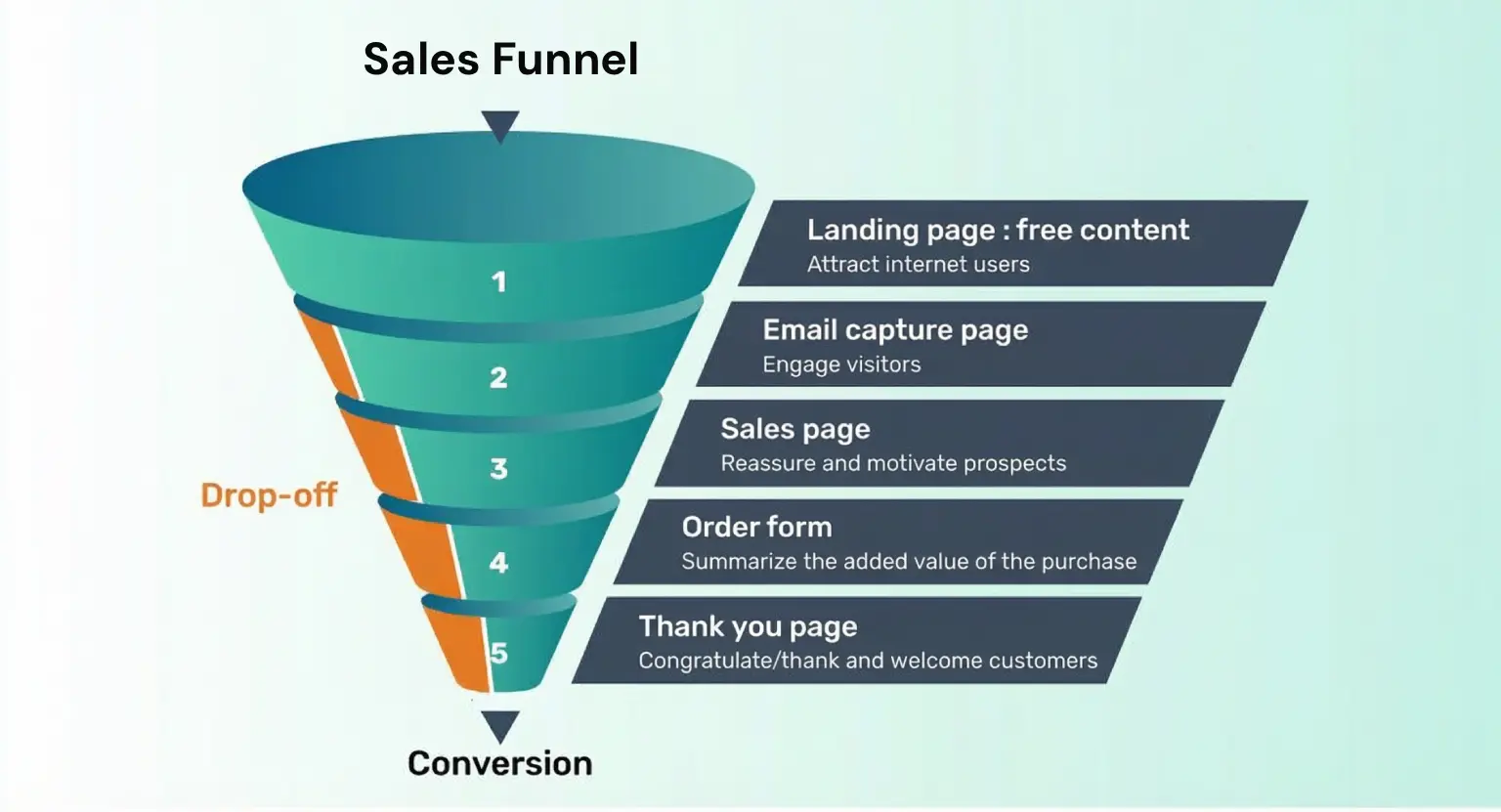
To manage all of this, relying on scattered tools is an absolute nightmare. Setting up behavior-based triggers is much smoother when you use integrated sales funnels that tie your registration page, broadcasting room, and mailing platform under one cohesive roof.
The Ultimate 5-Step Follow-Up Sequence
Now that your segments are clean and sorted, how do you map the actual messages?
Over the years, testing shows that a five-step series across four to five days strikes the perfect balance. It is long enough to overcome objections, yet tight enough that people do not lose momentum.
Let us map out this blueprint step by step.
Email 1 : The Fast Replay & Summary (Sent within 2 hours)
Do not wait until the next day to send your first message. Send this email while the topic is still warm in their minds.
For attendees, thank them for their time and highlight the core golden nuggets you discussed. Provide a direct, clean link to watch the replay if they want to review a specific segment.
For the no-shows, acknowledge that life gets chaotic, show them where they can access the full recording, and keep the focus on the value they missed out on. Keep this message incredibly helpful and low-pressure.
And make sure your call-to-action button to check out your product is prominent. Many of your eager buyers will click through directly from this initial replay link.
Email 2 : The Social Proof & Case Study (Sent 24 hours later)
At this stage, people understand what your product is, but they might be wondering if it actually works for real people.
This email is where you combat skepticism. Tell a real, raw story about one of your successful students or clients - do not just list dry statistics.
Describe where they started, the struggles they encountered, how your specific method helped them break through, and what their life looks like today.
When you show actual human transformation, the sales pitch stops feeling like a pitch. It starts looking like a legitimate bridge to a better future.
Email 3 : The Objection Crusher (Sent 48 hours later)
By day three, the initial excitement of your webinar has begun to fade. Your prospects are now bargaining with themselves, thinking of reasons why they should not buy.
Is it too expensive?
Do they lack the time?
Will this work in their specific local market?
Instead of ignoring these doubts, bring them out into the light.
Format this email as a friendly, conversational FAQ list. Answer the top four or five most common objections with absolute transparency. It shows you know your audience deeply and respect their concerns.
If you are using robust tools from webinars software, you probably noticed some of these questions popping up in your live chat. Use those exact questions to fuel this mail !
Email 4 : The Urgency & Bonus Drop (Sent 72 hours later)
Without a clear deadline, humans will procrastinate forever... They will bookmark your cart and promise themselves they will buy next week, only to forget completely.
In this email, announce that your special webinar-only bonus packages are expiring in twenty-four hours.
Make sure this scarcity is genuine. If you say a bonus is going away, actually remove it.
Fake scarcity destroys trust instantly. Explain why you are closing the doors or removing the bonus - usually, it is because you want to focus heavily on helping the new members succeed, which is a highly respectable reason.
Email 5 : The Final Last Call (Sent 4 hours before close)
This is your shortest, most direct email. It should feel like a quick note written on your phone.
Forget the complex graphics, polished headers, or long explanations. Send a plain-text message that gets straight to the point.
Remind them that the cart closes or the discount disappears in a few short hours.
Ask them a direct question, like : "Are you ready to take action on your goals this year?" Include a clear, bold link to your checkout page and a secondary link to ask your team any last-minute questions.
Optimizing Your Copy and Metrics for Peak Results
Writing the emails is only half the battle. If your deliverability is poor or your subject lines are boring, nobody will ever read your carefully crafted copy.
Let's discuss how to fine-tune your messaging.
First, focus your energy on creating gripping subject lines. Your subject line has one single job : to get the email opened.
Avoid hype-filled statements like "OPEN NOW!!!" or "UNBELIEVABLE OFFER INSIDE!!!" because spam filters will banish your messages to the dark pits of the spam folder.
Instead, try using low-key, personal phrasing. For example, "did you miss this live?" or "quick question about the replay" often work wonders because they mimic emails written by friends.
And when it comes to the body of your email, focus on the user's transformation, not just the features of your product - if you are an educator, you should know that mastering email marketing for course creators relies on building relationship-driven copy rather than purely transactional pitches.
Keep your lines short, vary your rhythm... Write like you talk over a hot cup of coffee with a friend.
We also suggest implementing regular split tests. Try sending two different subject lines to a small sample of your list before letting your main system send the winner to the rest.
This simple action can easily boost your overall open rates by ten to fifteen percent over a single campaign.
Tailoring Your Strategy to Different Audiences
Not every webinar goal is the same. A high-ticket coaching offer requires a slightly different cadence and messaging compared to a low-cost digital book or a membership launch.
The table below compares how you should alter your strategy depending on your target business model.
| Offer type | Sequence length | Core message focus | Primary call-to-action (CTA) |
|---|---|---|---|
|
Low-Ticket Course (Under $100) |
3 Days (3 Emails) |
Immediate utility, simple benefits, and fast-action discount codes. |
Direct checkout link to buy. |
|
Signature Online Course ($200 – $999) |
5 Days (6 Emails) |
In-depth case studies, social proof, addressing learning curve objections. |
Direct sales page or product checkout page. |
|
High-Ticket Coaching ($2,000+) |
5 to 7 Days (7 Emails) |
Personalized outreach, deep trust building, removing custom implementation fears. |
Link to a call scheduler. |
|
Membership Communities |
4 Days (4 Emails) |
Continuous community access, live events calendars, ongoing network support benefits. |
Membership enrolment page. |
|
Live Cohorts & Workshops |
6 Days (7 Emails) |
Start-date urgency, cohort peer pressure, limited seating limits, group dynamics. |
Application page or secure payment page. |
If your offer is a signature program, you want to focus heavily on student success stories.
If you need some ideas, brushing up on your overall strategic plan through an online course pricing strategy can help align your ticket price with your sequence style.
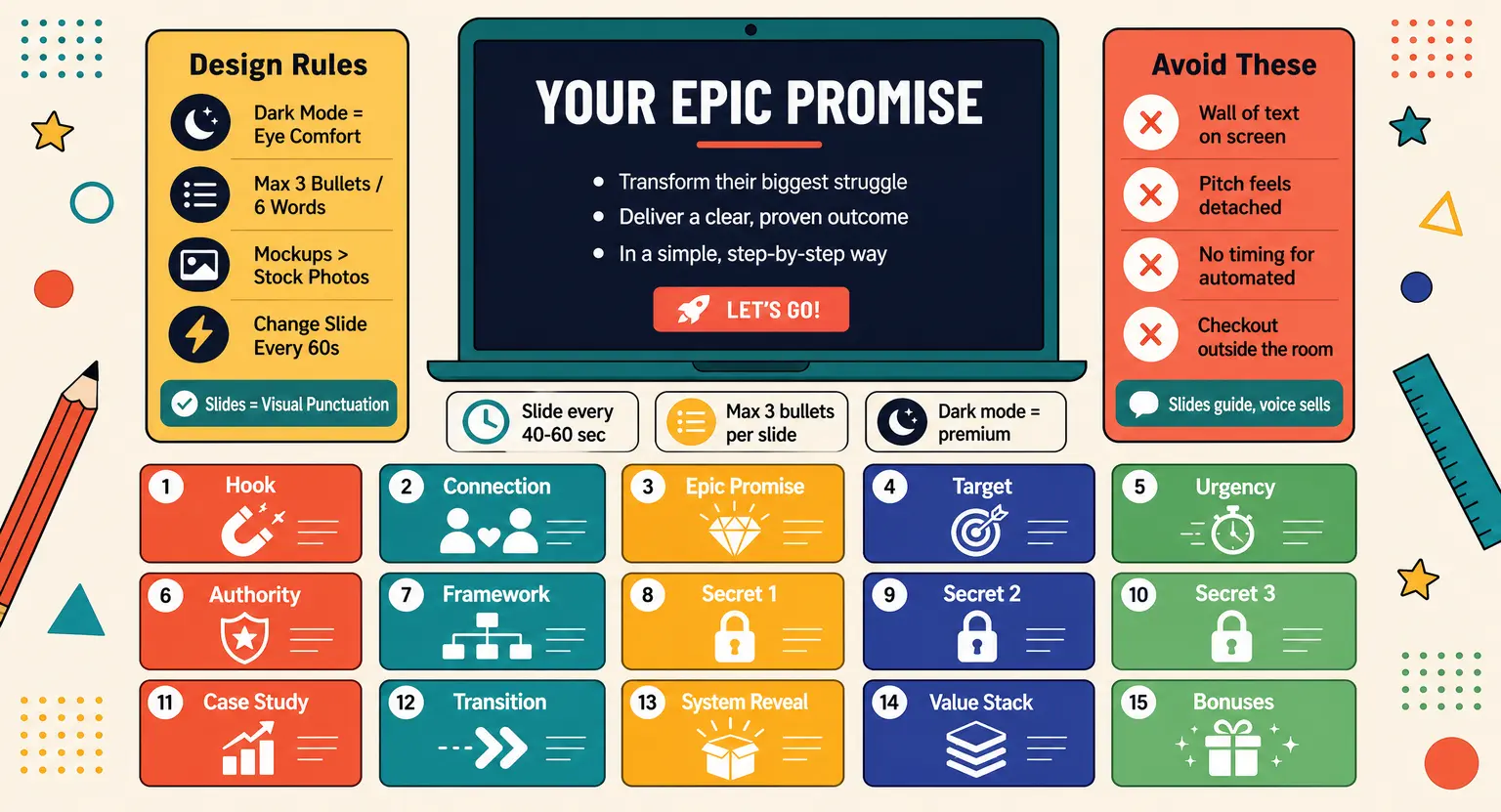
Additionally, if your webinar was structured using a robust webinar script template, transition seamlessly from where your live script ended to where your first email begins.
Common Follow-Up Mistakes That Kill Conversions
Even the most beautiful copy will fail if you make these classic mistakes in your follow up flow :
First, hiding the link. Some marketers try to be too clever : they tell long, artistic stories but hide the link to buy... Keep it bold and obvious so readers do not have to search.
Second, failing to scrub your list. If someone buys during the live broadcast, remove them immediately from the pitch emails, flooding their inbox with sales pressure after they bought kills trust and overall loyalty.
Third, lacking a clear system to capture leads. Your follow-up is only as good as the audience inside it. Learning how to grow an email list fast is a crucial skill that keeps your pipeline filled with fresh prospects.
Expanding Your Digital Business Horizons
Once you master this automated loop, you can begin to think bigger. A successful webinar sequence can easily become the engine that powers multiple digital products across your entire digital brand portfolio.
To feed this engine, continually seek out fresh online course ideas to turn your knowledge into highly scalable, lucrative assets. Perhaps your ultimate goals are focused on launching your first online course or packaging your expertise into high-converting sales funnels ?
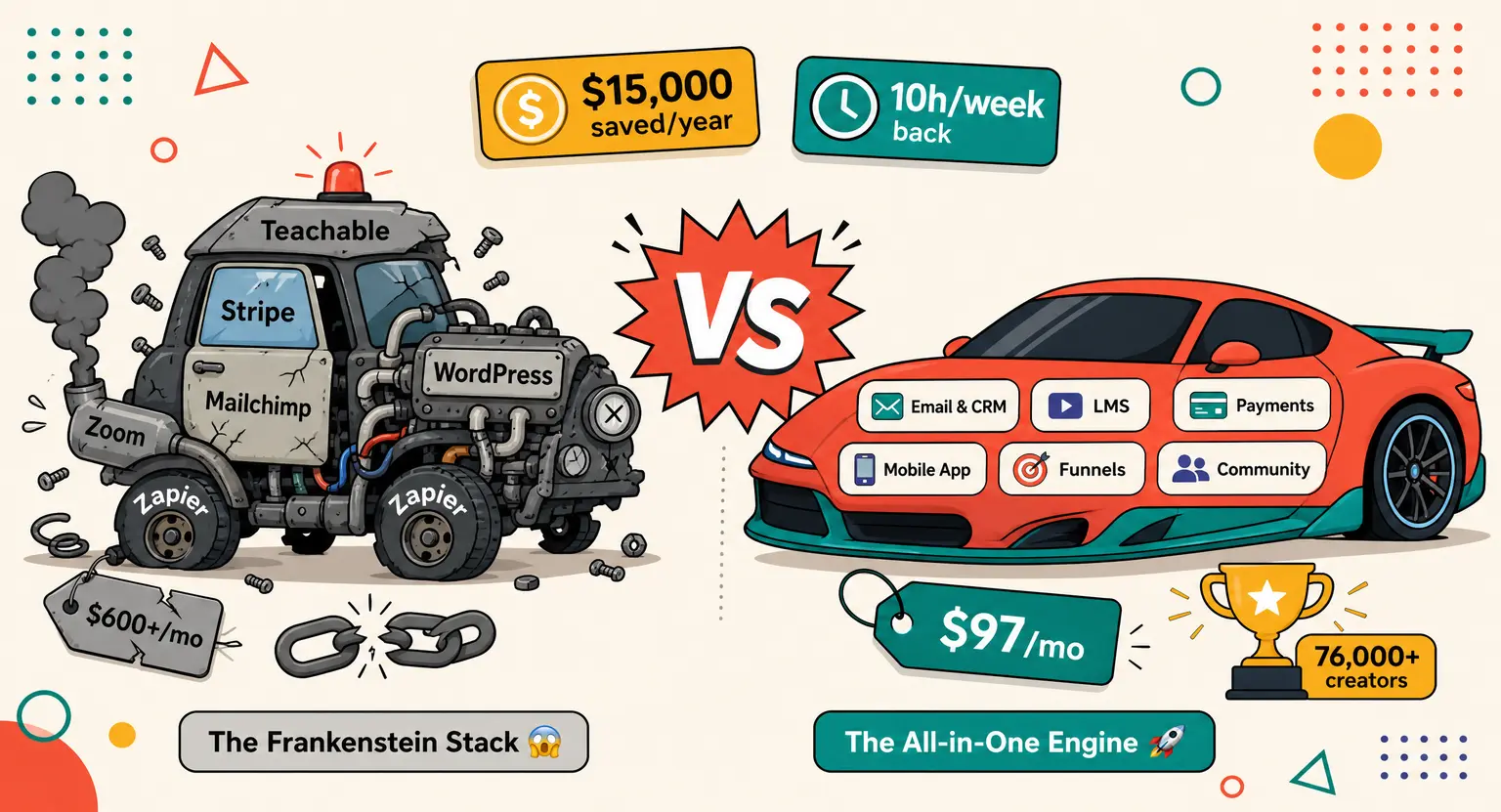
Whatever route you choose, utilizing robust tools like LearnyBox allows you to streamline your entire setup into one straightforward system that runs autonomously while you sleep.
Frequently Asked Questions
When should I send the first follow up email?
Send your first replay email within two hours of wrapping up to capture peak post event interest while your topic remains highly relevant and fresh in mind.
Should I send identical emails to no shows?
No. Segment your list immediately. No shows need access to direct replay links, whereas live attendees require concrete objection handling proof and social case studies.
How long should a webinar replay remain active?
Keep it online for exactly four to five days. This limited window drives genuine, authentic urgency and naturally inspires viewers to make a fast, confident decision.
Which specific email style performs best?
Plain text conversational emails work best. They feel incredibly warm and personal, appear entirely organic, and easily dodge standard promotional inbox spam filters daily.



 How to Create a Course Refund Policy (Templates & Best Practices for 2026)
 How to Run a Beta Version of an Online Course (2026 Guide)
 How to Create a Cohort-Based Online Course (2026 Guide)
 How to Sell an Online Course With a Quiz Funnel (2026 Guide)
 How to Sell an Online Course Through a Sales Call (2026 Guide)