







How to Price Coaching Services: The 2026 Strategic Blueprint
How to Price Coaching Services : The 2026 Strategic Blueprint
Key Takeaways for Setting Your Rates
-
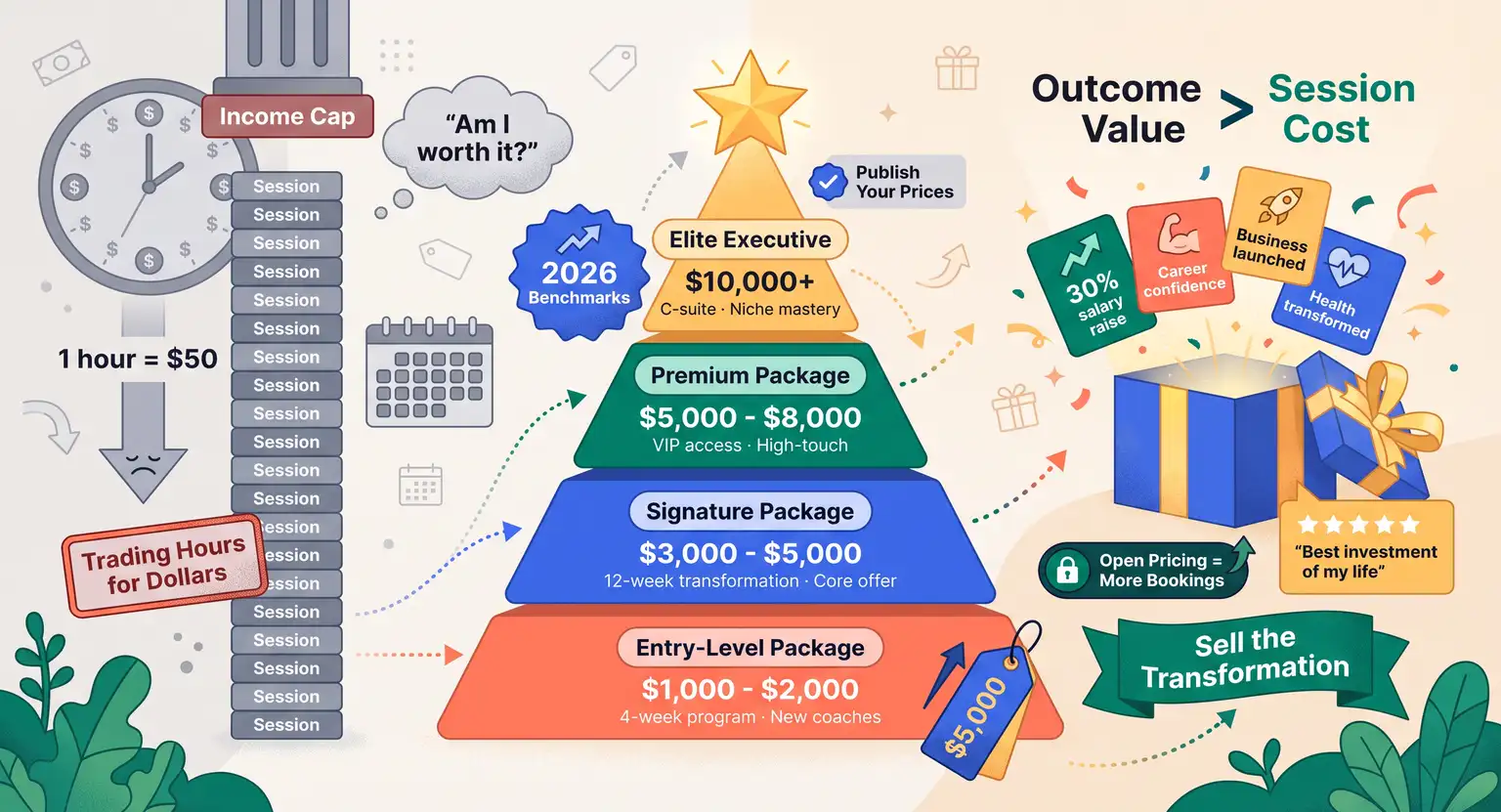
Ditch hourly billing : trading hours for dollars caps your income. Package your service around specific transformations instead.
-
Analyze 2026 benchmarks : average package rates range from $1,000 for entry-level coaches to over $10,000 for elite executive niches.
-
Structure matters : align your pricing structure with proven coaching business models to build a scalable and sustainable practice.
-
Publish pricing : open pricing filters out mismatched leads, builds trust, and accelerates the bookings process.
Pricing your coaching services is one of the most frustrating milestones you will face as a business owner. It is not just about choosing a neat number… Instead, it triggers a cascade of psychological battles, including imposter syndrome and the fear that nobody will actually pay you.
Most advice online tells you to simply charge what you are worth, but that is deeply flawed advice - you are a person of infinite worth, but your coaching is a business transaction. Clients do not buy your time; they buy a specific outcome.
When you first learn how to become a coach, the focus is almost entirely on mastery of the craft. You learn about active listening, powerful questioning, and behavior change.
But when the training wheels come off, you realize you also have to be a sales strategist, a marketer, and an accountant… Figuring out how to charge for your expertise is the bridge that turns an expensive hobby into a thriving enterprise.
Let us pull back the curtain on coaching fees in 2026.
Here is your comprehensive guide to setting rates that fuel your lifestyle without scaring away your dream clients!
The Psychology of Price : What Are Your Clients Actually Buying?
Why do some coaches charge fifty dollars an hour while others charge ten thousand dollars for a three-month engagement?
The difference rarely lies in their credentials… Instead, it is all about client perception, mindset, and market positioning.
When a client hands over their credit card, they are not buying a series of Zoom calls or a folder of worksheets. They are buying the physical bridge between where they are and where they desperately want to be.
If you are a career coach, you are not selling sixty-minute blocks of resume advice. You are selling a career advancement, a thirty percent salary raise, and a renewed sense of confidence.
If you are a health coach, you are not selling meal plans. You are selling vitality, longevity, and self-acceptance.
So, when you think about your pricing, you have to pivot your gaze away from your time.
High-ticket pricing works because high investments demand high commitment. When clients pay a premium, they show up, they do the work, and they get the results. Cheap coaching, ironically, often results in poor outcomes because there is no emotional skin in the game.
You must charge enough to create an environment where the client feels fully invested in their own success.
The Core Coaching Pricing Models
To build a sustainable practice, you must understand your choices - let us explore the four pricing models used by modern coaches.
First up is the traditional hourly rate. While simple to understand, it is the most limiting model.
You only earn when you are actively talking, meaning your income is strictly capped by the number of hours in a day. It also penalizes efficiency - the faster and better you get at helping people, the less money you make.
Second, we have the outcome-based package model. This is where you sell a specific transformation over a set timeframe, such as a twelve-week lifestyle overhaul or a six-month business launch. Clients pay a flat fee upfront or in installments.
This shifts the focus from individual sessions to the total journey. It is highly recommended for almost every niche.
Third is the monthly retainer. This is brilliant for executives or long-term partnerships where clients pay a flat monthly fee for continuous, on-demand support. They get direct access to you via message apps, brief calls, and strategic reviews.
This creates stable, predictable monthly recurring revenue.
Finally, there is value-based pricing, which is the holy grail of high-ticket business coaching. Your fee is calculated as a small percentage of the financial return you generate for the client.
If your strategy helps a founder scale their startup to make an extra million dollars, charging a fifty thousand dollar fee is an easy, logical investment.
| Pricing model | Average 2026 rates | Key advantages | Key drawbacks | Ideal scenario |
|---|---|---|---|---|
|
Hourly session |
$150 to $400 / hour. |
Very easy to sell; low booking friction. |
Limits total income; penalizes fast work. |
Coaches testing market or offering single consultations. |
|
3-month package |
$2,500 to $6,000 / program. |
Focuses on client outcomes; guarantees immediate cash flow up front. |
Requires a solid marketing system to sign up clients. |
Coaches offering deep transformations. |
|
Monthly retainer |
$1,000 to $5,000 / month. |
Creates highly predictable monthly recurring revenue. |
Potential for scope creep and around-the-clock text messages. |
Coaches working with busy corporate leaders. |
|
VIP intensive day |
$1,500 to $7,500 / day. |
Extremely high daily revenue; client receives massive focus fast. |
Can be physically exhausting; does not offer long-term support. |
Experts solving a single complex problem quickly. |
|
Hybrid group & course |
$500 to $2,000 / client. |
Highly scalable; leverages structured training content. Similar to an online course pricing strategy. |
Requires a larger audience to maintain group energy. |
Full-roster coaches looking to exit individual modeling. |
Step-by-Step Blueprint to Setting Your Rates
Now that you understand the psychology, the numbers, and the models, let us construct your ultimate pricing blueprint. Follow these physical steps to land on your ideal rates today.
Step one is determining your financial baseline. Before you can design any program, you need to know your physical costs.
Add up your monthly software subscriptions, tax set-asides, insurance fees, and your essential living salary. Once you have this number, multiply it by 1.3 to ensure a robust thirty percent profit margin - this represents your financial baseline.
Step two is identifying your ideal niche. If you are targeting students or wellness seekers, you must keep in mind that they are generally budget-conscious.
If you are selling solutions to startup founders, sales leaders, or high-performing professionals, your rates should scale upward rapidly - the more painful the problem, the more money a client will exchange to resolve it.
Step three is to design your entry-level beta offer. If you do not have an established portfolio, trying to sell a premium package will immediately trigger imposter syndrome. Start with a low price point for your first five clients to secure those crucial initial case studies.
This allows you to refine your methodology, test your client workflow, and build the evidence you need to secure high-paying dream clients in the future.
Elevating Your Business Beyond One-on-One Delivery
As your business grows, you will eventually hit a glass ceiling - you only have so many hours each week, and once your schedule is booked, your income hits a hard block.
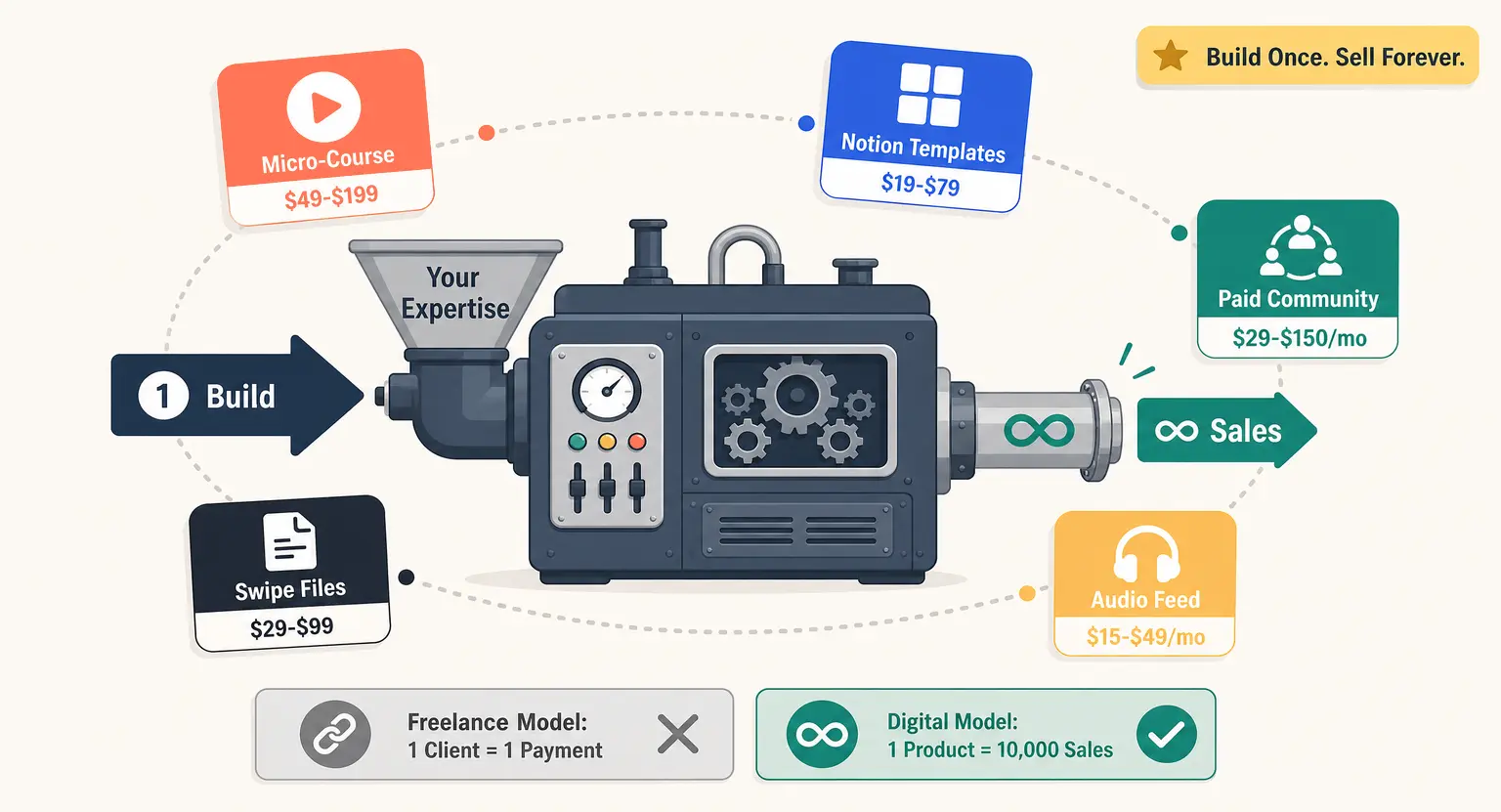
This is the moment to look at leverage. Instead of doing only one-on-one sessions, you can pivot to group coaching programs, mastermind sessions, or digital education.
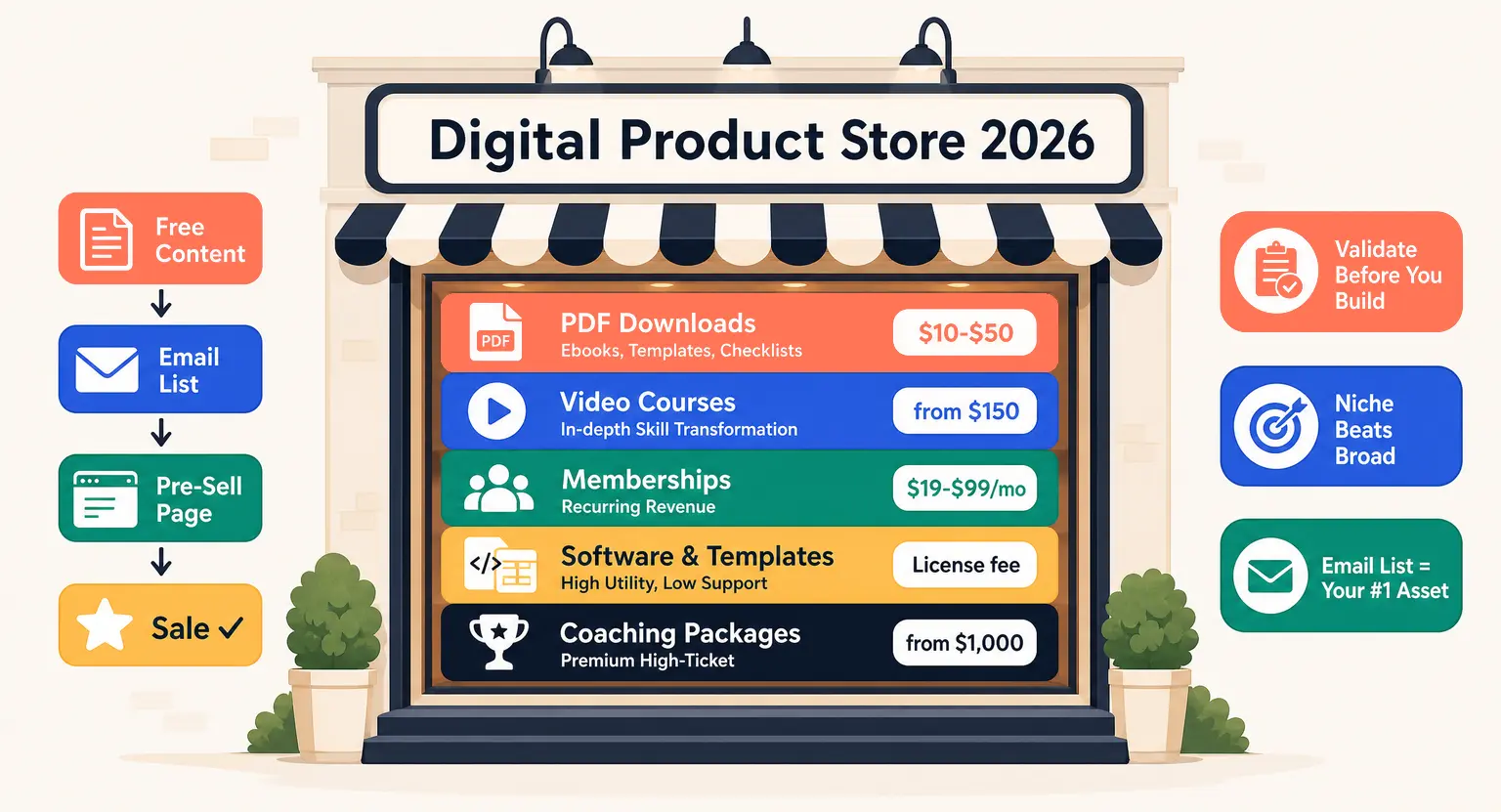
A highly effective route is to sell online courses alongside your high-touch services.
You can pre-record your core frameworks, templates, and lessons, freeing up your live calls to focus only on highly customized troubleshooting and master-level accountability - this dramatically increases the value of your client-facing time.
To execute this cleanly, you need the right tools.
Operating your coaching practice through a highly unified ecosystem like the LearnyBox platform keeps everything simple - having billing, video lessons, and communities in one hub allows you to scale cleanly and sustainably without technical headaches.
Explore Advanced Coaching Resources :
-
Read our comprehensive analysis on how to become a coach and scale your training.
-
Discover our step-by-step masterclass on how to get coaching clients cleanly without paying for expensive ads.
Frequently Asked Questions
How much should a beginner coach charge per hour?
A beginner coach with zero to two years of experience typically charges between fifty and one hundred and fifty dollars per hour.
However, you should avoid selling hourly work, as it limits your revenue potential. Starting with an introductory package is much smarter.
Should I publish my exact coaching prices on my website?
Yes, you should publish your rates clearly. Presenting pricing openly filters out unqualified leads instantly and establishes strong trust.
This straightforward, clean approach saves you from wasted discovery calls with clients who cannot afford your rates.
What is the most profitable coaching pricing model?
The flat-rate package or outcome-based model is the most profitable.
By framing your services around a twelve-week or six-month transformation, you can charge premium prices based on value instead of trading hours for dollars.
How do I know when it is time to raise my coaching rates?
You should raise your rates when your client calendar is eighty percent full, you have collected five glowing testimonials, and you have completed fifty sessions.
If you close more than half of your discovery calls, your rates are too low.
Can I combine coaching with digital products like online courses?
Absolutely. Designing a hybrid model where students consume online course lessons and join live coaching groups is the best way to scale recurring revenue while protecting your time. This leverages your knowledge without trading hours for dollars.




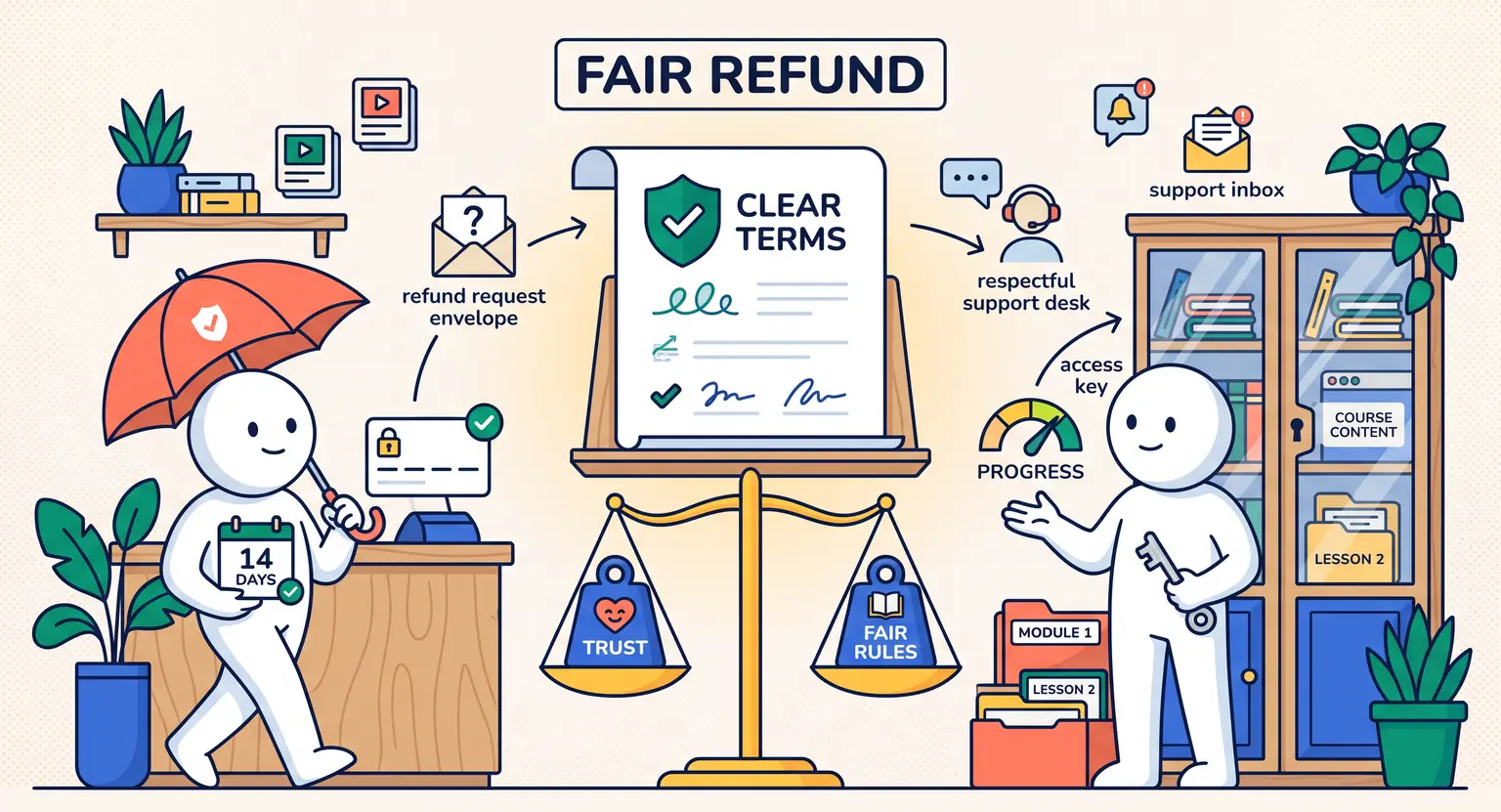 How to Create a Course Refund Policy (Templates & Best Practices for 2026)
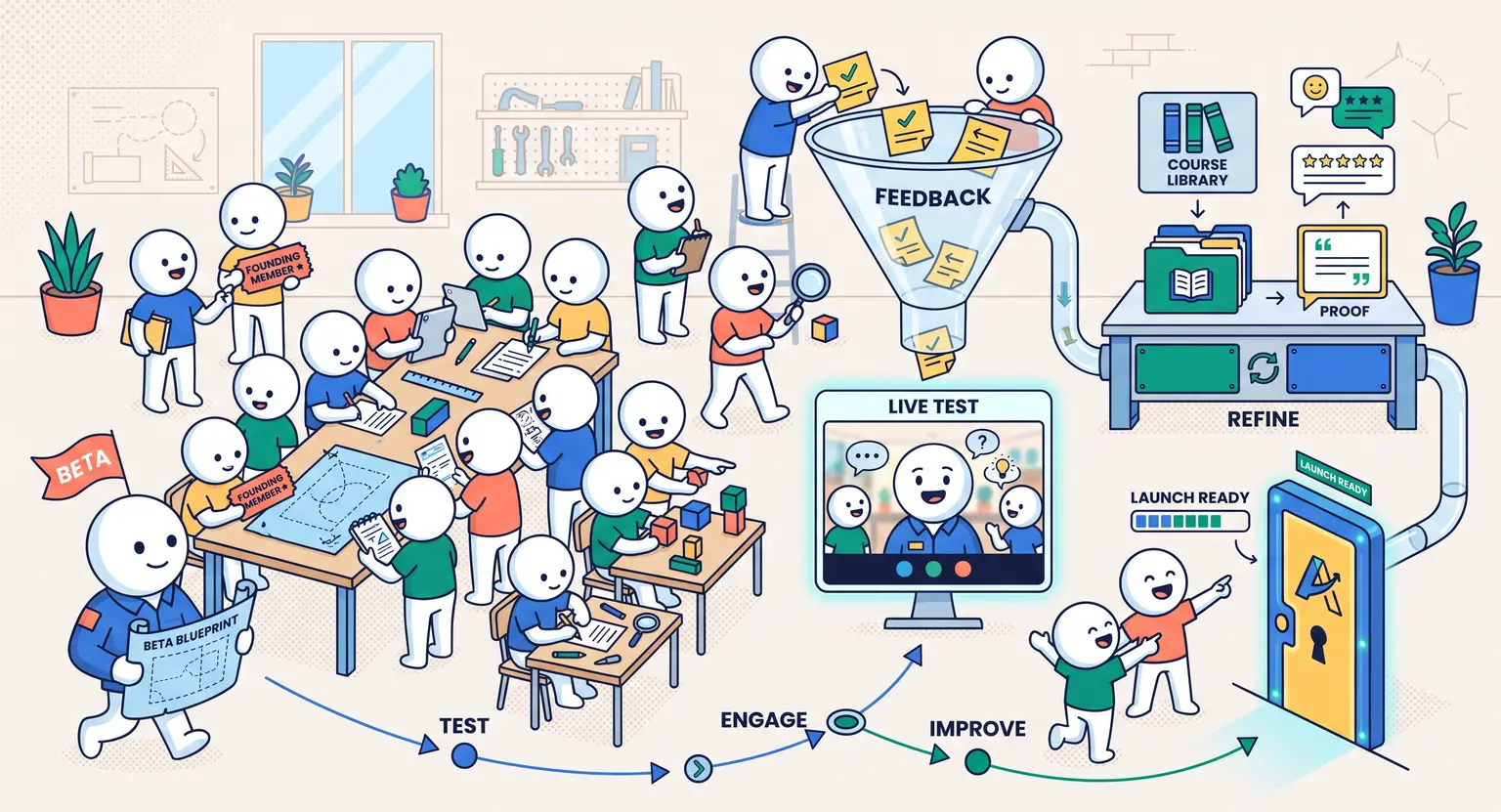 How to Run a Beta Version of an Online Course (2026 Guide)
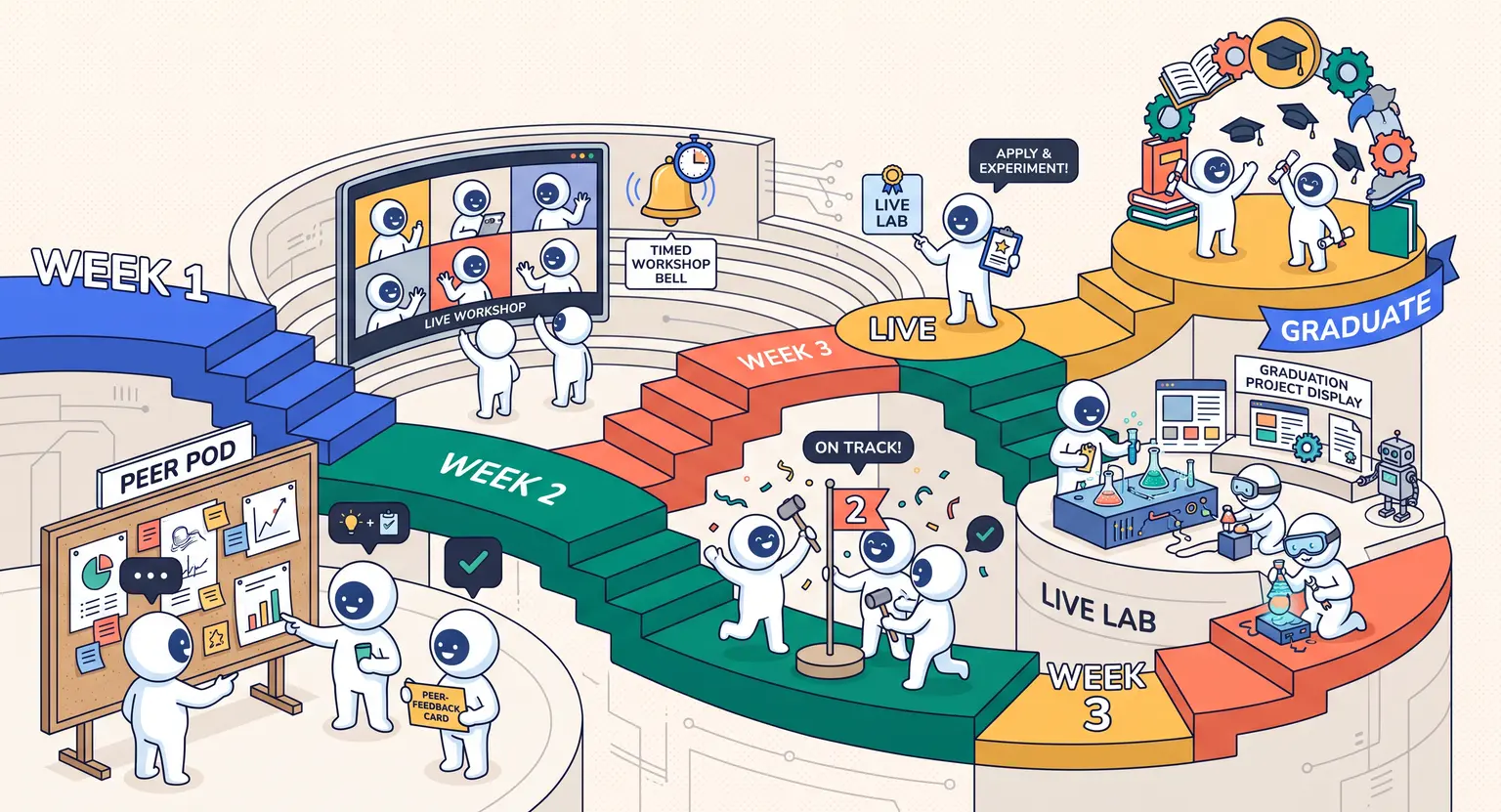 How to Create a Cohort-Based Online Course (2026 Guide)
 How to Sell an Online Course With a Quiz Funnel (2026 Guide)
 How to Sell an Online Course Through a Sales Call (2026 Guide)